Siniyah Island
Archaeologists have found the oldest pearling town in the Persian Gulf on an island off one of the northern sheikhdoms of the UAE.
- The pearling town sits on Siniyah Island, whose name means ‘flashing lights’.
- Siniyah Island shields the Khor al-Beida marshlands and located north of Umm al-Quwain.
- Umm al-Quwain is the least-populated emirate in the UAE.
- Period - The pearling town predates the rise of Islam across the Arabian Peninsula and dates back to the late 6th century.
- The archaeologists already discovered an ancient Christian monastery dating back as many as 1,400 years in the island.
- The town sits directly south of that monastery on one of the curling fingers of the island and stretches across some 12 hectares.
- Findings - Archaeologists found a variety of homes made of beach rock and lime mortar, ranging from cramped quarters to more sprawling homes with courtyards, suggesting a social stratification.
- In the homes, loose pearls and diving weights are also discovered.
- The site also bears signs of year-round habitation, unlike other pearling operations run in seasonal spots in the region.
- Fall -The pearling industry rapidly collapsed after World War I with the introduction of artificial pearls.
- The discarded oyster shells from the pearling industry is found in a dumpsite in the island.
Abu Dhabi, Dubai, Sharjah, Ajman, Umm Al-Quwain, Fujairah and Ras Al Khaimah are the seven emirates of UAE.
References
- The Hindu - Oldest pearl town found in UAE
- Economic Times - Archaeologists find the oldest pearl town in UAE
Raccoon Dogs
A new analysis of genetic data collected from the Huanan Seafood Market in Wuhan, China, has linked coronavirus to raccoon dogs.
- Raccoon dogs are neither dogs nor raccoons.
- They belong to the canid family and are closely related to foxes.
- Characteristics - They are the only canids that hibernate during the winter.
- Their fur becomes thicker during winter.
- They are monogamous, often living in pairs.
- Species - There are 2 species of raccoon dogs:
- Nyctereutes procyonoides - the common raccoon dog (the species that was in the Wuhan market)
- Nyctereutes p. viverrinus - the Japanese raccoon dog
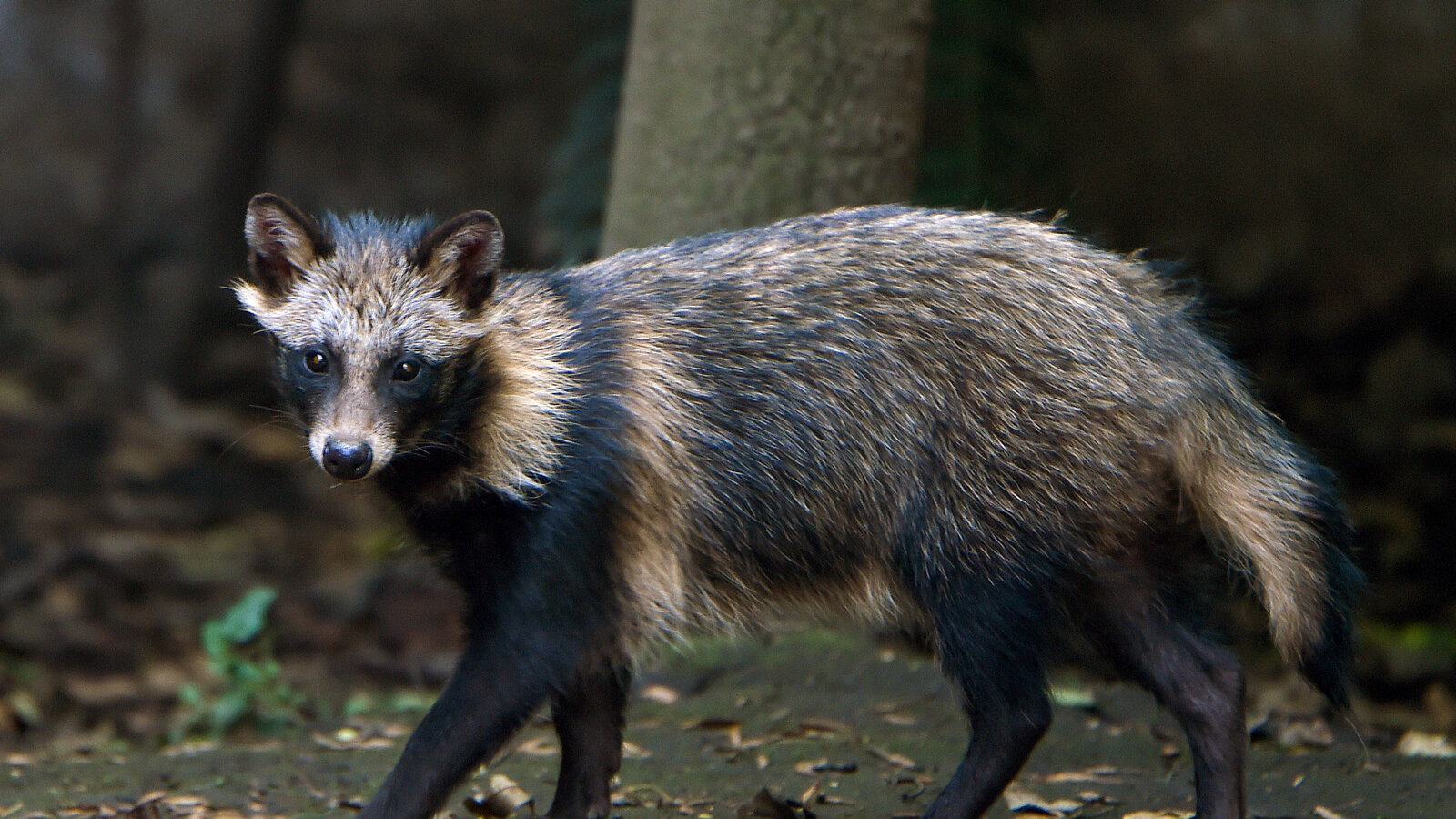
- Diet - These animals are omnivores and relish food sources such as rodents and berries.
- Distribution - They are originally from East Asia and are commonly found in parts of China, Korea and Japan.
- In Japan, they are known as tanuki because of the Japanese folklore and are revered.
- They are also found in Europe, where they were brought by fur traders.
- Economic Significance - These animals are farmed for their fur.
- Raccoon dog pelts are produced in China from racoon dog.
References
- IE - Raccoon dogs linked to coronavirus pandemic
Plastic Pollution
Only 9% of annual plastic waste recycled and around 85% of plastic packaging worldwide ends up in landfills.
The United States is by far the world’s biggest plastics polluter, but only around 5% of over 50 million tons of plastic waste produced by households in 2021 in the US was recycled.
- Plastics are made from natural materials such as cellulose, coal, natural gas, salt and crude oil through a polymerisation or polycondensation process.
- The primary material in plastic manufacturing, oil or gas are a growing source of the carbon pollution fuelling climate change.
- Grades of Plastic - Most plastic packaging is produced from 7 grades of plastic.
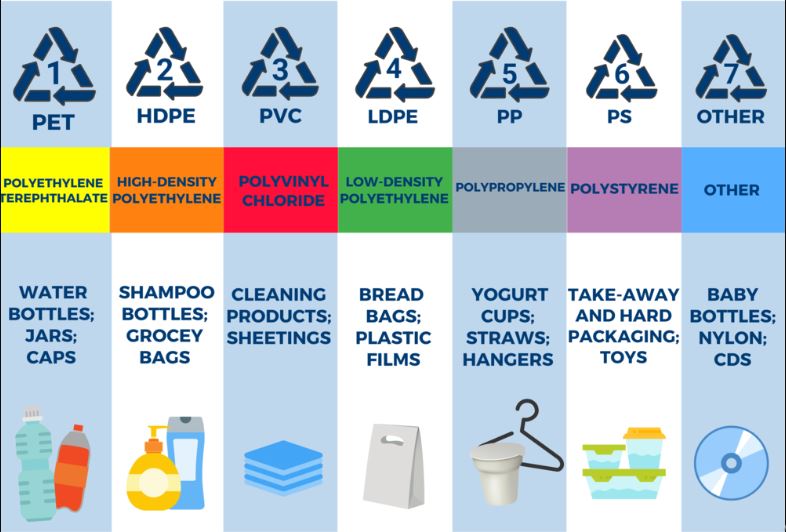
- These 7 grades of plastic are largely incompatible with each other, and are costly to sort for recycling.
- PET or Polyethylene terephthalate (number 1) is the world’s most common plastic.
- PET is the most recyclable plastic and there is a strong market for its by-product used to make drink bottles, food containers or fibers for clothes.
- The high-density Polyethylene (HDPE) (number 2) is the second most common plastic.
- The 5 other plastic types (numbered 3-7) might be collected but are rarely recycled because they have a very small market.
- These hard plastic’s value of the raw material is lower than the cost of recycling.
- Virgin plastic are often cheaper than recycled material, making plastic recycling is not economical.
- Plastic Ban - More than 30 African countries have either completely or partially banned lightweight plastic bags.
- The EU has banned 10 single-use plastics products.
- India has banned the use of 19 single-use plastic (SUP) items with effect from 1st July 2022.
- Related Topics - CPCB Report on Plastic Waste Generation, Circular Economy, Plastic rocks
References
- IE - Why most plastic can’t be recycled
Venusian Volcano
Scientists get first direct geological evidence of an active volcano in the Venusian surface.
- A fresh analysis of radar images obtained more than 30 years ago has yielded new evidence indicating Venus is currently volcanically active.
- NASA’s Magellan spacecraft imaged portions of Venus up to 3 times spanning 24 months from 1990 to 1992.
- It showed that a volcanic vent about 1.6 km wide on the Venusian surface expanded and changed shape over an 8-month span in 1991.
- The Atla Regio area of Venus is where 2 of the biggest volcanoes of Venus, Ozza Mons and Maat Mons are located.
- The vent is situated on Maat Mons, which at about 9 km tall is the planet’s highest volcano and second-highest mountain.
- Venus - It is the second planet closer to Sun in the solar system.
- The diameter of Venus is about 12,000 km and is slightly smaller than Earth.
- Due to its size, Venus is often called as ‘Earth’s twin’.
- It has a thick atmosphere mainly of carbon dioxide which traps in heat in a runaway greenhouse effect.
- This thick atmosphere makes Venus the solar system’s hottest planet.
- Venus lacks plate tectonics which is responsible for most of volcanoes on Earth.
Venus Missions
- The first spacecraft that visited Venus was the Soviet Union’s Venera series.
- NASA has 2 missions to Venus in near future - DAVINCI+ and VERITAS.
- European Space Agency (ESA) Venus mission - EnVision
- Japan’s Akatsuki spacecraft has been studying Venus’ atmosphere since 2015.
- ISRO’s Venus mission Shukrayaan I is expected to be launched in December 2024.
References
- The Hindu - First direct evidence of an active volcano in Venus
- IE - Active volcano found on Venus
IPCC AR 6 Synthesis Report
The Synthesis Report of the 6th Assessment Cycle (AR6) of the IPCC was adopted at the 58th Session of the IPCC at Interlaken, Switzerland.
- Key Findings of SR - The report reinforces that CO2 is the primary GHG and needs to be drastically reduced.
- India, despite being home to more than 17% of the global population, has contributed less than 4% of the global cumulative CO2 emissions.
- It reiterates that historical emissions have already depleted more than 4/5th of the global carbon budget.
- Thereby this has constrained the options available for climate resilient development for other countries.
- Adverse impacts from human-induced climate change will continue to intensify.
- Climate change has caused widespread adverse impacts to nature and people that are unequally distributed.
- The largest climate finance gaps are in developing countries and financial support for developing countries from developed countries is a critical to enhance mitigation actions.
- Accelerated mitigation and implementation of adaptation actions in the near-term would reduce projected losses and damages for humans and ecosystems.
Intergovernmental Panel on Climate Change (IPCC)
- The Intergovernmental Panel on Climate Change (IPCC) is the United Nations body for assessing the science related to climate change.
- It was established by the UN Environment Programme (UNEP) and the World Meteorological Organization (WMO) in 1988
- It prepares comprehensive Assessment Reports on climate change and Special Reports on topics agreed to by its member governments.
- The IPCC has 3 working groups:
|
Working Group
|
Deals with
|
|
Working Group I
|
Physical science basis of climate change
|
|
Working Group II
|
Impacts, adaptation and vulnerability
|
|
Working Group III
|
The mitigation of climate change
|
References
- PIB - IPCC AR 6 Synthesis Report
- IE - IPCC report: global warming will breach critical threshold by 2030



