MATSYA-6000
India’s indigenous manned submersible ‘MATSYA-6000’ plunges into the bowels of the Indian Ocean.
- The Indian Government launched the Samudrayaan Mission in 2021 and MATSYA is the vehicle designed for this mission.
- MATSYA-6000 is a manned submersible vehicle developed indigenously.
- It is a 6000 m depth-rated Remotely Operated Vehicle (ROV).
- It was designed and developed by National Institute of Ocean Technology (NIOT), Chennai under Ministry of Earth Sciences (MoES).
- The submersible can on-board a 3-person crew and dive deep at 6,000 metres.
- It has an endurance of 12 hours under normal operation and 96 hours in case of emergency for human safety.
The success of this mission will put India one among 6 countries to have piloted a crewed under-sea expedition beyond 5,000 metres.
India and CIOB
- The International Seabed Authority has allocated about 75,0000 square kilometres in the Central Indian Ocean Basin (CIOB) to conduct exploratory mining.
- Preliminary estimates indicate that 380 million tonnes of polymetallic nodules lie on the seabed (CIOB).
- The Union Cabinet in 2022 approved Rs 4,000 crore for ‘Deep Ocean Mission’ to be piloted by the Ministry of Earth Sciences.
- India has also committed to the High Seas treaty that seeks to protect 30% of the world’s ocean by 2030.
- The treaty seeks to conserve marine environments and regulate mining and commercial prospecting in the high seas, or parts of the ocean that are beyond the zone where a country has exclusive operating rights.
- CIOB is also part of the high seas, which encompass about two-thirds of the earth’s oceans.
References
- The Hindu - India suits up for deepest dive yet
- The Hindu - What is India's Deep Ocean Mission?
- PIB - Samudrayaan Mission is expected to be realised by year 2026
Horseshoe Crabs
Horseshoe crabs appear to be disappearing from their familiar spawning grounds along Chandipur and Balaramgadi coast in Odisha.
- Horseshoe crabs are one of oldest living creatures on the earth.
- These crabs are basically deep sea animals.
- The creature has lived on earth for about 450 million years without undergoing any morphological change.
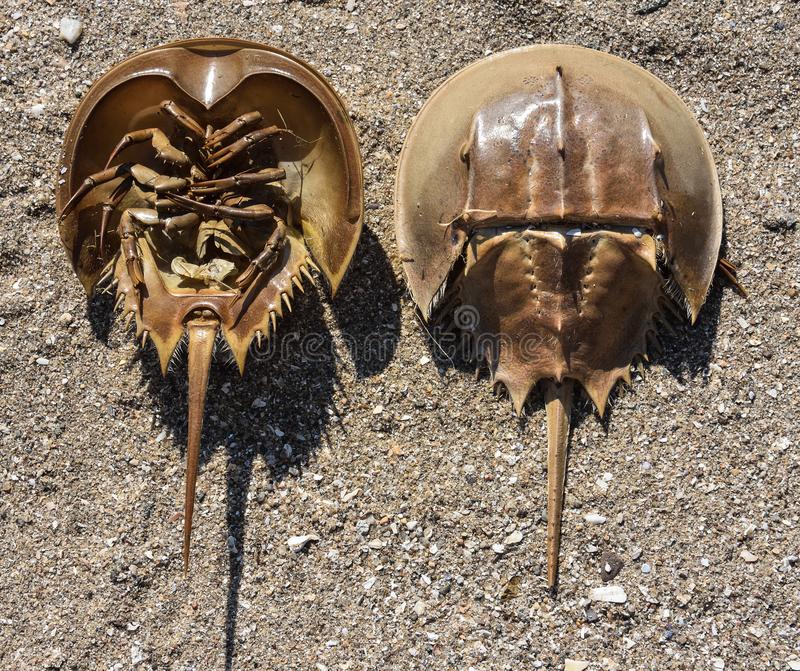
- In India - India one of the major breeding ground and maximum density of Horseshoe crabs is found along the Odisha coast.
- Breeding - They come to coasts of Balasore in Odisha and Digha and Sundarban in West Bengal for breeding purposes.
- They select a suitable site for laying their eggs.
- Balasore used to be the largest spawning ground.
- Threats - Their spawning activities are affected due to unregulated fishing activities.
- Blood - These crab’s blood is blue in colour due to a different oxygen-carrying protein, called hemocyanin which has copper.
- (human blood has haemoglobin which has iron that gives red colour to our blood)
- Horseshoe crab’s blood contains a special clotting agent limulus amebocyte lysate (LAL) which detects a contaminant called endotoxin.
- Medicinal Value - These crabs are medicinally priceless and are used to test vaccines, drugs and medical devices.
- Their blood is used to ensure that vaccines aren’t contaminated with endotoxins.
- Conservation
- Wildlife Protection Act 1972 - Schedule IV
The Japanese government has imposed complete ban on Horseshoe crab fishing and they have declared the animal as an endangered species.
References
- The Hindu - Horseshoe crabs disappearing off Odisha
TN-KET Initiative
Tamil Nadu has pioneered an initiative called TN-KET across the State to reduce the mortality rate among people with tuberculosis.
- The initiative TN-KET (Tamil Nadu Kasanoi Erappila Thittam - meaning TB death-free project) began in April 2022 in 2,500-odd public healthcare facilities that diagnosed TB in 30 districts.
- It has achieved significant reduction in the number of early TB deaths (Deaths within 2 months of TB diagnosis).
- Early TB deaths have reduced from more than 600 in April 2022 to less than 350 in December 2022.
Nearly 70% of all TB deaths among notified TB patients take place in the first two months after diagnosis.
- Chennai-based National Institute of Epidemiology (ICMR-NIE) along with the State TB Cell is spearheading TN-KET.
- Preliminary assessment (triaging) of patients based on just 3 conditions instead of 16 parameters of ‘differentiated TB care guidelines’.
- 3 conditions - very severe undernutrition, respiratory insufficiency, and inability to stand without support.
- The triaging was feasible for quick identification at diagnosis and referral for admission in a healthcare facility for comprehensive assessment and further management of the disease.
- The comprehensive assessment is mainly for identifying severe TB illness needing immediate care thus vastly cutting down the delay and increasing the chances of saving lives.
- The State has identified around 150 nodal inpatient care facilities with nearly 900 beds earmarked for people with severely ill with TB.
References
- The Hindu - TN’s novel initiative results in reduced TB deaths
Plastic rocks and Trindade Island
A rock made of plastic debris, discovered in the Trindade Island is an evidence of humans’ growing influence over the earth’s geological cycles.
- Plastic reaching the remote island of Trindade was an evidence of humans’ growing influence over the earth’s geological cycles.
- The plastic rock was found in the permanently preserved area, near the place green turtles lay their eggs.
- Plastic Debris -The fishing nets which is very common debris in Trindade, are dragged by the marine currents, accumulate on the beach.
- When the temperature rises, this plastic melts.
- Over the time, the melted plastic became intertwined with rocks on the island.
- These rocks are called ‘plastiglomerates’ since they are made of a mixture of sedimentary granules and other debris held together by plastic.
Trindade Island
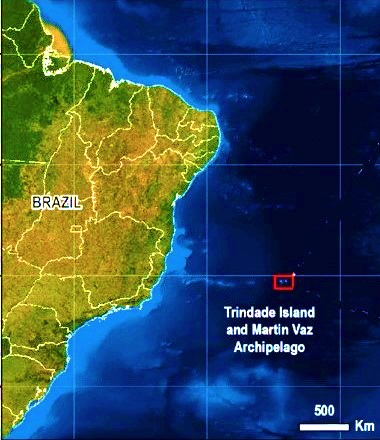
- Trindade Island is the easternmost and most remote point in Brazilian territory.
- It is located about 1,140 km from the mainland of Brazil.
- Trindade surfaced owing to volcanic activity under the Atlantic Ocean about 3 million years ago.
- Biodiversity - The Island hosts many species of native flora and fauna including seabirds and marine creatures.
- Trindade is one of the most important conservation and nesting spots for green sea turtles (Chelonia mydas).
- It hosts native seabirds like the Trindade Petrel, and the great frigatebird, which are only found in the Indo-Pacific.
- The surrounding marine region also hosts species of sharks, dolphins, and corals.
- Habitation - Trindade is a protected area not inhabited by any humans except for a small Brazilian Navy Crew.
References
- IE - Researchers find ‘terrifying’ plastic rocks on remote island
- The Hindu- Why have plastic rocks been found on Trindade Island?
Global Shree Anna Conference
Prime Minister inaugurates the Global Millets (Shree Anna) Conference at IARI Campus, PUSA New Delhi.
- A commemorative stamp and commemorative coin were unveiled in this 2-day conference.
- A compendium of Indian millet (Shri Anna) start-ups and a book of millet (Shri Anna) standards were also digitally launched.
- The Indian Institute of Millets Research of ICAR was declared as a Global Centre of Excellence.
- Global Millets Conference is a symbol of India’s responsibilities towards the global good.
- Shree Anna is becoming a medium of holistic development in India and is linked with village as well as the poor.
- AgLive 2023 - ‘AgLive 2023: The Millet Challenge’ is a Pitch session for Millets based Startups, organised as part of the conference.
- It was aimed at making an impact by increasing interaction amongst millet-based innovators/entrepreneurs, investors, and other stakeholders.
- India is the largest producer of millets. It produced 17.96 million Metric Tonne (MT) of Millets.
- India’s export of Millets is 64 million USD in the year 2021-22.
- Major millet-growing states in India are Rajasthan, Maharashtra, Karnataka, Andhra Pradesh and Madhya Pradesh.
- A wide range of millets are produced across India.
- Major Millet grown in India are Pearl Millet, Sorghum and Finger Millet.
- Minor Millets are Proso Millet, Kodo Millet, Little Millet, Foxtail Millet, Browntop Millet, Barnyard Millet, Amaranthus and Buckwheat.
References
- PIB - PM inaugurates the Global Millets (Shree Anna) Conference
- PIB - AgLive 2023: The Millet Challenge



