Prelims: Current events of national and international importance | Species | Conservation
Why in news?
Researchers discover a new species of spider in a Chikkamagaluru village, name it after ‘Malenadu’
- Family – Salticidae.
- Genus – Pilia, a genus of jumping spiders.
- These spiders are small, agile predators known for excellent vision, agile movements and jumping ability.
- It exhibit complex courtship behavior and active hunting, unlike web-building spiders.
- 1st described by - Eugène Louis Simon in 1902.
- Location – Madhugundi village, Mudigere taluk of Chikkamagaluru, Karnataka.
- Etymology – Named after the Malenadu region of Karnataka, locally known as the "land of hills" — “mala” means hill, “nadu” means land.
- Taxonomic importance –
- This is the 1st time both male & female specimens of the genus have been identified, resolving a long-standing taxonomic gap.
- Previously, only three species - all male specimens, are known.
- Distinctiveness – It differs from common house or garden spiders, both in appearance and behaviour.
- Habitat – 2 plant species — Memecylon umbellatum & Memecylon malabaricum - the spiders were found concealed between the leaves of these plants.
- Morphology – New species is morphologically closest to Bristowia, another genus of jumping spiders, sharing robust first legs and comparable genital structures.
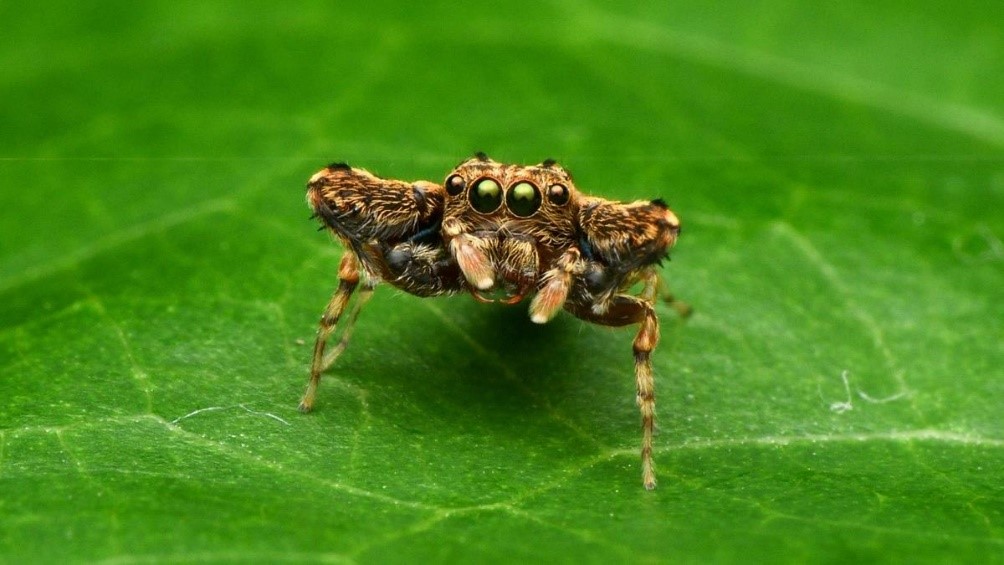
- Significance – This is the 1st discovery of a Pilia genus spider species in 123 years, last recorded in 1902 in Kerala, underscores the importance of Western Ghats' status as a biodiversity hotspot.
Reference
The Hindu | New spider species is discovered in Chikkamagaluru



