Prelims: Current events of national and international importance | Economy
Why in News?
Recently, the Ministry of Statistics and Programme Implementation (MoSPI) provided clarification on the latest GDP estimates for Q1 of 2026-27.
- Double Deflation – In this method, Gross Output and Intermediate Consumption are each independently adjusted to account for changes in price levels.
- Real GVA = Real Gross Output − Real Intermediate Consumption
- It provides a more accurate representation of the real value added by an industry, as it separately considers both output and input prices.
- Negative GVA Deflator - A negative Gross Value Added (GVA) deflator does not necessarily indicate a decline in manufacturing prices.
- This situation may arise when input prices increase at a faster rate than output prices.
- Example – Suppose:
- Output price ↑ 5%
- Input price ↑ 10%
- Although both output and input prices increased, input costs rose at a higher rate than output prices.
- As a result, Real Gross Value Added (GVA) may increase at a faster rate than Nominal GVA.
- Consequently, the implicit GVA deflator may become negative.
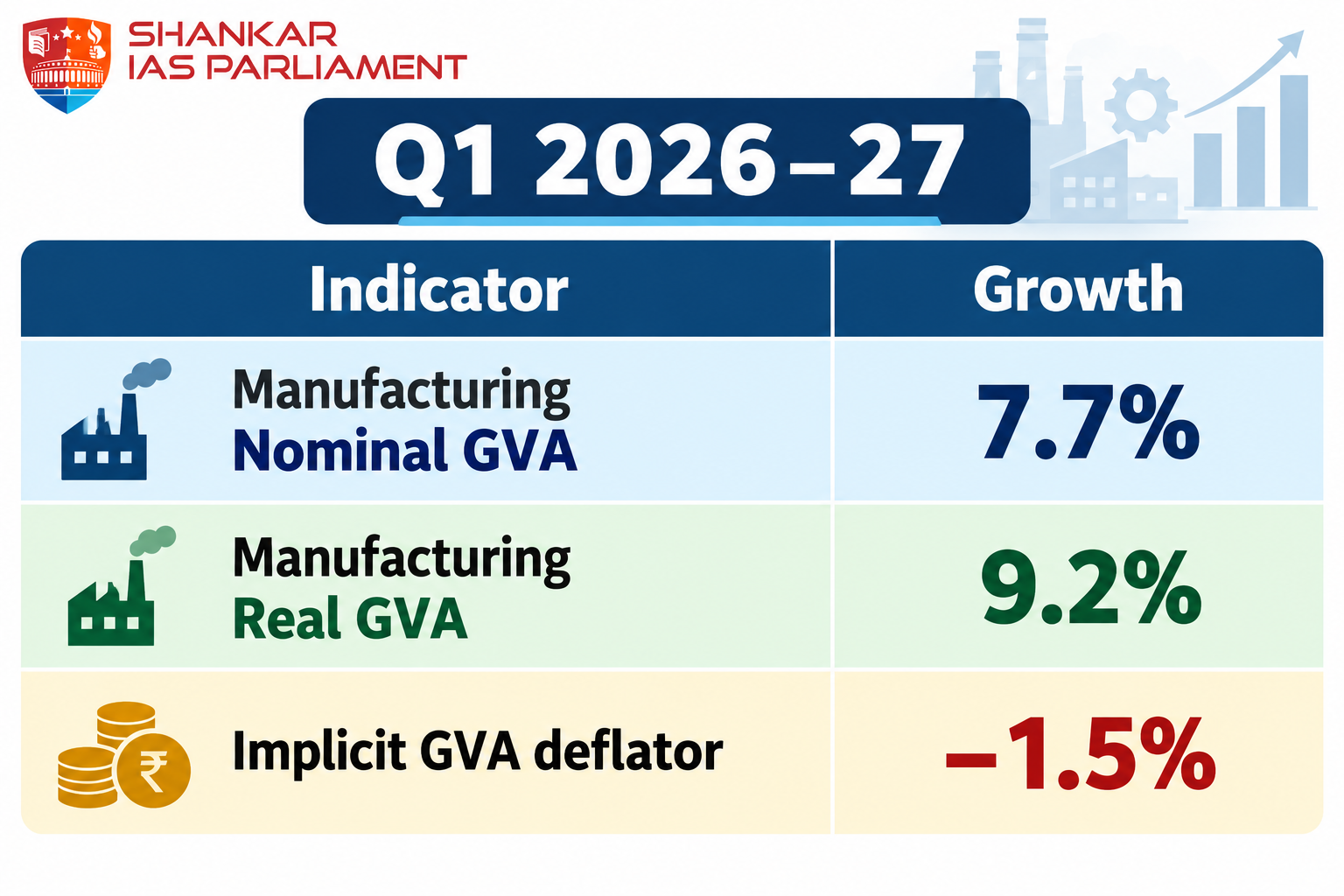
A negative deflator does not necessarily indicate declining prices.
- GDP Revision – This change represents a significant issue in data interpretation.
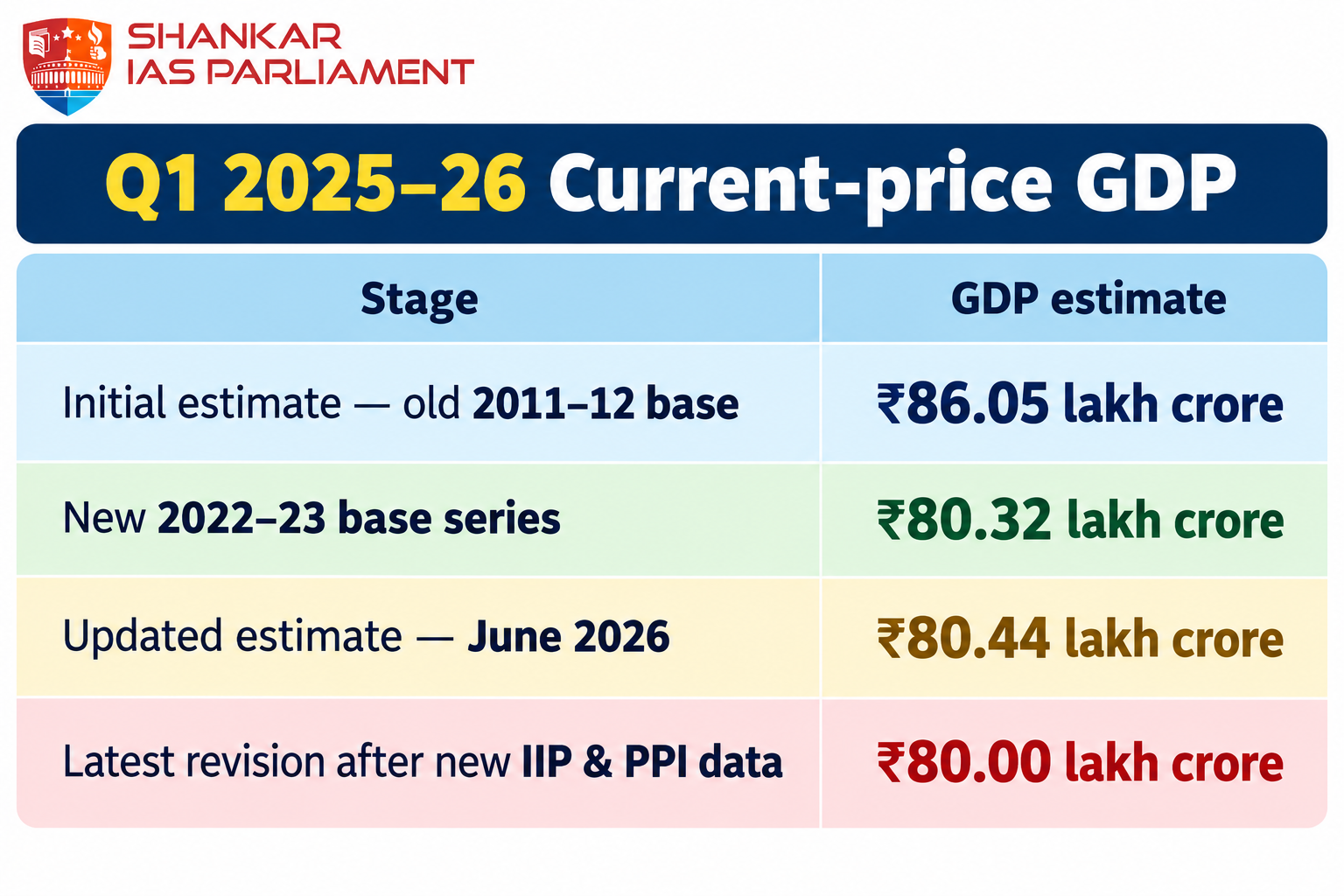
- Factors Contributing to the Change
- The revision occurred due to the following factors:
- Change in base year
- Improved data sources
- New IIP data
- Introduction of PPI
- Methodological improvements
- Successive revisions as better data became available
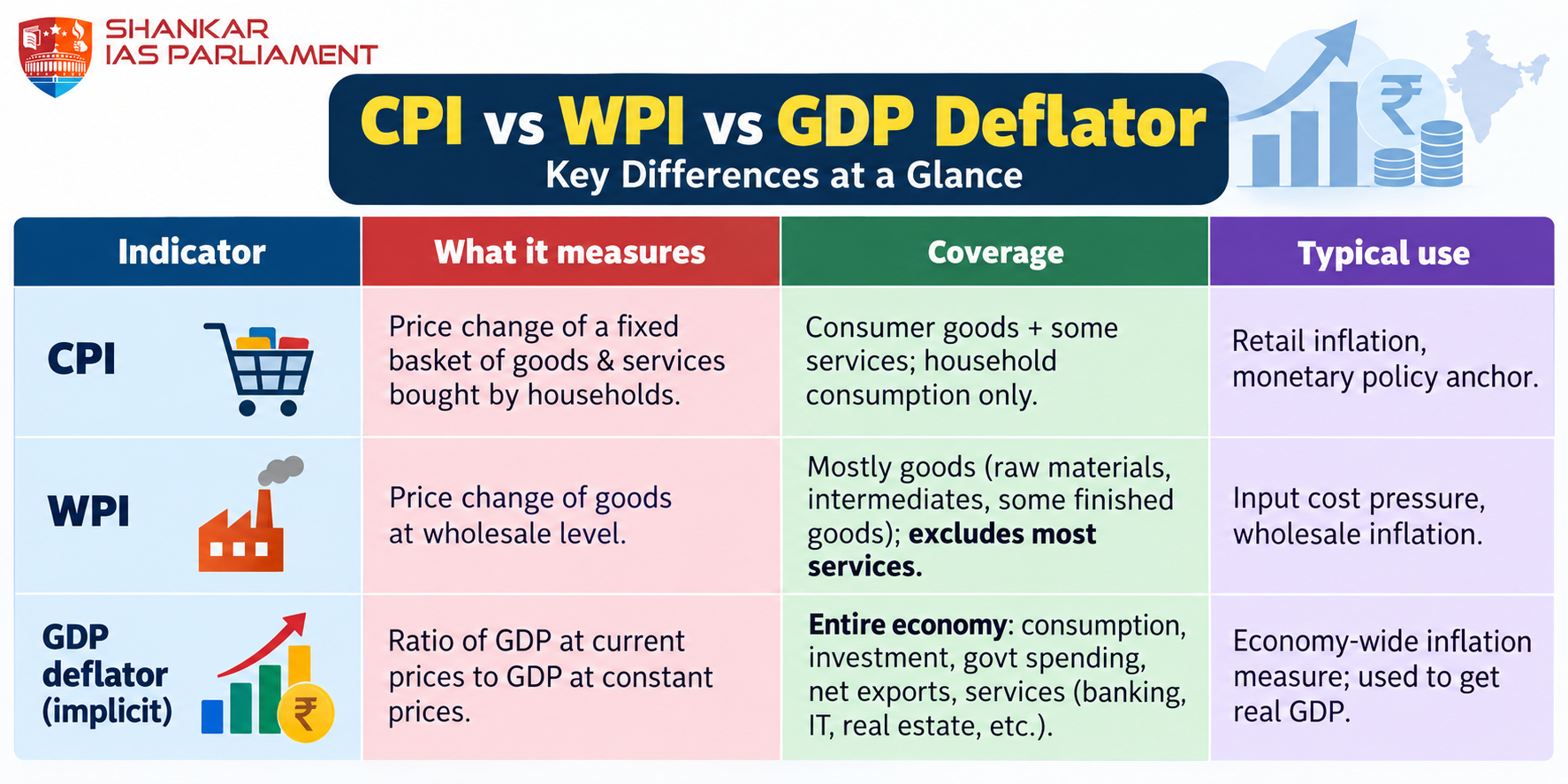
- GDP Deflator vs CPI vs WPI
- Difference between nominal and real GVA
- For example - Mining Sector: Increase in Nominal GVA but Decrease in Real GVA
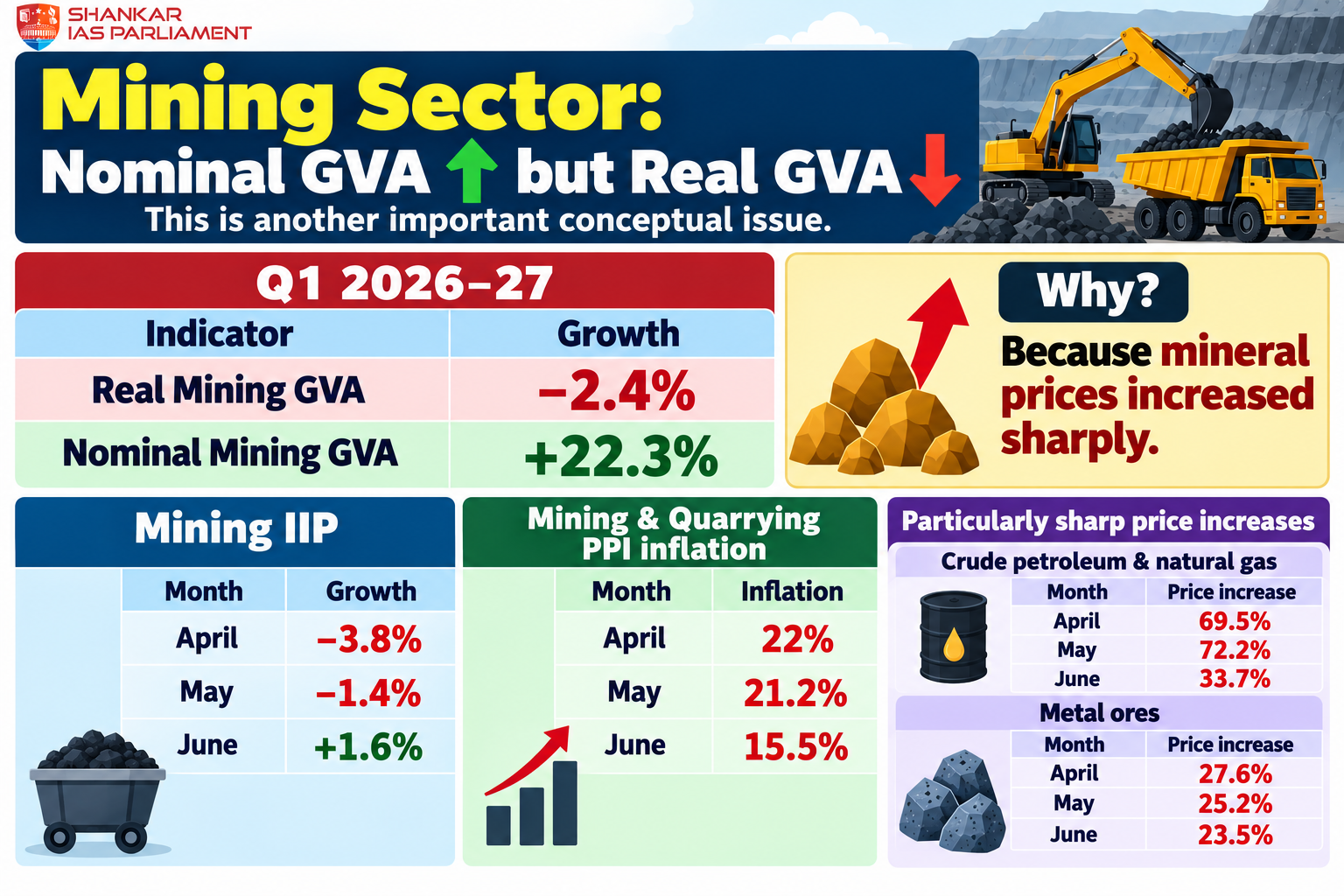
- Real Gross Value Added (GVA) reflects the quantity effect.
- Nominal Gross Value Added (GVA) incorporates both quantity and price effects.
- Therefore, it is possible for output to decline while nominal GVA increases if price levels rise sufficiently.
- Statistical discrepancy - Gross Domestic Product (GDP) may be estimated using several primary approaches:
- Production approach versus Expenditure approach
- In principle, GDP calculated by the production approach should equal GDP calculated by the expenditure approach.
- However, discrepancies may occur due to the following factors:
- Use of different data sources
- Timing differences in data collection
- Incomplete or missing information
- Measurement errors or inconsistencies
- Preliminary status of quarterly GDP estimates
- The resulting difference is recorded as a statistical discrepancy.
Reference
DD India | MoSPI Explains GDP Methodology



