0.1090
7667766266
x

CBD COP17: Animals for Biodiversity and Health

iasparliament Logo
October 25, 2026

Prelims: Current events of national and international importance | Environment

Why in News?

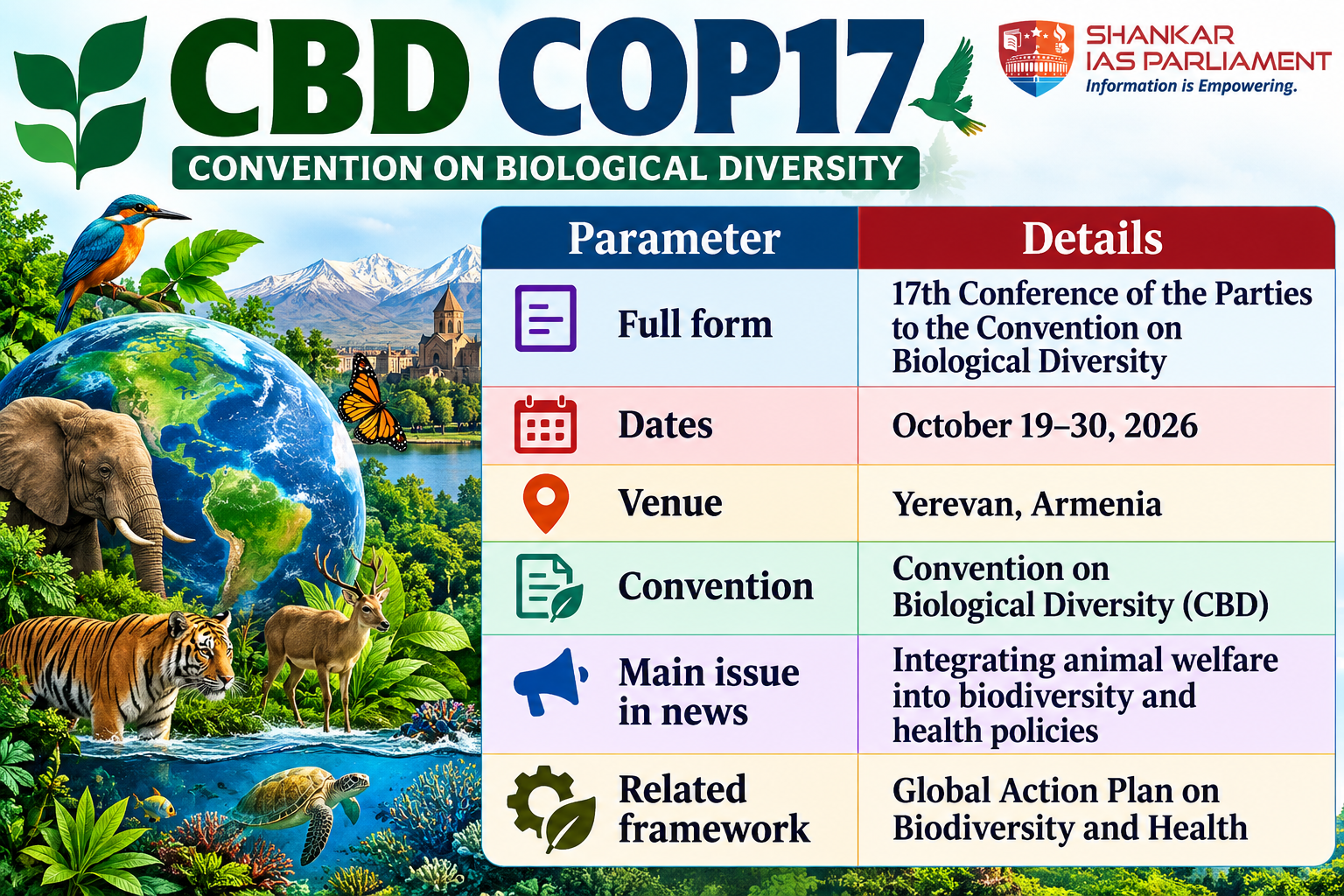
A new policy guide titled “Animals for Biodiversity and Health” was launched on October 21, 2026, at the 17th Conference of the Parties (COP17) to the Convention on Biological Diversity (CBD).
cbd-cop17-biodiversity-infographic-1.png

  • Titled – “Animals for Biodiversity and Health”.
  • Introduced at – 17th Conference of the Parties (COP17) to the Convention on Biological Diversity (CBD).
  • Objective – To help governments translate recommendations under the Global Action Plan on Biodiversity and Health into practical policies.
  • It facilitates the implementation of the Global Action Plan (GAP) on Biodiversity and Health.
  • It addresses interconnected challenges, including biodiversity loss, zoonotic diseases, and antimicrobial resistance (AMR).
  • Key Recommendations
  • Wildlife Protection
    • Prohibit or strictly regulate high-risk and inhumane wildlife capture, transport, and trade.
    • Mitigate risks associated with the exotic pet trade.
    • Enhance wildlife care, rehabilitation, and conservation.
  • Habitat Protection and Climate Resilience
    • Increase urban tree cover.
    • Develop wildlife corridors to enhance habitat connectivity.
    • Safeguard ecosystems and promote biodiversity conservation.
  • Farm Animal Welfare
    • Eliminate high-risk livestock confinement systems.
    • Preserve locally adapted and genetically diverse livestock breeds.
    • Advance food systems aligned with environmental sustainability.
  • Interconnections Among Animal Welfare, Biodiversity, and Human Health
  • The guide highlights the intrinsic relationship between animal welfare, ecosystem health, and public health.

Issue

Connection

Biodiversity loss

Habitat destruction and unsustainable wildlife exploitation threaten species and ecosystems.

Zoonotic diseases

Wildlife capture, trade and close contact between animals and humans can increase opportunities for pathogen spillover.

Antimicrobial resistance (AMR)

Inappropriate antimicrobial use and associated practices can contribute to the emergence and spread of resistant pathogens.

Climate change

Habitat degradation and ecosystem disruption can weaken ecological resilience.

Animal welfare

Better treatment, handling and management of animals can contribute to conservation and disease-prevention objectives.

  • Key insights
  • By 2050, an estimated 1.91 million deaths per year may be directly attributable to antimicrobial resistance (AMR) worldwide.
  • Approximately 8.22 million deaths each year may be associated with antimicrobial resistance (AMR).
  • The transcontinental spread of H5N1 avian influenza underscores the necessity of monitoring animal diseases and assessing their potential impacts on public health.

The One Health Approach is an integrated framework that recognises the interconnections among human health, animal health, and ecosystem health.

This approach promotes coordination among human medicine, veterinary science, environmental protection, and public health.

  • Countries mentioned in the guide

Country/place

Initiative

Colombia — Medellín

Developed 30 green corridors along roads and streams; the initiative was associated with lower urban temperatures and the return of wildlife.

Belgium

Introduced a positive list for mammals in 2009, specifying species legally permitted to be kept as pets.

Brazil

Wildlife screening and rehabilitation centres operated by IBAMA received more than 54,000 wild animals in 2023 for veterinary care and possible release.

Bangladesh and Cameroon

One Health frameworks recognise animal welfare.

Germany

National dietary guidelines incorporate health, environmental, social and animal welfare considerations.

Reference

Down to Earth | Animals for Biodiversity and Health

There are no reviews yet. Be the first one to review.

ARCHIVES

sidetext


