0.2917
7667766266
x

Gynacantha khasiaca

iasparliament Logo
May 28, 2026

Prelims: Current events of national and international importance | Species

Why in News?

An insect that enjoys a near-360° vision with thousands of lenses, and can stay still in the air, has resurfaced in Arunachal Pradesh’s Changlang district.
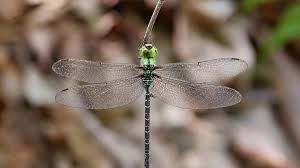
  • Scientific Name – Gynacantha khasiaca
  • An extremely rare and elusive species of dragonfly commonly known as the long-tailed duskhawker.
  • Family – Aeshnidae.
  • Order – Odonata (dragonflies & damselflies)
  • Genes – Gynacantha
  • Diversity – The global diversity of Odonata comprises 6,442 species across 693 genera.
  • India is home to 504 species and 27 subspecies across 152 genera and 18 families; the total number of species in Arunachal Pradesh is 110.
  • This genus comprises 92 species globally, with approximately 30 species recorded in Southeast Asia, and 10 species documented in India.
  • Rediscovery – In Arunachal Pradesh, after a gap of 110 years from the Namdapha National Park and Tiger Reserve.
  • Prior to this, the last confirmed record of the dragonfly in the state dated back to the historic Abor Expedition of 1914.
  • Habitat – It survives by hiding in shaded forests by day and relying on fresh water & dense tropical or sub-tropical rainforest ecosystems for its life cycle.
  • Distribution – It has been recorded in Bangladesh, Myanmar, and Nepal.
  • In India, beyond Arunachal Pradesh, it has been documented in Assam, Maharashtra, Meghalaya, Uttarakhand, and West Bengal.
  • Key Features
  • Eyes – Large compound eyes featuring a pale blue-green or olive-brown tint, packing thousands of tiny lenses that provide near-360° vision.
  • Head – The upper surface of its frons (forehead) is distinctively marked with a thick, black "T"-shaped mark.
  • Wings – Completely transparent but washed with a delicate amber-brown tint.
  • Colouration – Pale brown and green colouration.

Dragon Fly

  • Behaviour – Like other members of the Gynacantha genus, it is crepuscular.
  • This means it is highly active during twilight hours (dawn and dusk) or on heavily overcast, cloudy days.
  • Ecological Role – It plays a role as both predator (controlling insect populations) and prey in aquatic food webs.
  • Conservation Status
    • IUCN – Data Deficient

References

  1. The Hindu | Rare dragonfly resurfaces in Arunachal after 110 years
  2. Odonata of Bangladesh | Gynacantha khasiaca
Login or Register to Post Comments
There are no reviews yet. Be the first one to review.

ARCHIVES

MONTH/YEARWISE ARCHIVES

sidetext
Free UPSC Interview Guidance Programme
sidetext


