Prelims: Current events of national and international importance | Environment
Why in News?
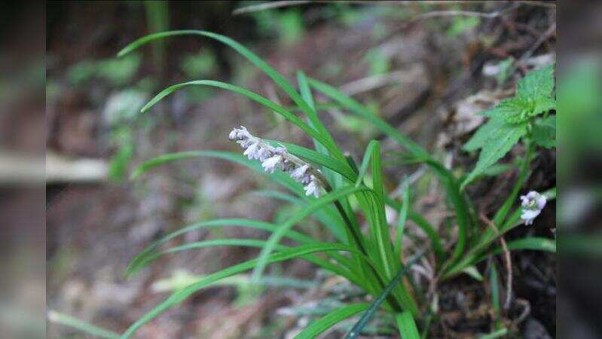
Botanists from the Wildlife Institute of India (WII), Dehradun, and the Uluberia Botanical Institute Herbarium documented the plant species Ophiopogon japonicus in the wild in India for the first time.
- The species was recorded at an elevation of 2,185 meters in a moist, temperate broadleaf forest floor in the West Kameng district of Arunachal Pradesh (Eastern Himalayas).
- Common Names - Dwarf Lilyturf, Mondo Grass, or Fountain Plant.
- Taxonomic Classification
- Family- Asparagaceae (subfamily Nolinoideae; historically placed under Liliaceae).
- Genus -The genus Ophiopogon comprises roughly 85 species worldwide; with this discovery, the number of species formally documented from India increases from 7 to 8.
- Morphological Features
- An evergreen, clumping perennial herb with narrow, arching, grass-like leaves (15–30 cm long) featuring backwardly serrated (retro-serrulate) margins.
- Produces short racemes of small white-to-pale-purple flowers that mature into metallic, bright cobalt-blue berry-like fleshy seeds.
- Spreads via subterranean stolons and slender rhizomes with swollen, water-storing tuberous roots.
- Geographic Distribution -Native across East Asia (China, Japan, Korea, and Nepal), thriving across a wide altitudinal range of 200–2,800 meters.
Medicinal Value
- Traditional East Asian Medicine - The dried tuberous roots are known as Ophiopogonis Radix or Maidong in Traditional Chinese Medicine (TCM).
- Bioactive Properties- Rich in bioactive polysaccharides, saponins, and flavonoids.
- Therapeutic Applications- Exhibited anti-inflammatory, antioxidant, immunomodulatory, and cardioprotective properties; clinically used to treat chronic dry coughs, protect mucosal barriers, and support cardiovascular health.
Conservation Significance
- Soil Conservation- Its fibrous, stoloniferous root matrix effectively binds loose topsoil on steep Himalayan slopes, mitigating soil erosion and landslides from heavy monsoon runoff.
- Biodiversity Benchmar- Extends the known geographic distribution of East Asian flora into the Eastern Himalayas, highlighting the region as a critical, under-explored botanical hotspot.
- Local Vulnerability- The newly recorded population faces localized anthropogenic threats due to its proximity to roadside habitats vulnerable to highway construction, slope degradation, and habitat fragmentation.
Reference
Times of India | Ophiopogon japonicus



