Prelims: Current events of national and international importance | Geography
Why in News?
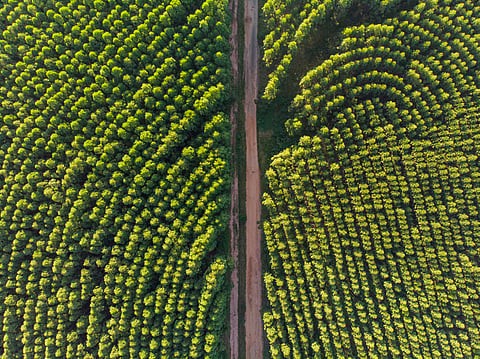
A recent report documented that 45 years of large-scale industrial eucalyptus monoculture in Brazil’s Jequitinhonha caused a 4.5-meter drop in the regional groundwater table and dried up 89% of local springs.
Ecological Drivers
- High Evapotranspiration Rates - Fast-growing eucalyptus species absorb vast volumes of soil moisture, transpiring hundreds of liters of water per tree daily.
- This significantly outpaces the evapotranspiration of native Cerrado vegetation.
- Disruption of Groundwater Recharge
- Under native Cerrado vegetation, approximately 50% of annual rainfall infiltrates the soil to recharge underground aquifers.
- Under dense eucalyptus monocultures, infiltration drops to ~29%, drastically lowering the subterranean water table.
- Loss of Native Savanna ("Green Deserts") - In the Chapada das Veredas plateau, native Cerrado cover plunged from 86.1% (1973) to 24.6%, converting biodiverse savannas into timber-crop monocultures.
- Stream Flow Collapse - Analysis of the local Fanado River revealed that maximum flow rates fell from during dry seasons, turning perennially flowing streams into intermittent watercourses.
Socio-Economic Concerns
- The drying of local springs (veredas) disrupted subsistence agriculture and livestock grazing for rural Quilombola (afro-descendant) and traditional farming communities.
- The plantations supply charcoal to fuel charcoal-based pig iron production (marketed as "green steel") and biochar offset projects.
- The report highlights these operations as an instance of greenwashing, where carbon sequestration claims overlook severe local hydrological damage.
Lessons for India
- Mirror concerns in India, where historical introductions of Eucalyptus and Acacia monocultures across the Western Ghats and Nilgiri hills depleted local water tables and degraded shola-grassland ecosystems.
- Reaffirms the need to prioritize native, multi-tiered species over fast-growing exotics in afforestation drives (such as CAMPA or commercial agroforestry) to safeguard long-term hydrological stability.
Reference
Down to earth | Eucalyptus monoculture plantation in Brazil



