Prelims: Current events of National and International Importance | Agriculture and Economy
Why in News?
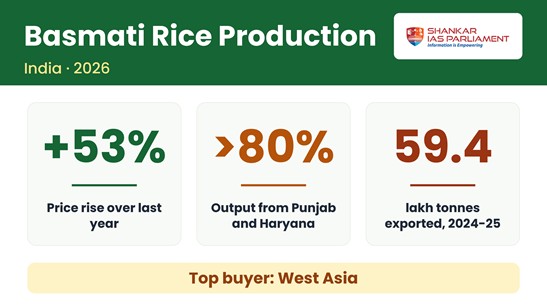
Basmati farmers in Punjab and Haryana are reaping a windfall in 2026, with prices up about 53% to Rs 42–45 per kg, despite a weak, El Niño-hit monsoon.
Production and Trend
- Trend – Exports, a proxy for output, rose from 39.4 lakh tonnes (2021-22) to 59.4 lakh tonnes (2024-25); Punjab’s basmati output grew from 26 to 32 lakh tonnes in 2024-25.
- Leading states – Punjab and Haryana give over 80% of output; western Uttar Pradesh is third. Uttarakhand, Himachal Pradesh, Jammu and Kashmir and Delhi complete the GI region.
- Ideal conditions – Alluvial loamy soils of the Indo-Gangetic plains, a warm humid growing season, cool nights at grain filling, and good-quality irrigation water.
Export Destinations
West Asia takes over half of basmati exports: Saudi Arabia, Iran, Iraq, the UAE and Yemen. The USA is also a major market. India meets 70–80% of global basmati demand; Pakistan supplies most of the rest.
Why Farmers Are Happy
- Gulf stockpiling – The US–Iran crisis and Hormuz closure led Gulf buyers to build reserves.
- Tight supply – Lower sowing and hailstorms trimmed output.
- Irrigated crop – Punjab and Haryana basmati is irrigated and needs less water than ordinary paddy, so the weak monsoon hurt less.
- Caution – No MSP exists, input costs are high and prices are volatile.
Union Government Support
- Price floor removed – The minimum export price ($1,200 in August 2023, cut to $950 that October) was scrapped in September 2024; APEDA monitors contracts.
- GI tag – Protects the authenticity of basmati from seven northern states.
- APEDA and BEDF – Work with states and agricultural universities on quality and export promotion.
Reference



