0.1259
7667766266
x

Palaeoloxodon namadicus in Narmada River

iasparliament Logo
November 19, 2026

Prelims: Current events of national and international importance | Environment

Why in News?

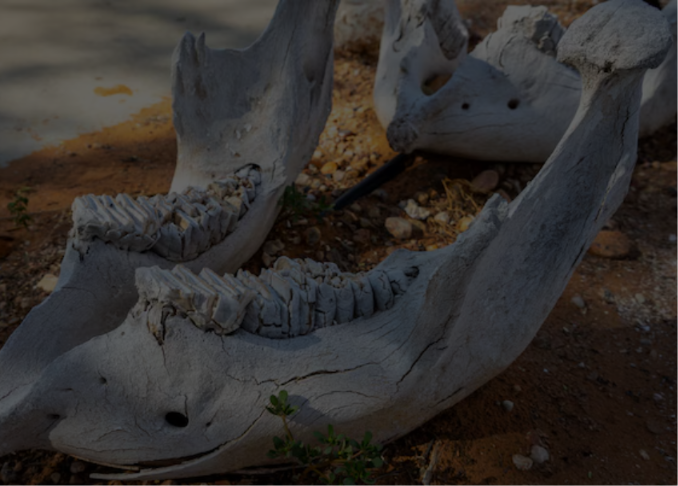
A fossilised prehistoric elephant jaw measuring approximately 75 cm in length and 25 cm in width has been discovered along the Narmada River.

  • Palaeoloxodon namadicus is an extinct giant straight-tusked elephant widely regarded as one of the largest land mammals ever to have lived.

Key Highlights

  • Anatomical Clues - The preserved jaw displays molars with distinct parallel enamel ridges and grooves.
  • Tooth row counts (six rows on one side and seven on the other) suggest the specimen may belong to a sub-adult or young individual rather than a fully grown adult.
  • Geological Context- Found in yellowish sediments linked to the Pleistocene epoch (around the Baneta formation), initial estimates place the fossil roughly 7 to 8 lakh years old, pending detailed lab examination and scientific dating.
  • Narmada Valley Palaeontology - The Narmada Basin is renowned for preserving Pleistocene megafauna and hominin remains most famously the 1982 Narmada hominin fossil from Hathnora.

Palaeoloxodon namadicus in Narmada River

Features

Detail

Scientific Name

Palaeoloxodon namadicus (Extinct Asian / Indian straight-tusked elephant)

Discovery Site

Patai Ghat (Deori tehsil, Raisen district, Madhya Pradesh) along the Narmada River

Epoch & Estimated Age

Pleistocene epoch (preliminary estimate ~7–8 lakh years for the jaw; species range Middle to Late Pleistocene)

Size & Megafauna Status

Among the largest proboscideans and land mammals known (estimated shoulder heights ~4.5–5 m and masses often cited around ~18–19+ tonnes)

Indian Distribution

Narmada and Godavari basins, post-Siwalik Pleistocene beds, Ganga valley, and parts of eastern/central India

Evolutionary Context

  • Believed to have descended from an ancestral African Palaeoloxodon recki lineage that dispersed into Eurasia, diverging from European Palaeoloxodon antiquus.
  • High-crowned (hypsodont) ridged molars were well adapted to processing abrasive grasses and tough Pleistocene vegetation.

Reference

Money Control | Prehistoric Elephant Jaw

There are no reviews yet. Be the first one to review.

ARCHIVES

sidetext