Nanoantenna
Researchers have developed a nanoantenna made of DNA and polyethylene glycol (PEG) to study changes in the structure of protein molecules.
- Working - The DNA-based nanoantenna works like a two-way radio that can both receive and transmit radio waves.
- It receives light in one wavelength.
- It transmits light in another colour depending upon the protein changes it senses, and this can be detected and studied.
- Characteristics - These fluorescent nanoantennae remained stable at higher temperatures.
- These nanoantenna offer a distinct advantage over the fluorescent dyes that are ubiquitously used in biotechnology.
- The latter ‘display a low affinity for proteins’, while these nanoantennae have an affinity to a specific region of a protein, which is contingent on the structure and chemistry of the protein.
- So, they are able to detect even the most minute of changes.
- The nanoantenna was able to pass muster even with respect to protein-protein interactions.
- This nanoantenna can be synthesised with different lengths and flexibilities to optimize their function.
- Significance - The antenna will help us understand how natural nanomachines function or malfunction, consequently leading to disease.
- Labs equipped with a conventional spectrofluorometer, could readily employ these nanoantenna[e] to study proteins.
- This study will in turn help us identify new drugs or to develop new nanotechnologies or nano-machines.
- The antenna performed well when used for examining enzyme kinetics i.e. the speed at which a reaction progresses in the presence of an enzyme.
Reference
- https://indianexpress.com/article/technology/science/dna-worlds-tiniest-antenna-7746091/
- https://www.siliconrepublic.com/innovation/worlds-smallest-nanoantenna-dna-nanotechnology
Bomb Cyclone
Major U.S. cities like New York bore the brunt of the blizzard, which their National Weather Service confirmed intensified into a “bomb cyclone”.
- Bomb cyclones are sometimes called ‘winter hurricanes,’ but they are a different type of storm.
- Bomb Cyclone is a large, intense midlatitude storm that has low pressure at its center, weather fronts and an array of associated weather, from blizzards to severe thunderstorms to heavy precipitation.
- Trigger - Bomb Cyclone is characterized by the explosive power of rapid drops in atmospheric pressure.
- It becomes a bomb when its central pressure decreases very quickly—by at least 24 millibars in 24 hours.
- Conditions - When a cyclone “bombs,” or undergoes bombogenesis, this means that it has access to the optimal ingredients for strengthening, such as
- High amounts of moisture,
- Winds blowing at 150 miles per hour in the upper atmosphere,
- Very warm sea surface temperatures just offshore (2-4 degrees Fahrenheit warmer than average), and
- A highly unstable atmosphere.
- Region - The U.S. Eastern Seaboard is one of the regions where bombogenesis is most common.
- That’s because storms in the midlatitudes (that includes the entire continental U.S.) draw their energy from large temperature contrasts.
Reference
- https://www.thehindu.com/news/international/bomb-cyclone-hits-eastern-us-triggers-transport-chaos-outages/article38350533.ece
- https://www.scientificamerican.com/article/what-is-a-bomb-cyclone/
Cotton Corporation of India
- Cotton Corporation of India (CCI) was established in 1970 under the administrative control of Ministry of Textiles, Government of India as a Public Sector Undertaking under the Companies Act 1956.
- It is engaged in diverse activities related to trade, procurement, and export of cotton.
- It is responsible for equitable distribution of cotton among the different constituents of the industry and aid imports of cotton.
- It undertakes price support operations, whenever the market prices of cotton fall below the Minimum Support Prices (MSP).
- Headquartered at CBD Belapur, Navi Mumbai, the CCI has more than 400 cotton procurement centres in all major cotton growing States.
- CCI Operations cover all the cotton growing states in the country:
- Punjab, Haryana and Rajasthan (Northern Zone),
- Gujarat, Maharashtra, Madhya Pradesh & Orissa (Central Zone),
- Andhra Pradesh, Telangana, Karnataka & Tamil Nadu (Southern Zone)
Reference
- https://www.thehindu.com/business/agri-business/cabinet-approves-price-support-to-cotton-corporation-of-india/article37417136.ece
- https://cotcorp.org.in/AboutUs.aspx
Digital Rupee
Union Finance Minister has announced the launch of the Digital Rupee 2022-2023 onwards.
- Digital Rupee is the Central Bank Digital Currency (CBDC) of India.
- This CBDC will be launched by the Reserve Bank of India.
- The underlying technology that will be powering the Digital Rupee will be Blockchain.
- To know more about the Central Bank Digital Currency, click here.
Reference
- https://indianexpress.com/article/explained/explained-what-is-the-digital-rupee-announced-by-sitharaman-in-budget-7751109/
- https://zeenews.india.com/economy/what-is-a-digital-rupee-and-how-it-will-fuel-india-s-growth-all-you-need-to-know-2432871.html
Greater Mekong Region
The World Wildlife Fund’s report on the greater Mekong region highlights the need to protect the rich biodiversity and habitats in the region.
- The Greater Mekong Region spans six countries - China, Myanmar, Lao PDR, Thailand, Cambodia and Vietnam
- This region is a biodiversity hotspot and home to tigers, Asian elephants, saola and thousands of other species.
- [Saola is an extremely rare animal also called the Asian unicorn or spindlehorn.]
- This region is the ‘rice bowl’ of Asia and at its heart lays the Mekong River.
Popa Langur
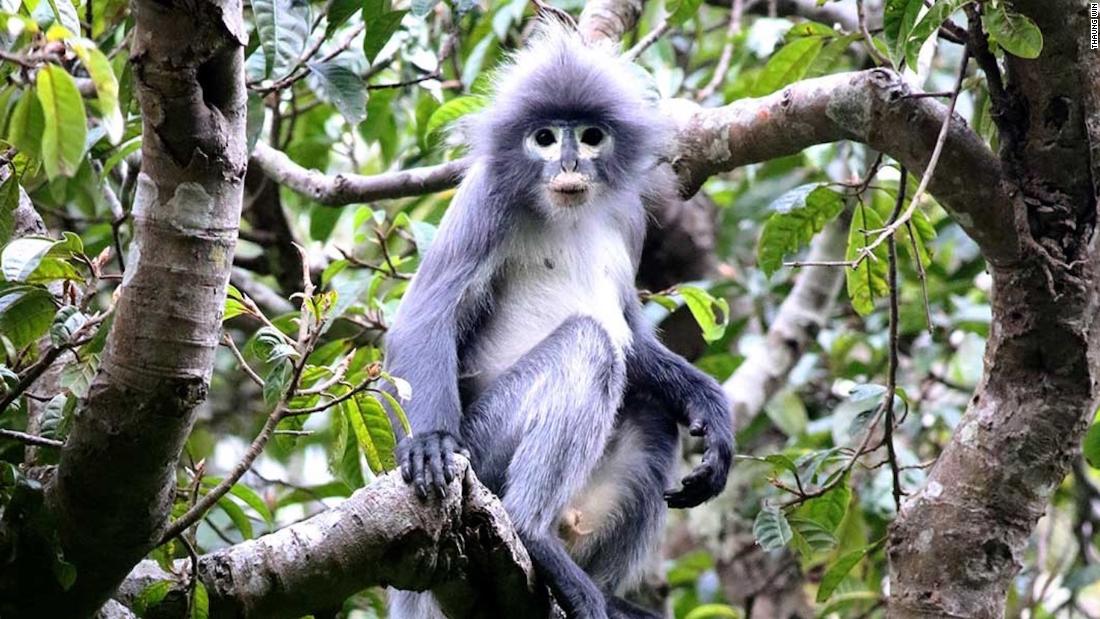
- This monkey was the only new mammal reported among the 224 new species listed in the WWF’s latest update on the greater Mekong region.
- It is called the Popa langur, for it lives on the steep hillsides of the extinct Mt. Popa volcano in Myanmar.
- It is also called Ghostly monkey, as it has ghostly white circles around its eyes.
- The monkey is a candidate to be listed as a critically endangered species on the Red List of the International Union for the Conservation of Nature, since only 200-250 are thought to survive in the wild.
Reference
- https://indianexpress.com/article/technology/science/ghostly-monkey-new-mekong-region-species-wwf-report-7742431/
- https://www.theguardian.com/world/2022/jan/26/ghostly-monkey-and-slug-snake-among-224-new-species-found-in-mekong-region
- https://www.worldwildlife.org/places/greater-mekong#:~:text=The%20vast%20region%20spans%20six,heart%20lays%20the%20Mekong%20River.



