Mains: GSIII – Infrastructure
Why in News?
MG Hector Tomahawk, described as India’s first mainstream plug-in hybrid SUV, offers 115+ km electric-only range, 40+ km/l efficiency, and 1,100+ km total range, highlighting the potential of PHEVs in India’s transition to cleaner mobility.
What are PHEVs?
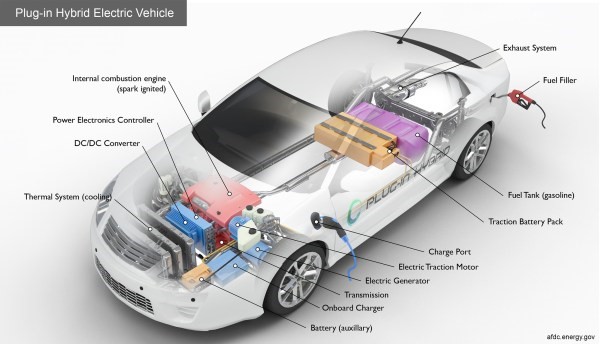
- A Plug-in Hybrid Electric Vehicle (PHEV) combines:
- An Internal Combustion Engine (ICE) using conventional fuel.
- An electric motor.
- A rechargeable battery that can be charged externally.
- Unlike conventional hybrids, PHEVs can be plugged into an external power source and generally have a larger battery and longer electric-only range.
- Thus, PHEVs combine the long-distance capability of petrol vehicles with the lower-emission operation of electric vehicles.
- EV Technologies – The broader electric-mobility ecosystem includes:
- BEVs – Battery Electric Vehicles: Run entirely on electricity stored in batteries.
- HEVs – Hybrid Electric Vehicles: Combine an ICE with an electric motor but cannot normally be externally charged.
- PHEVs – Plug-in Hybrid Electric Vehicles: Combine an ICE and electric motor with externally rechargeable batteries.
- FCEVs – Fuel Cell Electric Vehicles: Use hydrogen fuel cells to generate electricity for propulsion.
- These technologies form part of the broader category of low-emission vehicles.
|
HEV vs PHEV vs BEV
|
|
Feature
|
HEV
|
PHEV
|
BEV
|
|
Internal Combustion Engine
|
Yes
|
Yes
|
No
|
|
Electric Motor
|
Yes
|
Yes
|
Yes
|
|
External Charging
|
No
|
Yes
|
Yes
|
|
Electric-only Range
|
Limited
|
Higher
|
Entire driving range
|
|
Fuel Dependence
|
Higher
|
Lower
|
None
|
- Charging Infrastructure Not essential Useful/required for full benefit Essential
How does a PHEV Work?
- A PHEV can operate using:
- Electric power from its battery.
- Petrol engine for longer journeys.
- Both systems together, depending on driving conditions.
- The battery can be charged through an external power source and also through regenerative braking and the vehicle’s powertrain.
- A larger battery allows the vehicle to undertake a significant portion of daily travel using electricity alone.
What are the Advantages of PHEVs?
- Lower Fuel Consumption – Greater use of electric power can reduce petrol consumption and operating costs.
- Reduced Range Anxiety – The petrol engine provides additional range when charging infrastructure is unavailable.
- Lower Dependence on Charging Infrastructure – Unlike BEVs, PHEVs can continue operating using their ICE when charging facilities are limited.
- Transitional Technology – PHEVs can provide a gradual transition from conventional vehicles and hybrids towards fully electric vehicles.
- Potential Emission Reduction – Greater electric-mode usage can reduce tailpipe emissions compared with conventional ICE vehicles, particularly when the vehicle is regularly charged.
What are the Limitations of PHEVs?
- Higher Initial Cost – PHEVs are generally more expensive because they contain both an ICE system and a relatively large battery.
- Complex Engineering – They require two propulsion systems, increasing mechanical and electronic complexity.
- Dependence on Charging Behaviour – The environmental and fuel-saving benefits are greater when owners regularly charge and use the vehicle in electric mode.
- Weight and Packaging – Carrying both an engine and a larger battery increases vehicle weight and engineering complexity.
- Hybrid Technology as a Transition – Hybrid technology is increasingly viewed as a transitional pathway towards electrification.
- It improves fuel efficiency through electrification while reducing dependence on extensive charging infrastructure.
- However, hybrids remain dependent on fossil fuels and therefore are not equivalent to zero-emission BEVs.
- PHEVs occupy an intermediate position by combining external charging capability, electric driving and the flexibility of an ICE.
|
PHEV vs Flex-Fuel Vehicle (FFV)
|
- Flex-Fuel Vehicles (FFVs) use an internal combustion engine capable of running on varying blends of petrol and ethanol.
- PHEVs, on the other hand, combine an ICE with an electric motor and externally rechargeable battery.
- Thus, FFVs primarily promote fuel diversification and greater use of biofuels, while PHEVs promote electrification and reduced fossil-fuel consumption.
|
What could be done?
- Develop adequate and interoperable EV charging infrastructure.
- Promote cleaner electricity generation to maximise the environmental benefits of electrification.
- Encourage domestic manufacturing of batteries and power electronics.
- Establish robust standards for battery recycling and end-of-life management.
- Encourage consumer awareness regarding regular charging and efficient use of PHEVs.
- Adopt a technology-neutral approach while gradually increasing the share of zero-emission vehicles.
What lies ahead?
- PHEVs can serve as a bridge between conventional internal combustion vehicles and fully electric mobility.
- Their ability to combine electric driving with the flexibility of an ICE can address concerns such as range anxiety and inadequate charging infrastructure.
- However, their long-term effectiveness depends on regular charging, cleaner electricity and a gradual expansion of zero-emission mobility.
Reference
The Indian express| Plug-in Hybrid Electric Vehicles (PHEVs)



