What is the issue?
Questions are being raised on the sustainability of paddy-wheat cultivation, especially in Punjab.
What is the extent of paddy-wheat monoculture in Punjab?
Monoculture refers to the practice of cultivation of a single crop at a given area
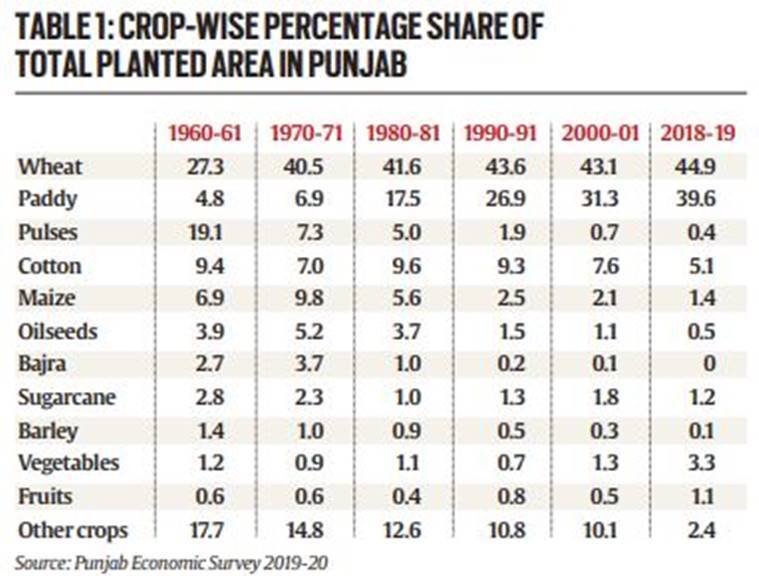
- Paddy-wheat cultivation adds up to 84.6% of the total area planted to all crops in Punjab in 2018-19.
- The real acreage share increase has taken place in paddy from below 7% in 1970-71 to almost 40% in 2018-19.
- The above gains have been at the expense of other crops such as pulses ,maize, bajra, oilseeds, cotton, groundnut ,sugarcane ,etc.
- The only crops that have registered some acreage expansions are vegetables (especially potato and pea) and fruits (kinnow).
What are the problems of monoculture?
- Increase in vulnerability to pest and disease attacks
- No nitrogen fixation unlike pulses and legumes
- Absence of crop rotation leads to depletion of soil nutrients
- Growing dependence on chemical fertilizers and pesticides
- Decline in water table since paddy is a water-guzzling crop where more than 30 irrigations are needed (5 irrigations for wheat)
- Punjab’s groundwater table has been declining by 0.5 meters per annum on an average
- Soil salinity and waterlogging due to excess surface irrigation
- Nutrition insecurity because of lack of crop diversification
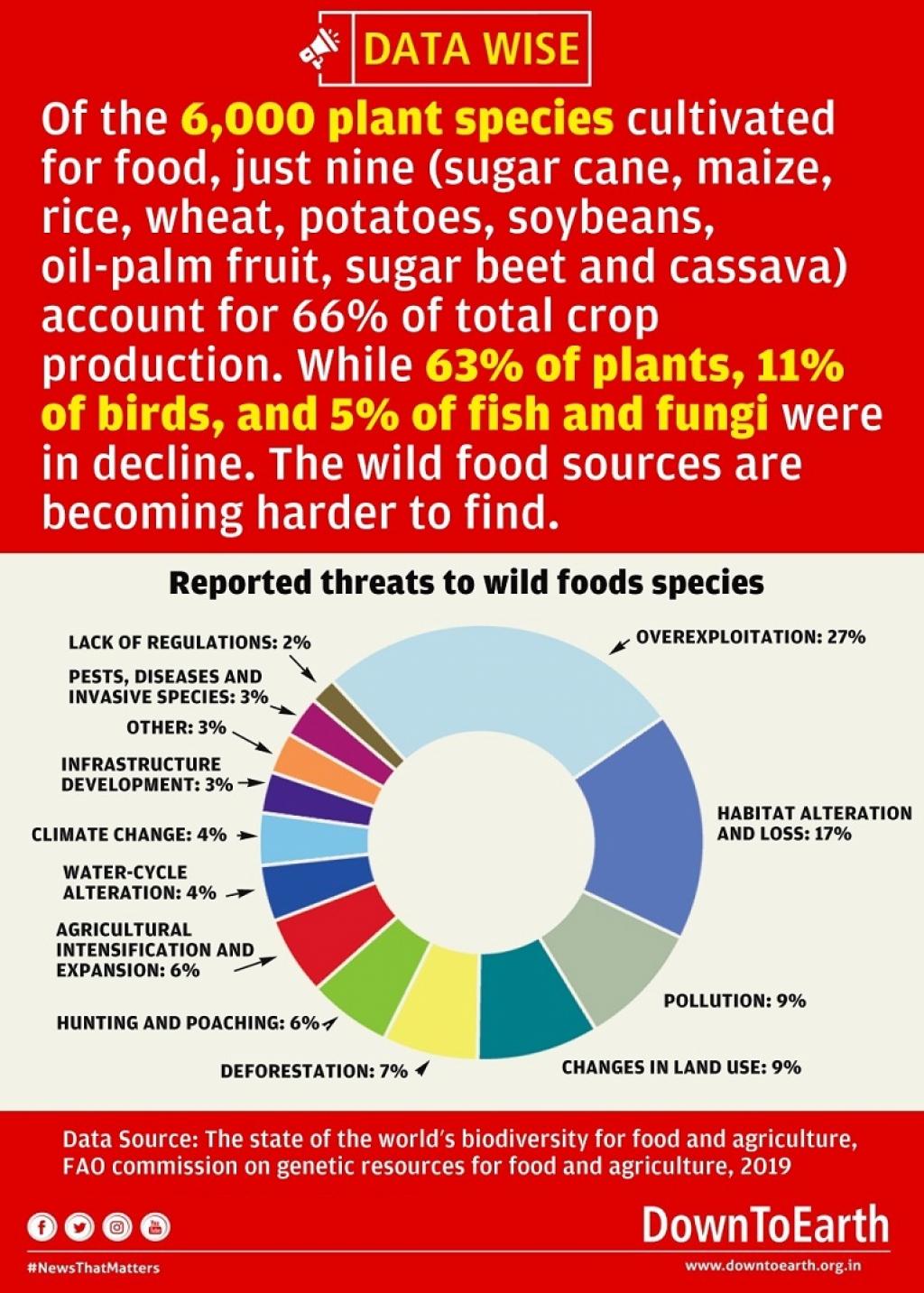
- Decrease in biodiversity
- Economically riskier for farmers
What measures have been taken so far?
- Punjab Preservation of Subsoil Water Act in 2009- bars any nursery-sowing and transplanting of paddy before May 15 and June 15, respectively
- But it pushes harvesting to October-end leaving little time for farmers contributing to stubble burning
- Minimum Support Prices (MSP) given to various crops incentivises crop diversification
How can the issues of monoculture be addressed?
- Limit Punjab’s a non-basmati paddy area and ensure planting of only shorter-duration varieties
- Direct seeding of paddy can reduce the usage of inputs
- Water savings can be induced through metering of electricity
- Assured government price/per-acre incentive support must be provided for crops other than paddy and wheat
- Crop diversification, including rotation and intercropping and the use of diverse forage plants in pastureland must be promoted
- Prospective private buyers should be part of the extension effort
- But change is possible only if the State works closely with the Union Government
Source: The Indian Express, Businessline



