Prelims: Current events of national and international importance | Species
Why in News?
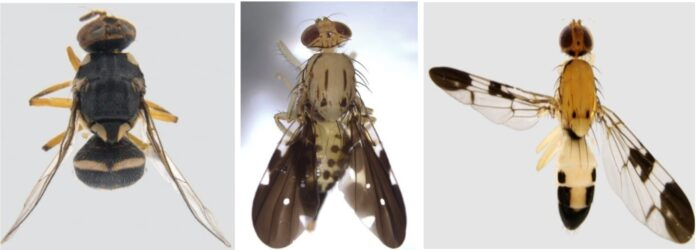
A three‑year survey in Ri‑Bhoi district documented 37 fruit fly species, including two species new to science and three species recorded for the first time in the Indian subcontinent.
Key Findings
- A total of more than 35,000 fruit fly specimens were collected.
- Thirty-seven fruit fly species were documented across forest, orchard, and vegetable ecosystems.
- Bactrocera dorsalis was identified as the dominant pest species.
Taxonomic Discoveries
- Two species newly described to Science
- Zeugodacus umiam, associated with GI-tagged Khasi mandarin.
- Zeugodacus nasivittatus, associated with sweet orange and Khasi mandarin.
- Three new records for the Indian Subcontinent
- Bactrocera abbreviate.
- ErectoPhorelliosoma.
- Hilaratumiosoma hilaratum.
Ecological Insights
- Forests exhibited the highest diversity and abundance of fruit flies, serving as reservoirs for rare and specialized species.
- Habitat fragmentation poses a significant threat to the diversity of lesser-known insect species.
- Fruit flies present a significant pest risk, causing severe crop losses and leading to export restrictions due to quarantine regulations.
- High‑Risk Zone – Meghalaya’s climate, host diversity, border proximity favour pests/invasives.
- It provides the first comprehensive dataset on fruit fly diversity, host associations, and seasonal patterns in the region, informing integrated pest management and conservation strategies.
Significance
- It reinforces Meghalaya’s status as a biodiversity hotspot.
- It demonstrates the value of long-term ecological surveys in Northeast India.
Reference
Hub News | Fruit Fly Hotspot



