Mains: GS III – Science and Technology| Disaster Management
Why in News?
Following a few weeks of break, the Cell Broadcast System (CBS) has been resumed in India, according to Centre for Development of Telematics (C-DOT)
What is CBS?
- CBS – The Cell Broadcast System (CBS) is a mobile technology that simultaneously sends short emergency text messages to all compatible phones within a specific geographic area.
- Advantages – Unlike traditional SMS, which sends messages to individual phone numbers one by one, CBS broadcasts messages from cell towers to every device in range like a radio signal.
- It can send warnings to large numbers of mobile users within seconds, across a district, state, or the whole country.
- It is widely used for public warning systems during disasters like earthquakes, floods, and tsunamis.
- For rapidly developing disasters such as lightning, earthquakes, gas leaks, and tsunamis, the system can automatically issue an alert if human confirmation does not occur within about 10 seconds.
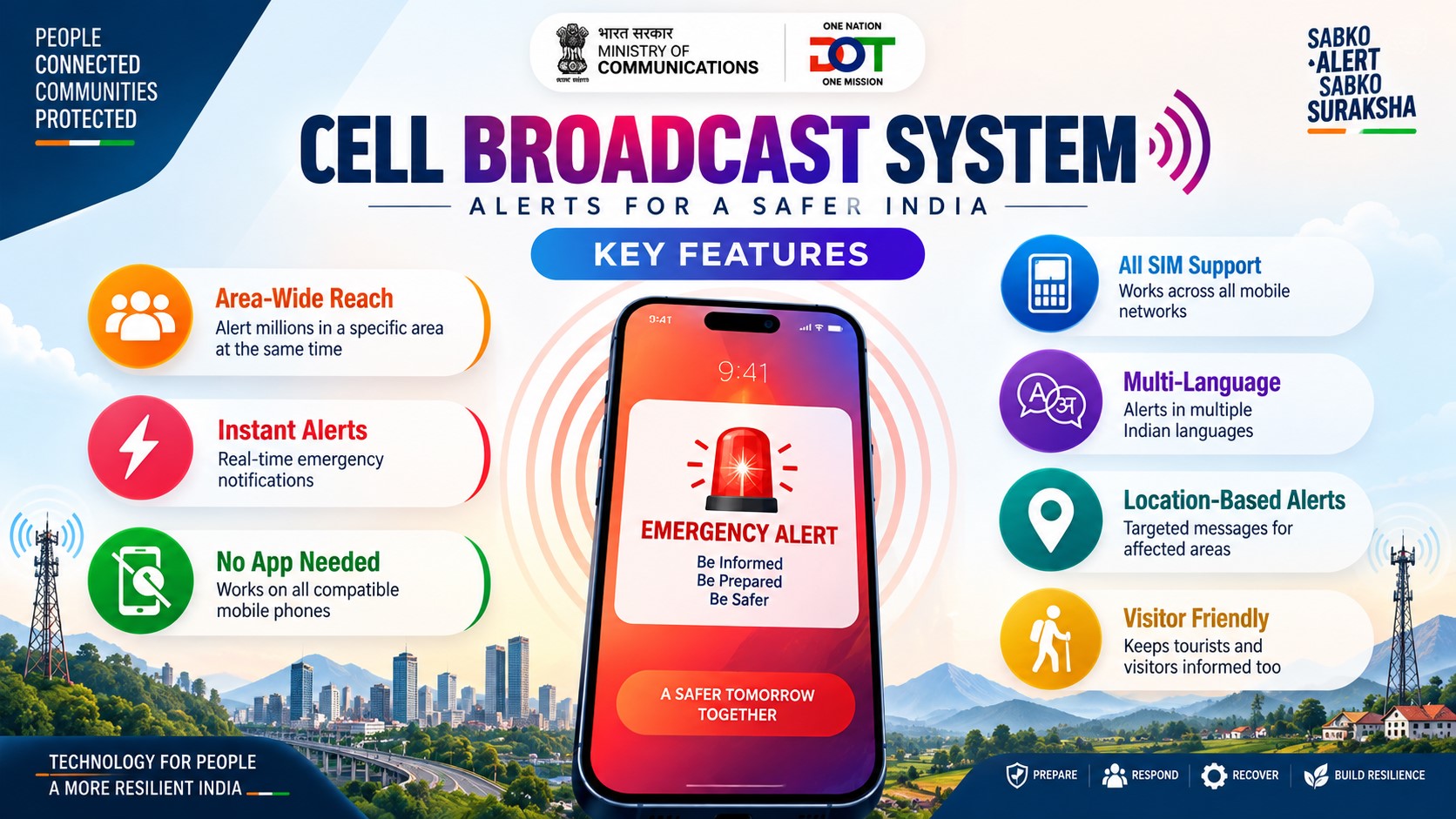
What are the Key Features of CBS?
- Geo-Targeted – Reaches only the devices connected to specific cell towers in the danger zone.
- No Internet or Apps Needed – Functions entirely through cellular networks (2G through 5G) without requiring data, sign-ups, or phone numbers.
- Immune to Congestion – Works instantly even when cellular networks are jammed with heavy traffic during an emergency.
- Unmissable Alerts – Overrides silent and Do Not Disturb modes with a loud warning siren, vibration, and a pop-up text message.
- Privacy-Friendly – Does not track personal user data or require knowing recipient phone numbers.
How It Works and Helps?
- Instant Delivery – It broadcasts messages simultaneously through specific cell towers to every active phone in range, avoiding the queuing delays of traditional SMS.
- Geo-Targeted Alerts – Authorities can pinpoint warnings down to a single cell tower or cluster, protecting people only in the affected area (such as zones facing a flash flood, cyclone, or earthquake).
- Bypasses Network Congestion – Unlike calls or standard texts, emergency broadcasts work smoothly even when mobile networks are overloaded during a crisis.
- High Visibility and Sound – Alerts override silent or Do Not Disturb (DND) modes, flashing a priority pop-up notification alongside a loud, distinctive siren.
- No Sign-Up Needed – Users do not need to download an app, create an account, or share personal phone numbers and location data. It works for local residents and visitors alike as long as the phone is turned on.
- Multilingual Support – Warnings are translated into regional and local languages so that all communities can understand safety instructions immediately.
What are the Issue and Challenges with CBS?
- Errant and False Alarms – Unintended test messages or misconfigured alerts (such as test broadcasts sent late at night or to high-profile officials) can cause panic and confusion.
- Temporary Suspensions – Operational glitches have forced authorities like the National Disaster Management Authority (NDMA) to temporarily halt services for technical and procedural reviews.
- Disruptive Overrides – Because CBS messages bypass silent and Do Not Disturb modes with a loud siren, accidental triggers can severely disturb users at inappropriate times.
- Device and Network Variability – While standardized, older or unconfigured mobile devices in a targeted zone may occasionally handle or display broadcast signals inconsistently depending on local tower configurations.
Reference
The Hindu| CBS



