Mains: GS-II – International relations | Bilateral, regional and global groupings and agreements involving India and/or affecting India’s interests
Why in News?
Delhi will host the 2nd India-Arab Foreign Ministers’ Meeting on January 30–31, 2026, bringing together all 22 Arab League members in a major diplomatic outreach amid regional conflicts and global shifts.
What is the Arab league?
- Arab League – It is a regional intergovernmental organisation comprising 22 member states in the Middle East and North Africa.
- It is officially known as the League of Arab States (LAS).
- Established in – Cairo, Egypt on 22 March 1945
- Goal – To foster political, economic, and cultural cooperation while safeguarding the sovereignty of its members.
- Headquarters – Cairo, Egypt.
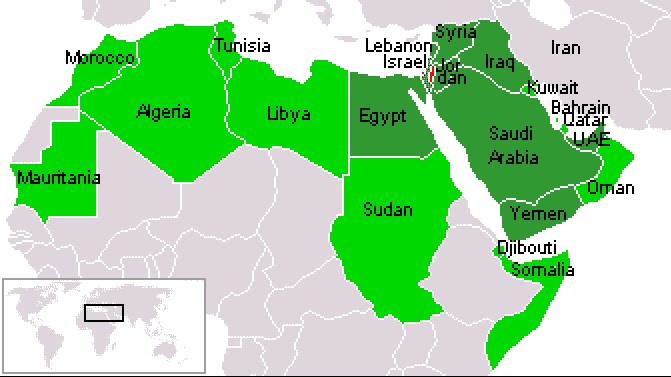
- Structure – Governed by the Council, where each member has one vote, decisions are binding only on those states that vote for them.
- 7 founding members – Egypt, Iraq, Jordan, Lebanon, Saudi Arabia, Syria, and Yemen.
- Other Members – Algeria, Bahrain, Comoros, Djibouti, Egypt, Iraq, Jordan, Kuwait, Lebanon, Libya, Mauritania, Morocco, Oman, Palestine, Qatar, Saudi Arabia, Somalia, Sudan, Syria, Tunisia, UAE, and Yemen.
- Syria's Return – After a 12-year suspension due to the civil war, Syria was readmitted on 7 May 2023.
- Observers – Several nations hold observer status, including India, Brazil, Eritrea, Venezuela, Armenia, Chad, and Greece.
What about India- Arab League engagement?
- Historical roots – India’s relations with Arab League countries go back centuries through trade and cultural exchanges.
- Formalisation of Ties – The engagement with the LAS was formalised in March 2002 through an MoU, which institutionalising the process of dialogue.
- Aim – To strengthen friendship and cooperation between India and the Arab States, with provisions for annual meetings between India’s External Affairs Minister and the Arab League’s Secretary General.
- Arab-India Cooperation Forum (AICF) – Established in December 2008, with the first meeting in January 2016 at Manama, Bahrain.
- Permanent Representation – In December 2010, India’s Ambassador to Egypt was designated as Permanent Representative to the Arab League.
- Economic Engagement Platforms – India-LAS Partnership and Investment Summit, a biennial flagship economic event, focus on trade, investment, and infrastructure cooperation.
- New Initiative (2026) – During the current ministerial visit, the India–Arab Countries Chambers of Commerce, Industry and Agriculture will be inaugurated to boost collaboration in business, agriculture, and industry.
What are the Key pillars of engagement?
- Role in Multilateral Forums – India has also strongly rallied for the region in various multilateral forums such as BRICS and SCO and positions itself as a bridge between regions in global platforms.
- Convergence of strategic vision – India’s long-term vision aligns closely with those of Arab nations, Saudi Vision 2030, UAE Centennial 2071, Kuwait Vision 2035, and Oman Vision 2040 — alongside India’s Viksit Bharat 2047.
- Notably, India is recognized as one of the eight strategic partners in Saudi Vision 2030.
- Trade and investments
- Bilateral trade – With most of India’s external trade flowing through the Suez Canal, the Red Sea, and the Gulf of Aden, its economic engagement with the Arab League has become vital — bilateral trade now exceeds $240 billion.
- CEPA – India has signed the Comprehensive Economic Partnership Agreement (CEPA) with the UAE and Oman; UAE trade alone is $115B, aiming for $200B by 2030.
- Investment – The cumulative FDI in India from the region has crossed $2.5 billion.
- Major commitments made by UAE ($75 billion), Saudi Arabia ($100 billion) and Qatar ($10 billion), mostly in the fast-growing infrastructure sector.
- Connectivity – The India-Middle East-Europe Economic Corridor was launched at the G20 Leaders’ Summit in New Delhi in 2023, to ensure speed, efficiency and collective prosperity.
- Digital & Financial Cooperation
- The RuPay card was launched in the UAE in August 2019; rupee is being accepted as legal currency at Dubai airports since 2023.
- India and the UAE have operationalised the rupee-dirham settlement system.
- UPI – India’s Unified Payments Interface (UPI) is already accepted for financial transactions in Bahrain, Saudi Arabia, Qatar, and the UAE and is likely to grow further in the LAS countries soon.
- Energy Security
- Energy Dependence – The region caters to about 60% of India’s crude oil imports, 70% of natural gas, and more than 50% of fertilizers and related products.
- Top crude oil exporters – Iraq, Saudi Arabia, and the UAE.
- Strategic Oil Reserves – The UAE has signed an agreement with India to store strategic oil reserves in the country, operationalised with an initial investment of $400 million.
- LNG deals – India signed a $78 billion Liquified Natural Gas (LNG) deal with Qatar in 2024 for another 20 years, in 2023, Indian Oil signed LNG contract with ADNOC (Abu Dhabi National Oil Company) for a period of 14 years.
- Security & Defence Cooperation
- Defence partnership – India has signed defence cooperation agreements with several Arab League countries including Oman, UAE, Saudi Arabia, Egypt, and Qatar.
- Maritime Security Initiatives – India’s SAGAR (Security and Growth for All in the Region) framework promotes joint collaboration in the Indian Ocean Region, particularly against sea piracy and maritime security threats.
- Strategic partnerships – India’s strategic ties with the Arab region began with Oman in 2008 and later expanded to the UAE (2015), Saudi Arabia (2019), Egypt (2023), and Qatar (2025), showing rapid growth in strategic convergence.
- Strategic Advantage – India’s agreement with Oman over the Duqm port offers a critical advantage to the Indian Navy in its operations in the region, also allow India to watch on the activity of China’s Navy activities.
- Regional Security Concerns – The threat of war in Iran and the future of the Gaza peace process are common areas of security concerns in the region.
- Counter-Terrorism Cooperation – Most of the LAS countries are in total sync in India’s fight against cross-border terror and have condemned the Uri, Pathankot, Pulwama, and Pahalgam terror attacks in India.
- Defence Production & Exports – LAS countries are showing strong interest in joint defence production and Indian exports like the Tejas fighter jet, BrahMos and Aakash missiles, and artillery guns.
- Emerging Frontiers of Cooperation – Cyber, space and drone are future areas of cooperation.
What lies ahead?
- As India grows into a major economic, political, and military power, the Arab League region forms a critical part of its global matrix.
- For LAS countries too, India is a strong and reliable partner.
- The countries of the two regions may be separated by the Arabian Sea but are joined by history, destiny, trust, and growing brotherhood.
- The meeting of the foreign ministers of LAS in Delhi offers the perfect opportunity to forge closer ties and seek new avenues of engagement.
Reference
The Hindu | India-Arab League: Bridging Cultures, Creating Opportunities



