Prelims: Current events of National and international importance| Environment
Why in News?
Punjab has surpassed its entire 2025 stubble-burning total during the 2026 season, recording 6,718 incidents (rising to 6,874 as of November 19, 2026) compared to 5,114 cases in all of 2025.
- 2026 Season Tally – 6,718 incidents reported in Punjab Pollution Control Board data (1,604 higher than the full 2025 season), with later updates reaching 6,874 as of November 19, 2026.
- 2025 Season Tally– 5,114 incidents across the entire season.
- Regulatory Action– The Commission for Air Quality Management (CAQM) issued notices to 12 officials following the surge past 2025 levels
Causes of Stubble Burning
- Short planting window– Farmers often have only 10 to 20 days between harvesting paddy (rice) and sowing the next crop, such as wheat. Burning is a fast, low-effort way to clear fields on time.
- Mechanized harvesting– Combine harvesters leave behind tall, tough stalks that are difficult and slow to clear manually or plough under.
- High cost and limited access to machinery– Equipment like Happy Seeders, mulchers, and balers can be expensive or hard to rent during peak harvest weeks.
- Low economic value of residue– Paddy straw is often less suitable as cattle fodder than wheat straw and has limited local demand or transport infrastructure for alternative uses.
- Cropping patterns and labor shortages– Intensive rice–wheat cycles and seasonal farm labor shortages increase pressure to clear land quickly.
Effects of Stubble Burning
- Air pollution and smog– Burning releases fine particulate matter (PM2.5 and PM10), carbon monoxide, and other pollutants.
- When combined with cool weather and trapped air, this creates dense regional smog and poor visibility.
- Human health impacts– Smoke irritates the eyes, throat, and airways, and worsens respiratory conditions like asthma and bronchitis.
- Fine particles can also strain the cardiovascular system, with children, older adults, and people with existing illnesses facing higher risks.
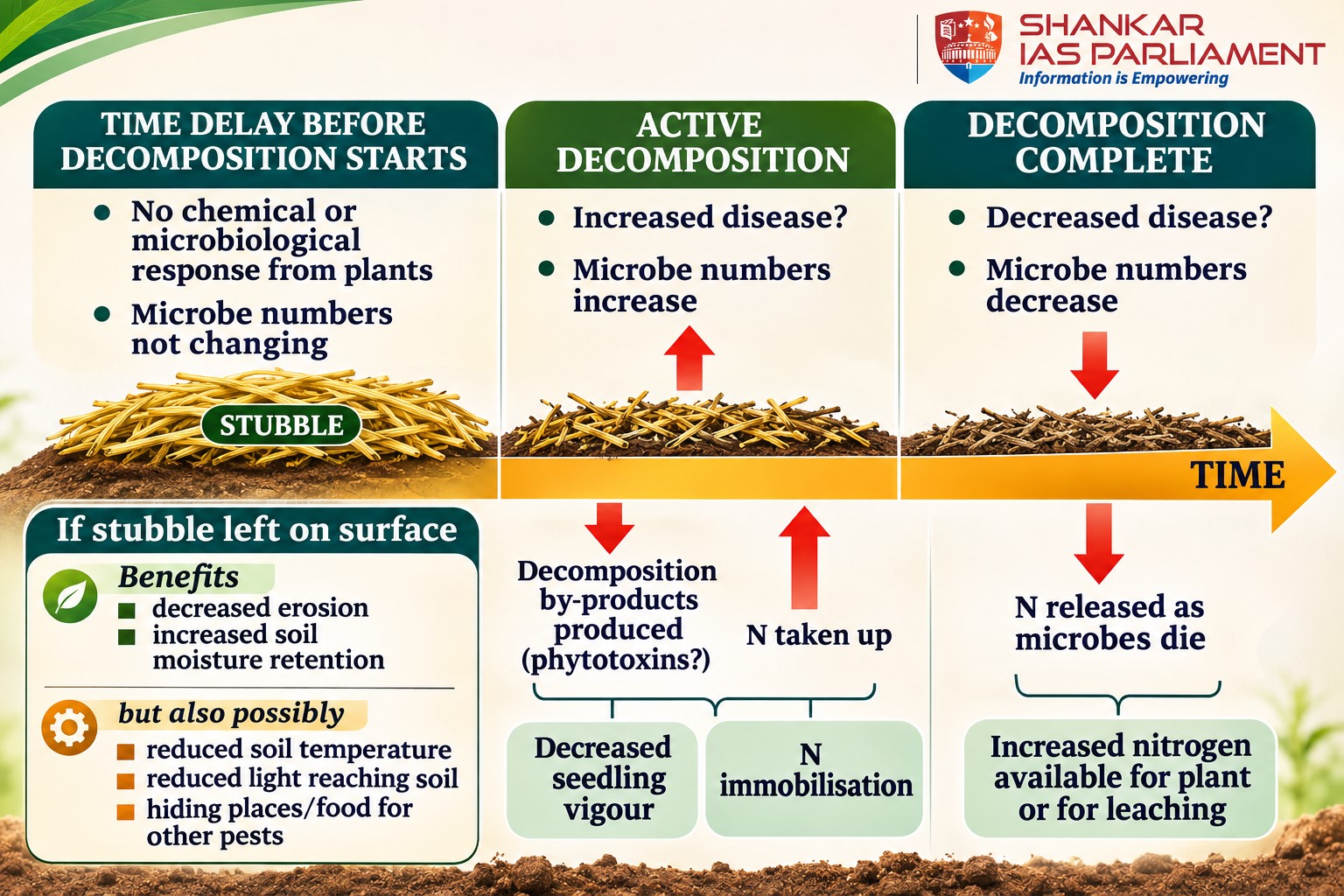
- Soil degradation– High heat kills beneficial soil microbes and burns away organic matter and nutrients such as nitrogen, carbon, phosphorus, and potassium, reducing long-term soil fertility.
- Climate and economic impacts– Fires emit greenhouse gases—including carbon dioxide, methane, and nitrous oxide—that contribute to climate change.
- Heavy smoke also disrupts daily life, lowers productivity, and raises healthcare costs.
Reference
DD News| Stubble Burning



