Prelims: Current events of National and International Importance| Environment
Why in News?
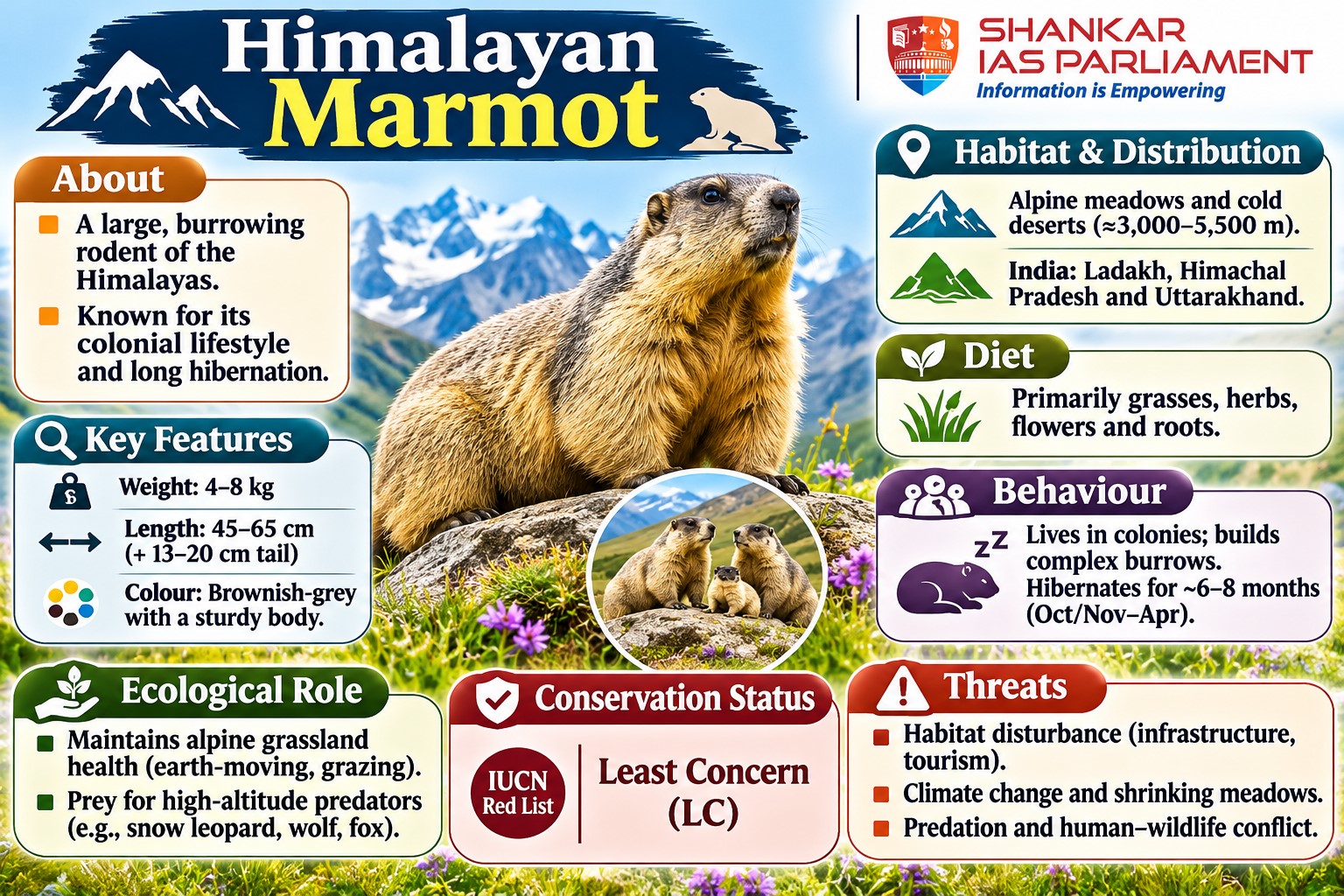
Researchers from the Birbal Sahni Institute of Palaeosciences (BSIP) found that Himalayan marmot (Marmota himalayana) droppings preserve biological and chemical clues that track climate change and vegetation shifts in the higher Himalaya.
How Droppings Record Climate Clues
- Pollen grains– Show which alpine-steppe plants marmots eat and reflect surrounding vegetation, including groups like Artemisia, Asteroideae, Caryophyllaceae, Poaceae, Cyperaceae, and Chenopodiaceae.
- Fungal spores and elemental signatures– Help trace environmental shifts alongside dietary plants, creating a modern reference for past ecological reconstruction.
- Altitude and habitat shifts– Changes in marmot habitats can signal shifts in elevation as temperature, precipitation, and snow cover change.
Why It Matters
- Alternative to scarce sediments– Remote, arid high-altitude areas often lack conventional archives like lake sediments, peat, or thick soil.
- Wildlife conservation– Marmots shape alpine habitats and serve as key prey for snow leopards, so tracking their habitat helps guide broader mountain conservation.
Reference
PIB| Himalayan Marmot & climate change



