|
One Liners 31-12-2025
|
|
Geography
|
|
Tsunami-Ready Villages in the Indian Ocean Region
India is projected to have over 100 tsunami-ready villages in the Indian Ocean region.
- Key facts -
- India will be the 1st country to achieve this distinction.
- Currently, 24 coastal villages across six districts have received this designation.
- Odisha is in the process of adding 72 more villages, while Kerala will add nine villages by March 2026.
- Certification Criteria (UNESCO-IOC)
- High levels of tsunami awareness and preparedness.
- Regularly updated evacuation maps.
- Continuous 24-hour tsunami warning systems.
- Active participation in mock tsunami drills.
- Implementation
- Community-based initiative.
- The program involves partnerships with states and union territories, including Gujarat, Kerala, Andhra Pradesh, and Andaman and Nicobar Islands.
- Coordinated by the Indian National Centre for Ocean Information Services (INCOIS).
- INCOIS operates the Indian Tsunami Early Warning Centre (ITEWC).
- Significance
- Disaster risk reduction in vulnerable regions.
- It also strengthens community resilience.
- UNESCO-IOC partnership on tsunami safety.
|
|
Social Issues
|
|
Child Marriage
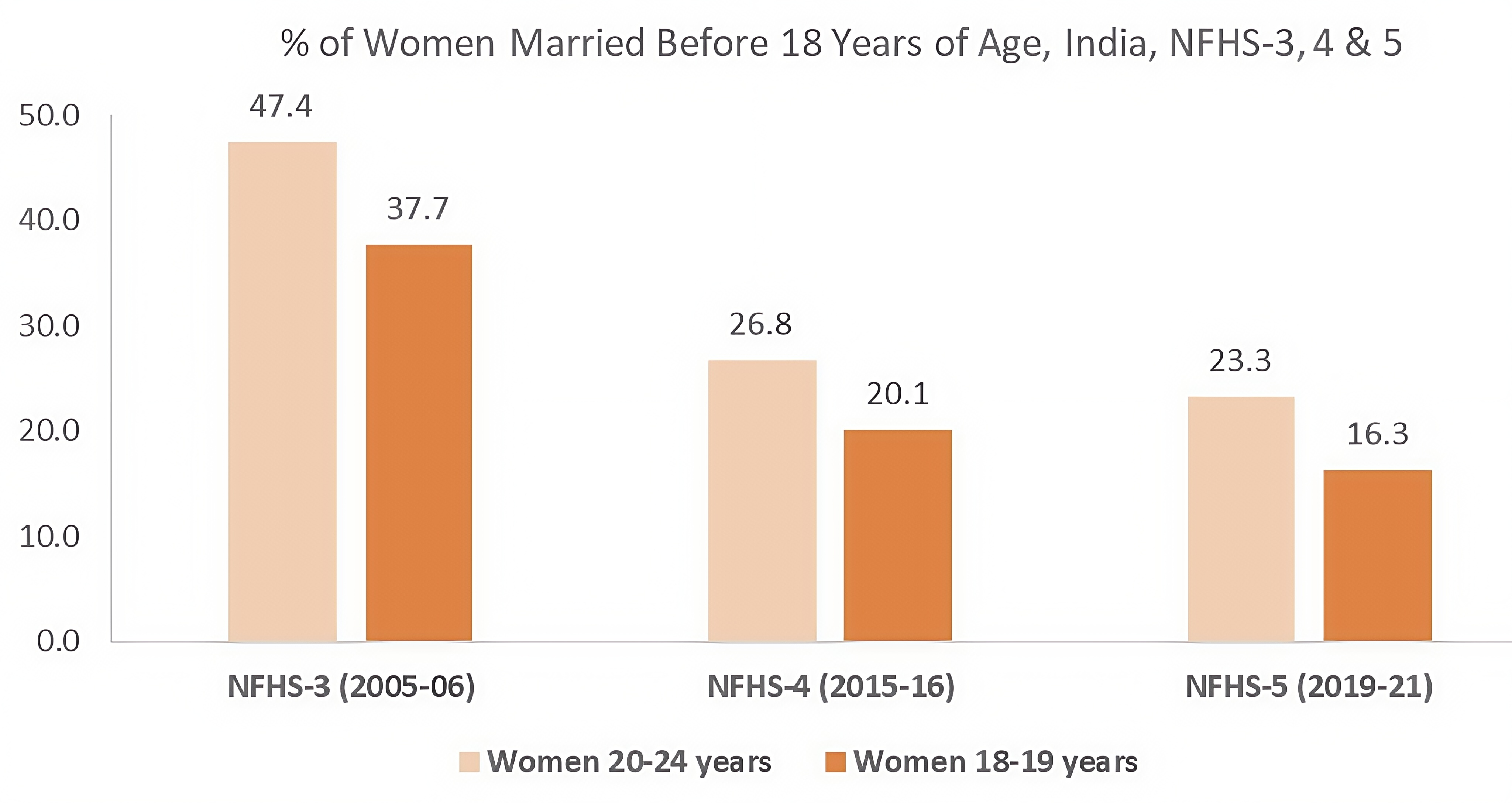
- NFHS data – The prevalence of child marriage declined from 47.4% in 2005-06 to 23.3% in 2019-21.
- Regional Disparities in Progress –
- States such as West Bengal, Bihar, Tripura, Jharkhand, Andhra Pradesh, Assam, Telangana, Madhya Pradesh, and Rajasthan continue to report high rates of child marriage.
- Socioeconomic Correlates –
- There is a direct association between child marriage and socioeconomic factors.
- 40 % of girls from the lowest income quintile and 48% of girls with no formal education were married before the age of 18.
|
|
Polity & Governance
|
|
Achievements of Ministry of Development of North-East Region
- Key Achievements in 2025
- Enhancement of the logistics sector in the North Eastern Region (NER).
- Establishment of the North East Science and Technology Cluster (NEST).
- Promotion of cluster-based growth in agarwood and bamboo production.
- Registration of 150 new Geographical Indications (GI) products in the North Eastern Region.
- Organization of the Rising Northeast Investors Summit.
- Implementation of the Ashtalakshmi Darshan Youth Exchange Programme.
- Launch of the Bamboo Value Chain Development Program.
|
|
International Relations and Issues
|
|
Kimberley Process
- It is a tripartite initiative involving governments, the international diamond industry and civil society.
- Kimberley Process Certification Scheme (KPCS) which was set up by a UN resolution came into effect from 1st January 2003.
- Participants – Currently, it has 60 participants representing 80 countries with the European Union and its Member States counting as a single participant.
- Coverage – More than 99% of global rough diamond trade.
- It is the most comprehensive international mechanism in this sector.
- Objective – To prevent the trade in “conflict diamonds”—rough diamonds used by rebel groups or their allies to finance conflicts that undermine legitimate governments, as defined in United Nations Security Council resolutions.
|
|
Chairpersonship of the Kimberley Process (KP)
Kimberley Process (KP) Plenary has selected India to be its chairperson from January 1, 2026.
- 3rd time – India will chair the Kimberly Process.
- Nodal agency for KP in India – Gem & Jewellery Export Promotion Council (GJEPC).
- Significance – It reflects global trust in the government’s commitment to fostering integrity and transparency in international trade.
|
|
Economy
|
|
Analysis of India's economic performance in 2025
“Rocky" year for the Indian economy.
- Positive Developments
- Budget 2025 introduced changes to income tax rates and slabs, aiming to reduce the tax burden and increase disposable income.
- The GST Council abolished the 12% and 28% tax slabs, reallocating items to the 5% and 18% categories.
- Four new labour codes were implemented to enhance social security for workers.
- Trade Agreements
- The India-UK Comprehensive Economic and Trade Agreement (CETAA) was signed in July 2025.
- The India-EFTA Trade and Economic Partnership Agreement (TEPA) became effective in October 2025, with EFTA committing to invest $100 billion.
- The India-Oman Comprehensive Economic Partnership Agreement (CEPA) was signed in December 2025.
- Negotiations for the India-New Zealand Free Trade Agreement (FTA) concluded in December 2025, with New Zealand agreeing to invest $20 billion.
- The trade agreement with the European Union is in its final stages of negotiation.
- Challenges
- US Tariffs – Donald Trump imposed 25%, then additional 25% tariffs (total50%) on India, especially for Russian oil imports.
- Impact – Hurt labour-intensive sectors, stalled trade talks.
- Growth – RBI projects 7.3% for 2025-26, implying a slowdown in H2.
- Future outlook for 2026 –
- It remains mixed, with ongoing tariff challenges.
- However, key macroeconomic indicators such as GDP, IIP, and CPI are scheduled for updates with new base years.
|
|
Security
|
|
INSV KAUNDINYA
INSV Kaundinya embarks on her maiden voyage.
- It is an indigenously built traditional stitched sailing vessel.
- Voyage from – Porbandar, Gujarat to Muscat.
- Significance –
- It retraces ancient maritime routes that once connected the western coast of India with Oman.
- It facilitates trade, cultural exchange and sustained civilisational interactions across the Indian Ocean.
|
|
Science
|
|
Traditional Method for Antivenom Production
- Traditional Method – Horse-Derived Antivenom.
- Production – Venom is injected into horses, after which antibodies are extracted and processed to produce antivenom.
- Limitations –
- This method demonstrates limited efficacy against more than 60 venomous species.
- Efficacy is further reduced by geographical variation in venom composition.
- The use of horse antibodies can result in adverse side effects.
|
|
Advancements in Antivenom Production
- Recent Approach – Danish Laboratory Innovations
- Researchers utilized alpacas and llamas, members of the camelid family, for their unique nanobodies.
- Nanobodies are characterized by their small size, stability, and high efficacy.
- These nanobodies are genetically engineered into bacteriophages and subsequently mass-produced in bacterial systems.
- This approach demonstrates broad-spectrum efficacy, as evidenced by effectiveness against 17 of 18 African snake venoms in murine models.
- Indian Research Initiatives -
- The National Research Centre on Camels in Bikaner demonstrated that camel-derived antivenom is effective against Sochurek’s saw-scaled viper.
|
|
Life Cycle of Invasive Mosquito Species
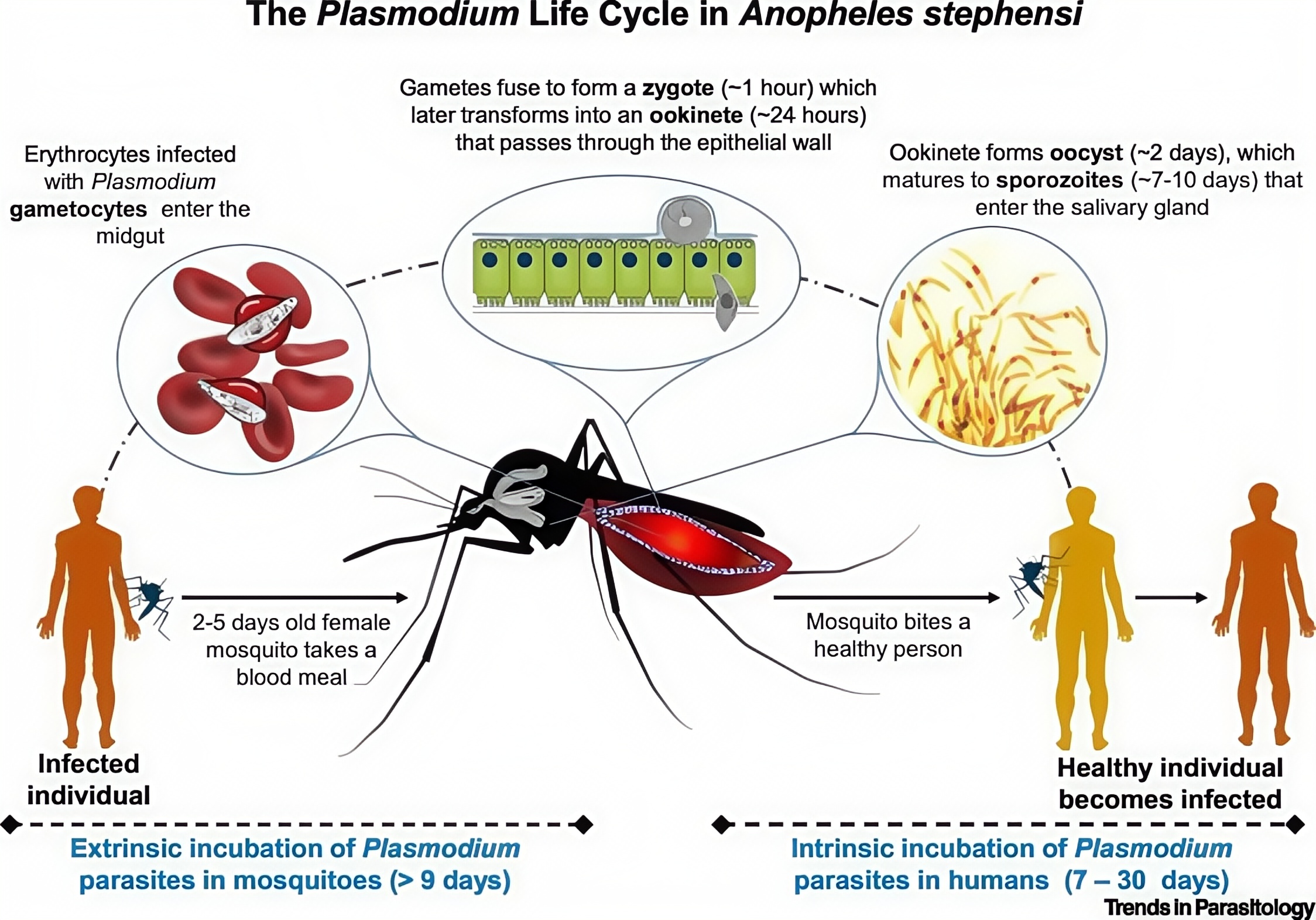
India’s plan to eliminate malaria by 2030 is at risk because of the invasive mosquito species Anopheles stephensi.
|