|
One Liners 29-10-2026
|
|
Geography
|
|
Highest heatwave exposure for infants, older adults
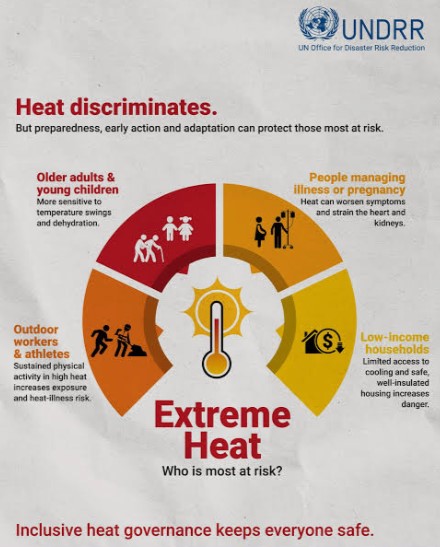
India ranks among the top countries globally for heatwave exposure affecting infants and older adults, alongside China, the United States, and Russia, according to the tenth indicator report of the Lancet Countdown on Health and Climate Change.
Key Findings from the Report
- High Exposure Nations– India shares the highest tiers of thermal stress vulnerability for young children and the elderly with China, the U.S., and Russia.
- Global 2025 Statistics–
- Older adults globally experienced 10.8 billion person-days of heatwaves in 2025.
-
- Infants globally experienced 1.1 billion person-days of heatwaves in 2025.
-
- When normalized by population, older adults faced an average of 12.8 heatwave days per person, while infants faced 8.7 heatwave days per person.
- Local Impact in India– People in India experienced over 2,600 hours annually of moderate or higher outdoor heat stress, which also contributed to significant night-time sleep disruption and substantial losses in agricultural and labor productivity.
- Call to Action– Authors led by University College London noted that climate health harms are growing faster than global mitigation efforts, urging authorities to formally classify climate change as a global health emergency.
|
|
Economy
|
|
India’s Soybean Imports in 2025–26
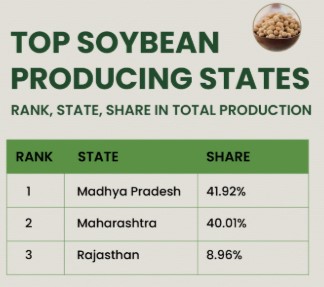
India's soybean imports surged to a record 1.1 million metric tons in the 2025–26 marketing year (ended September 30, 2026), jumping sharply from just about 2,000 tons the previous year.
Key Highlights of the 2025–26 Soybean Trade
- Driving Factors– A strong rally in domestic soybean prices prompted Indian processing mills to dramatically ramp up overseas purchases.
- Non-GM Restriction– India permits imports strictly of non-genetically-modified (non-GM) soybeans. This limits sourcing to a small group of African nations—such as Niger, Benin, Togo, and Nigeria—where non-GM beans command a premium.
- Top Exporter– Niger emerged as India's largest soybean supplier, accounting for over 430,000 tons of the total shipments.
- Customs Investigations– Indian customs authorities initiated probes into certain soybean shipments declared as originating from Niger due to suspicions that some cargoes actually originated in Nigeria and were mislabelled to evade import tariffs.
- Soymeal Impact– Driven by higher domestic prices and tight seed availability, India's soymeal exports were cut in half, dropping to 1 million tons in 2025–26.
|
|
Environment
|
|
Fully Marine Amphibian from 237 Million Years
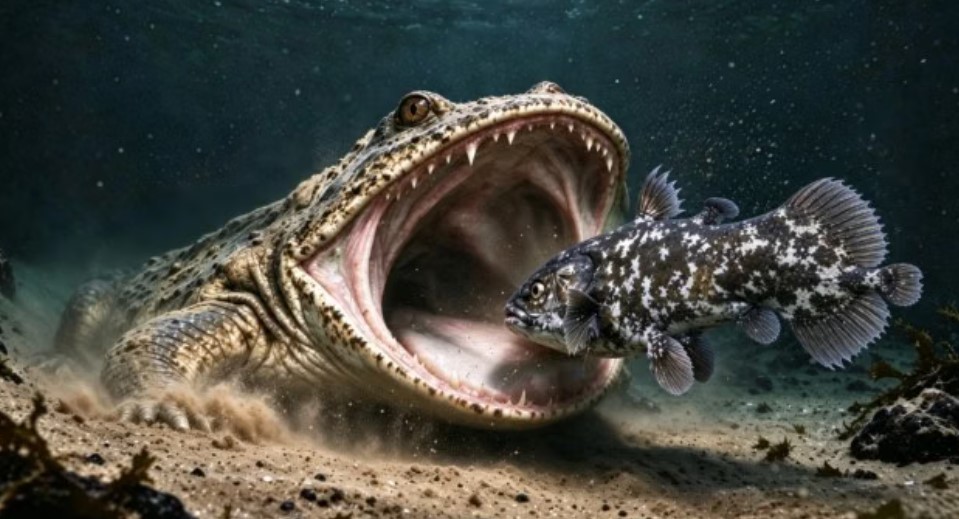
Gerrothorax maritimus is the first known fully marine stem amphibian, discovered in Guizhou Province, China, and announced in October 2026.
- Key Details of the Discovery
- Age & Period– Lived approximately 237 million years ago during the Late Triassic period.
- Location– Two nearly complete fossil skeletons were uncovered in an ancient offshore marine setting in Guizhou Province, hundreds of miles away from large landmasses.
- Research Team– Findings were published in Nature Ecology & Evolution by researchers from the University of California, Davis, Peking University, and the Geological Museum of Guizhou.
- Physical Traits & Anatomy
- Size– Measured roughly 737 millimeters (about 3 feet) long with a chunky, disc-shaped, bottom-dwelling body.
- Bony Armor– Its entire body was covered in thick, heavy bony plates.
- Predators– The armor provided defense against Mesozoic marine predators like ichthyosaurs.
- Feeding Style– It acted as a bottom-dwelling ambush predator, hunting by sucking in prey from the seafloor—similar to a modern wobbegong shark.
|
|
Siang Upper Multipurpose Project (SUMP)
The Siang Upper Multipurpose Project (SUMP) is a proposed 11,200 MW hydropower and water-storage dam on the Siang River in Arunachal Pradesh, designed by the state-run NHPC Limited to act as a strategic counter-measure against China’s massive upstream dam projects. If built, it will be India's largest hydropower project.
- Scale & Scope– The project envisions an 11,200 MW capacity with a massive reservoir meant for electricity generation, water table improvement, and heavy flood moderation.
- Strategic Purpose ('Countering China') – China is building a massive 60,000 MW hydropower project on the Yarlung Tsangpo (the upstream Tibetan name for the Siang/Brahmaputra) in Medog County.
- New Delhi estimates China's project could divert up to 40 billion cubic metres (BCM) of water or pose a "water bomb" risk if sudden releases occur.
- India views the SUMP reservoir as a buffer or "shield" to absorb sudden water flow changes and safeguard downstream security in Arunachal Pradesh and Assam.
- Timeline– The Upper Siang project was declared a National Project in 2008 by the central government.
- The stages were merged into the SUMP framework, though it remains stalled at the pre-feasibility survey (PFR) and technical assessment stage due to intense resistance.

|
|
Oxfam Report on Carbon Emission
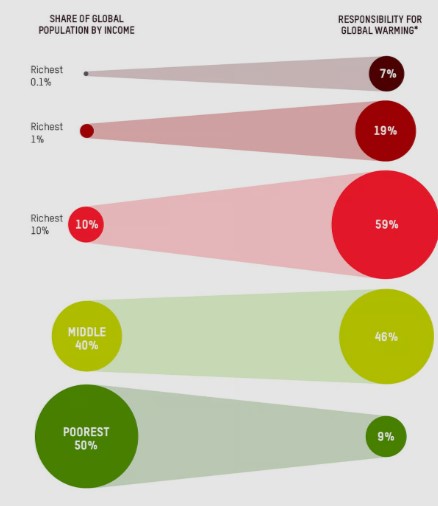
- The world's richest 0.1% (about 8 million people) produce more carbon pollution than the poorest 3.5 billion people combined, according to Oxfam's report, "Disaster Divide– How Climate Chaos Deepens Inequality and Enriches the Few".
- Key Findings from the Oxfam Report
- Extreme Disparity– A person in the richest 0.1% contributes nearly 400 times more to extreme heatwaves than someone in the poorest half of the global population.
- Sub-Saharan Africa Comparison– The total carbon pollution of the richest 0.1% is more than three times higher than that of the entire population of Sub-Saharan Africa (roughly 1.3 billion people).
- Global Warming Share– The richest 1% are responsible for 20% of global warming since 1990—which is 100 times more per person than someone in the poorest half of humanity.
- Private Aviation– Private jets collectively emit more carbon dioxide in just two seconds than an individual in the poorest half of humanity emits in a full year.
- Human and Economic Cost– Emissions from the richest 1% are projected to cause 1.9 million excess heat-related deaths (78% of which will occur in low- and lower-middle-income countries) and lead to nearly $53 trillion in economic damage by 2050.
- Disaster Profiteering– The report highlights how wealthy investors backing high-polluting industries also profit from disaster cleanup, preparedness, and insurance.
|
|
India released Four Key Publications
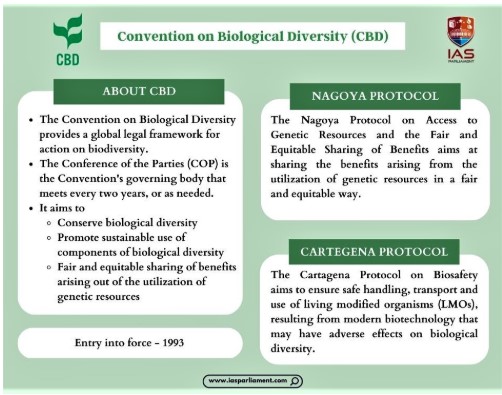
India released Four Key Publications on Biodiversity Conservation, Biosafety and Access and Benefit Sharing at a side event during the 17th Conference of socialist Parties (COP-17) to the Convention on Biological Diversity (CBD) in Yerevan, Armenia.
Union Minister Shri Bhupender Yadav launched the documents with officials from the NBA, UNDP, Armenia, and the CBD Secretariat.
The Four Publications
- Guidelines for the Designation of India's Other Effective Area-Based Conservation Measures (I-OECMs) 2026– Sets criteria for recognizing conservation outside protected areas.
- 5th National Report on Cartagena Protocol on Biosafety– Outlines India's governance of living modified organisms.
- The Convention on Biological Diversity Handbook– Reference Guide and Indian Perspective– Provides reference material for international negotiations.
- India's ABS Success Story– Details India's leadership in Access and Benefit-Sharing under the Nagoya Protocol.
|
|
Security
|
|
INS Srishti
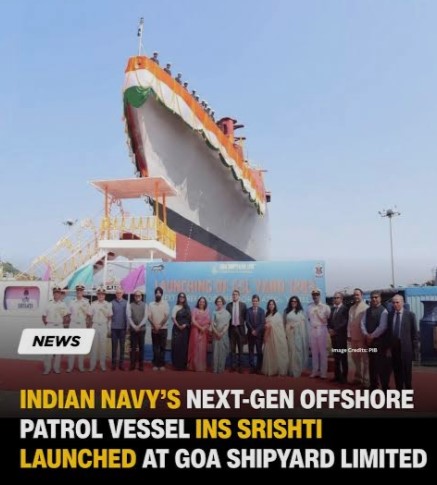
INS Srishti (Yard 1283) is a Next-Generation Offshore Patrol Vessel (NGOPV) indigenously designed and built for the Indian Navy.
- Launch Date– October 27, 2026
- Location Built– Goa Shipyard Limited (GSL) in Vaddem, Goa Name Meaning– Derived from Sanskrit, Srishti means "Creation" or the "Act of Creating".
- Keel Laying Date– June 9, 2025
- Ceremonial Launch– Performed by Smt. Sandeepa Sahay, with Shri Vishvajit Sahay (Secretary, Defence Finance) attending as the chief guest.
- Program & Role
- Program– Part of an 11-ship NGOPV procurement contract signed on March 30, 2023, under the "Buy (Indian-IDDM)" category to support the Aatmanirbhar Bharat and Make in India initiatives.
- Shipyard Division– Seven of the ships are being constructed by Goa Shipyard Limited, while four are built by Garden Reach Shipbuilders & Engineers (GRSE) in Kolkata.
- Primary Missions–
- Maritime surveillance and coastal/offshore security
- Search and Rescue (SAR)
- Protection of offshore energy and economic assets
- Humanitarian Assistance and Disaster Relief (HADR)
- Anti-piracy operations
|
|
INDIA-RoKN BILATERAL EXERCISE 2026
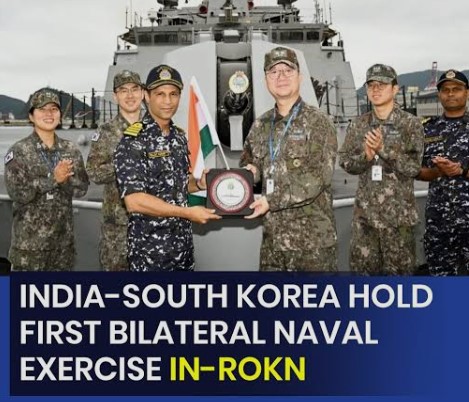
The Press Information Bureau reports that Indian Naval Ship (INS) Sahyadri arrived at Busan Naval Harbour in the Republic of Korea on October 26, 2026, to participate in the second edition of the India–Republic of Korea Navy (IN-RoKN) Bilateral Exercise.
- Participants– Indian Navy represented by the indigenously built guided-missile stealth frigate INS Sahyadri, and the Republic of Korea Navy represented by ROKS Munmu the Great.
- Location– Busan Naval Harbour and adjacent waters, South Korea.
- Evolution– This is the second edition of the bilateral exercise, following the inaugural edition held in October 2025.
- Structure of the Exercise
- Harbor Phase (Busan)–
- Formal welcome and official calls on senior RoKN officials.
- Professional interactions, operational discussions, and sharing of best practices.
- Cross-deck visits, cross-training activities, and friendly sporting events to build camaraderie.
- Sea Phase–
- Coordinated maritime maneuvers at sea.
- Tactical formation steaming, cross-deck helicopter operations, and seamanship drills to improve joint operational interoperability in the Indo-Pacific.
|
|
Health
|
|
Anemia Mukt Bharat Abhiyaan (AMB) 7X7X7 framework
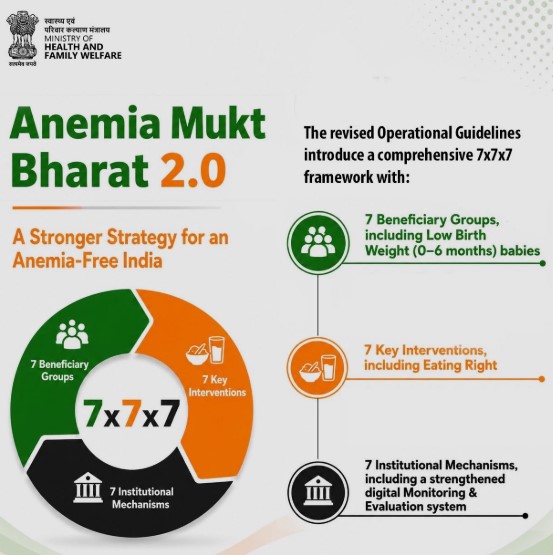
The Government of India released the renewed Anemia Mukt Bharat Abhiyaan (AMB) 7X7X7 framework operational guidelines on June 29, 2026, upgrading the previous 6X6X6 strategy to accelerate anemia reduction.
- Key Shifts from 6X6X6 to 7X7X7
- Approach Upgrade– Moves from the older T3 approach (Test, Treat, Talk) to the T4 approach by adding Track (Test, Treat, Talk, Track).
- Shift in Philosophy– Transitions from universal prophylaxis to a screening-led, case-based, and outcome-focused model supported by end-to-end digital tracking.
- The 7X7X7 Framework Components
- The 7 Beneficiary Groups
- Children aged 0–5 years
- Children aged 5–9 years
- Adolescents aged 10–19 years
- Women of Reproductive Age (WRA) (15–49 years)
- Pregnant women
- Lactating women
- Low Birth Weight (LBW) babies (0–6 months) (Newly added as the 7th group)
- The 7 Interventions
- Prophylactic Iron and Folic Acid (IFA) supplementation
- Testing for anemia across platforms
- Therapeutic management of identified anemia cases
- Deworming
- Jan Bhagidari (Community communication strategy for behavior change and compliance)
- Addressing non-nutritional causes of anemia (e.g., malaria, hemoglobinopathies, fluorosis)
- "Eating Right" (Promotion of locally available iron-rich foods and diet diversification) (Newly added as the 7th intervention) 3.
- The 7 Institutional Mechanisms
- Intra-ministerial and inter-ministerial coordination
- National Centre of Excellence and Advanced Research on Anemia
- National AMB Abhiyaan Unit
- Strengthening supply chain and logistics
- Convergence with other Ministries and flagship programs (such as POSHAN Abhiyaan, PM POSHAN, and ICDS)
- Unified AMB Abhiyaan Portal and digital framework (integrating JANANI, RBSK, and U-WIN portals)
- Strengthened monitoring, evaluation, and digital tracking mechanisms (Newly refined as the 7th mechanism) .
|
|
Index
|
|
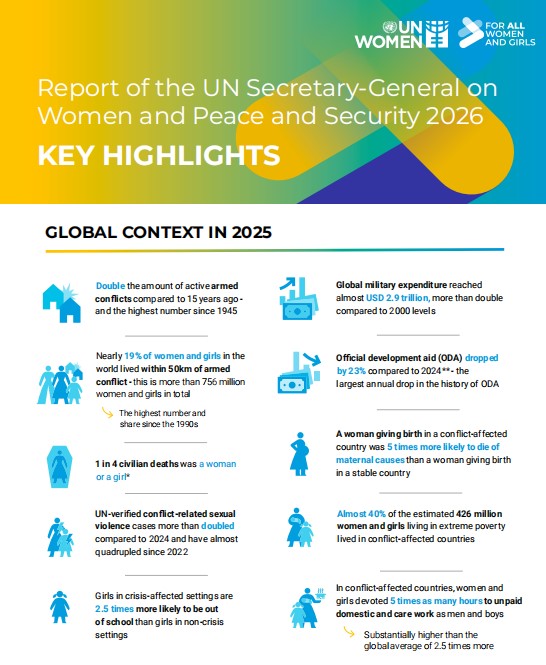
The UN Secretary-General’s 2026 Report on Women, Peace and Security
The UN Secretary-General’s 2026 Report on Women, Peace and Security (Document S/2026/758), released in October 2026, highlights a severe escalation of violence and exclusion against women and girls in armed conflict zones.
- Key Findings and Statistics
- Deadlier Conflicts for Women– Women and girls accounted for one in four civilian deaths in armed conflicts last year (over 9,250 of the 37,000+ total civilian deaths), doubling their proportion compared to 2021. At least 25 women and girls are killed every day.
- Proximity to Conflict– An estimated 756.1 million women and girls (roughly 18.8% of the global female population) lived within 50 km of an active armed conflict in 2025—an increase of 5.6% from 2024 and the highest number recorded since the 1990s.
- Exclusion from Peace Processes– Women made up only 5% of negotiators across 57 peace processes worldwide in 2025, down from 7% the previous year. Furthermore, none of the 13 ceasefire agreements drafted explicitly prohibited conflict-related sexual violence.
- Care Burden– In conflict-affected countries, women and girls devoted five times as many hours to unpaid domestic and care work as men and boys (substantially higher than the global average of 2.5 times).
- Maternal Risks– A woman giving birth in a conflict-affected country is five times more likely to die from maternity-related causes than a woman in a stable country.
- Funding and Militarization Shortfalls– Global military expenditures hit a record $2.9 trillion in 2025 (776 times the UN regular budget), while roughly 40% of women's organizations in crisis-affected settings face temporary or permanent closure due to severe funding cuts.
- Core Recommendations
- End Violence and Uphold Law– Immediately cease attacks on civilians and hold perpetrators of conflict-related sexual and gender-based violence accountable.
- Include Women in Decision-Making– Move past tokenism to ensure full, equal, and meaningful participation of women as decision-makers and negotiators in all ceasefires and peace processes.
- Resource Women's Civil Society– Rebalance global spending away from unchecked militarization and adequately fund local women-led organizations that mediate conflicts and protect communities.
|



