|
One Liners 24-10-2026
|
|
Geography
|
|
Earthquake in China
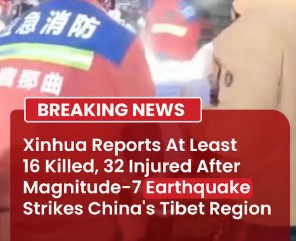
A magnitude 7.0 earthquake struck Baqên County in the northern part of China's Tibet Autonomous Region on October 22, 2026, leaving at least 16 people dead and 32 to 65 others injured.
- Date and Time– Thursday, October 22, 2026, at approximately 10–33 p.m. local time (14–33 GMT).
- Magnitude– 7.0
- Depth– Shallow, less than 10 kilometers (about 6.2 miles) deep.
- Epicenter– Baqên County in Nagqu City, located at a high altitude of roughly 4,864 meters (15,958 feet) above sea level, about 390 to 400 kilometers northeast of the regional capital, Lhasa.
- Casualties and Damage
- Death Toll– At least 16 people killed.
- Injuries– 32 people injured initially (some reports estimate up to 65 injured), with at least 11 in serious condition.
- Infrastructure– At least 339 homes collapsed or suffered major damage.
- Impact– Power and communication lines were disrupted in remote villages, and more than 12,000 residents were evacuated.
- Emergency Response
- Relief Level– Authorities activated a Level-II earthquake disaster emergency response.
- Personnel Deployed– Hundreds of police officers, firefighters, and rescue teams were dispatched to set up temporary housing tents, restore electricity, and search for survivors in freezing, high-altitude conditions.
- Context– It marks the largest earthquake to hit the region in five years.
|
|
International Relations and Issues
|
|
United Nations Day 2026
United Nations Day 2026 was observed on Saturday, October 24, 2026, marking the 81st anniversary of the entry into force of the UN Charter in 1945.
Key Details for UN Day 2026
- Anniversary– 81 years of global cooperation, diplomacy, human rights, and development.
- Secretary-General’s Message– António Guterres urged nations to choose "Dialogue over division. Cooperation over confrontation. Solidarity over fear" to face climate change, conflict, and rising inequalities.
- India Observance– The United Nations in India hosted a special reception in New Delhi featuring Shri Kirti Vardhan Singh (Minister of State for External Affairs and Environment, Forest and Climate Change) as chief guest, alongside External Affairs Minister S. Jaishankar reaffirming India's commitment to the UN Charter.
- Official Information– You can explore global events and historical context via the United Nations Day Official Page.

|
|
Social Media Ban in Greece
Greece's Parliament approved a law on October 23, 2026, that bans children under the age of 15 from accessing online social media platforms. The ban officially takes effect on January 1, 2027.
- Target Age Group– Children under 15 years old (applies to both existing accounts and new users).
- Included Platforms– Major platforms such as Instagram, Facebook, TikTok, and LinkedIn (with room for additional services to be included).
- General Internet Use– The law does not ban children from using the broader internet, meaning they can still access educational tools and digital communication services.
- Age Verification–Social media companies will be required to verify user ages using a digital token system that confirms eligibility without exposing private user identities.

|
|
Alberta’s Referendum
Alberta, Canada’s oil-rich western province, held a non-binding referendum amid growing separatist demands and disputes over provincial autonomy. Nearly 75% of counted votes favoured remaining within Canada, strengthening the federal government’s position.
Key Features
- Voters chose between remaining in Canada or initiating a legal process for a binding independence referendum.
- About 1.54 million of 2.06 million counted votes supported Canadian unity.
- The referendum had no immediate legal effect and mainly measured public sentiment.
- Background – Alberta’s oil wealth, federal environmental regulations and perceived fiscal imbalance have fuelled separatist sentiments.
- Significance – Alberta produces over 80% of Canada’s crude oil, making it vital to Canada’s energy security, economy and North American energy trade. Despite the unity vote, separatist support remains politically significant.

|
|
Economy
|
|
India's first full-fledged open-sea mussel longline farming
The Vizhinjam Regional Centre of the ICAR-Central Marine Fisheries Research Institute launched India's first full-fledged open-sea mussel longline farming unit at Vizhinjam, Kerala, on October 21, 2026.
Key Details
- Location– Vizhinjam, Thiruvananthapuram, Kerala
- Project & Funding– Part of the Pradhan Mantri Matsya Sampada Yojana (PMMSY)-funded project “Development of Pilot-Scale Open-Sea Eco-Mussel Farms in India – A Blue Growth Project” with a sanctioned fund of ₹152 lakhs.
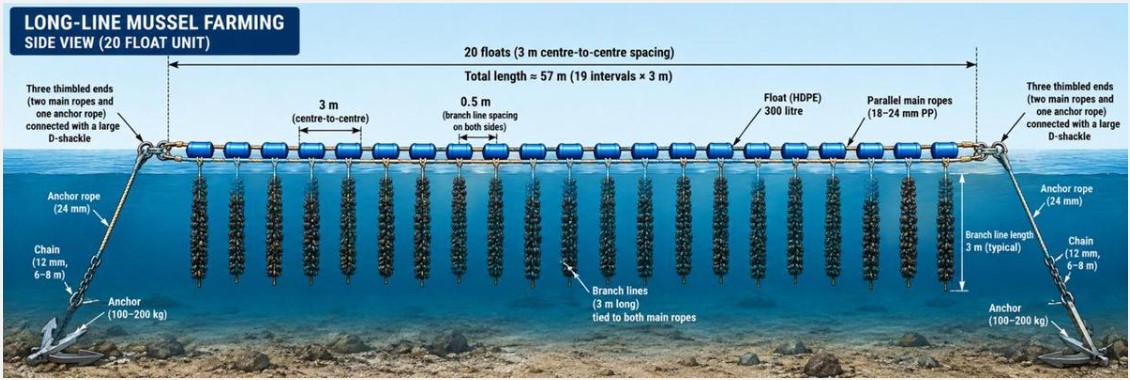
- Unit Design– Includes 20 specially designed 300-litre HDPE floats, parallel mainlines, suspended mussel culture ropes, and an anchoring system.
- Hatchery Support– Backed by a multi-species shellfish hatchery at Vizhinjam that produces millions of green mussel (Perna viridis) and brown mussel (Perna indica) seeds to reduce reliance on seasonal wild seed.
- Community Partner– Implemented in collaboration with the local Vizhinjam Mungal Thozhilali Kshema Sangom
|
|
Environment
|
|
International Day of the Snow Leopard 2026
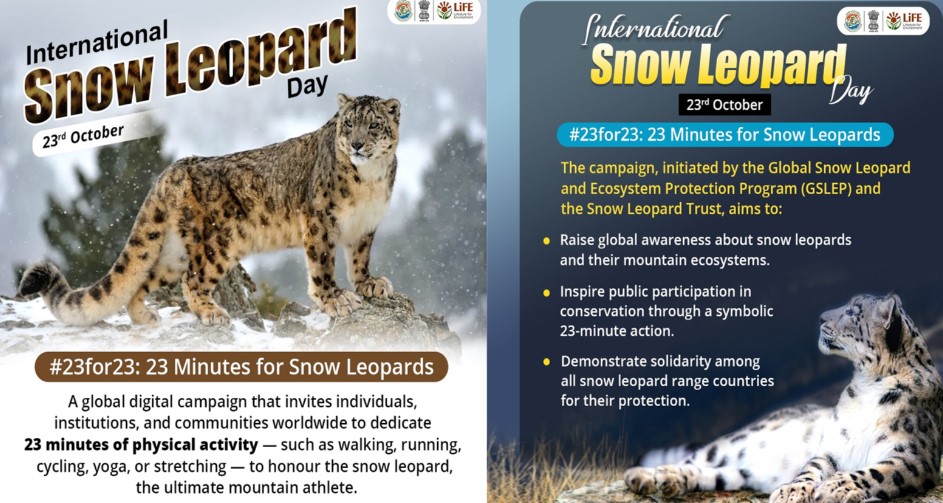
International Day of the Snow Leopard is observed annually on October 23 to raise global awareness about protecting the endangered snow leopard (Panthera uncia) and its fragile high-altitude mountain ecosystems.
Key Details & Significance
- Origin & History– Originally commemorated following the adoption of the 2013 Bishkek Declaration by range countries, the United Nations General Assembly officially proclaimed October 23 as the International Day of the Snow Leopard to strengthen regional and international conservation efforts.
- The "Ghost of the Mountains"– Known for their elusive nature and ability to blend into snowy, high-altitude terrain, snow leopards inhabit rugged mountain regions across 12 to 13 countries in Central and South Asia.
- India's Population– India is home to an estimated 718 snow leopards spread across the Himalayan and Trans-Himalayan regions, including Ladakh, Jammu and Kashmir, Himachal Pradesh, Uttarakhand, Sikkim, and Arunachal Pradesh.
- Core Threats– The species faces ongoing pressures from habitat loss, climate change, prey depletion, illicit trafficking, poaching, and retaliatory killings by local herders due to livestock predation.
- Conservation Focus– Modern conservation strategies emphasize community coexistence, such as financial relief programs for herders, camera-trap-triggered deterrents, and better livestock protection systems rather than just population tracking.
|
|
UN climate damages fund
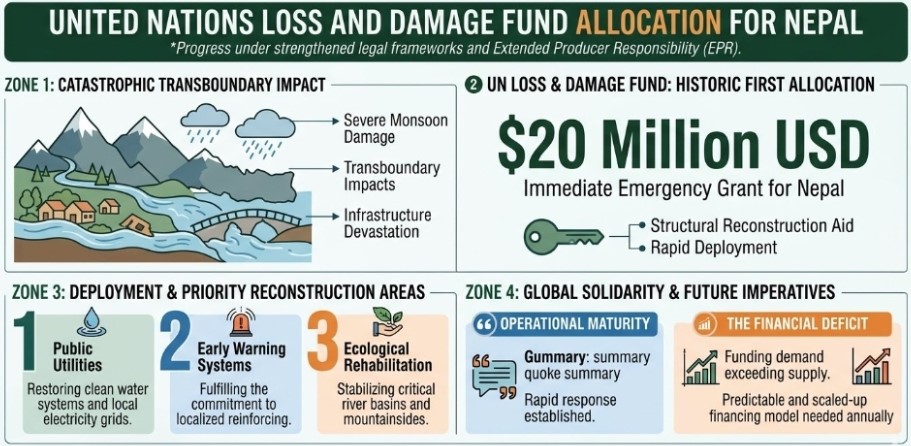
The United Nations' Fund for Responding to Loss and Damage has provisionally earmarked $20 million (approx. ₹205 crore or up to $21.6 million depending on valuations) to help Nepal recover from the catastrophic August 2026 flash floods and ice-rock avalanches.
- This October 22, 2026 decision marks a historic first– it is the initial time the Loss and Damage Fund—created during COP27 in 2022—has allocated or set aside financial assistance for a specific country.,
- Key Facts About the Payout
- The August Disaster– Tsunami-like flash floods and mudslides—triggered by climate-induced glacier melting and a permafrost-related ice and rock avalanche—struck Nepal and neighboring regions in August 2026. The disaster killed over 1,400 people, left thousands missing, and destroyed homes, schools, roads, and hydropower infrastructure.
- The Financial Gap– While the $20 million grant is a landmark symbolic step, Nepal's government estimates total economic and reconstruction losses at around $4.7 billion to $5 billion. The $20 million cap represents the maximum allowable amount a country can request in a single application.
- Next Steps for Nepal– The approval at the board's emergency meeting means the money is earmarked, but Nepal must still formally submit a detailed project proposal for final sign-off before funds are disbursed.
- Fund Status– The Loss and Damage Fund has accumulated roughly $820 million in pledges from wealthy nations, yet it faces active support requests from developing nations totaling over $2.8 billion.
|
|
Security
|
|
ICG launches maiden sailing expedition
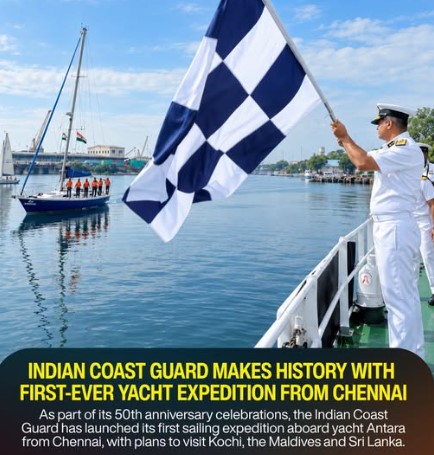
The Indian Coast Guard (ICG) launched its maiden yacht sailing expedition aboard the Antara from Chennai.
- Vessel– Aboard the yacht Antara.
- Starting Point– Flagged off from Chennai by Inspector General Yoginder Dhaka (TM, Commander, Coast Guard Region East).
- Occasion– Held as part of the Indian Coast Guard's golden jubilee (50th anniversary) celebrations.
- Route & Plan– The team is sailing from Chennai to Kochi along the Indian coastline before heading out on international passages to Sri Lanka and the Maldives.
- Training & Purpose– The crew underwent intensive training in seamanship, offshore sailing, navigation, and endurance. The initiative promotes maritime adventure, showcases the force's values of courage and teamwork, and inspires youth to look into maritime careers.
|
|
Science
|
|
Nigeria confirms its first Ebola case is Bundibugyo strain
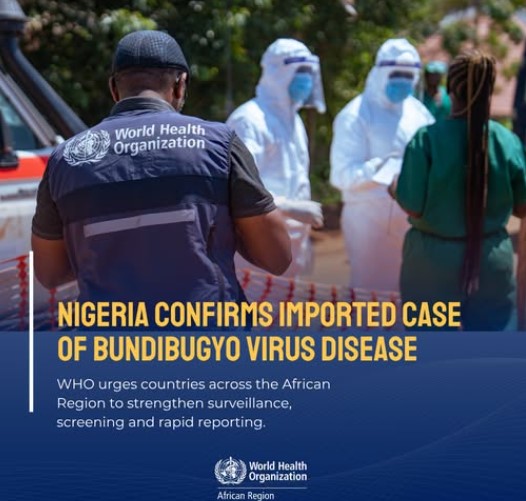
Nigeria has confirmed its first case of Ebola in 12 years, identifying an imported case of the rare Bundibugyo strain in Abuja. The case is tied to the wider, severe outbreak originating in the Democratic Republic of the Congo (DRC).
- Patient Profile– The patient is a foreign national (reported as a diplomat or diplomat's wife) who arrived in Abuja, Nigeria, from Uganda on October 3, 2026.
- Timeline of Events–
- October 3, 2026– Traveled from Uganda to Abuja.
- October 7, 2026– Developed initial symptoms.
- October 11, 2026– Sought medical treatment at a private healthcare facility in Abuja, where she was initially treated for malaria.
- October 20, 2026– Laboratory tests confirmed the Bundibugyo strain of the Ebola virus.
- Current Status– The patient is in isolation receiving supportive care and has reportedly deteriorated into multi-organ failure.
|
|
Sports
|
|
Commonwealth Kabaddi Championship 2026
The inaugural Commonwealth Kabaddi Championship 2026 is taking place from October 23 to October 31, 2026, at the Veer Savarkar Sports Complex in Ahmedabad, Gujarat, India.
- Venue– Veer Savarkar Sports Complex, Ahmedabad, Gujarat
- Dates– 23–31 October 2026
- It is the inaugural edition of the Commonwealth Kabaddi Championship.
- Men’s Competition
- 13 teams will participate.
- Teams are divided into two groups–
- Group A (7)– India, Nigeria, Malaysia, Uganda, England, Tanzania, Sri Lanka
- Group B (6)– Bangladesh, Kenya, Canada, Australia, Scotland, Singapore
- India– Captain – Surjeet Singh; Vice-Captain – Naveen Kumar
- Women’s Competition - The inaugural women’s competition will feature 10 teams.
- Tournament Format
- Group stage– Each team plays every other team in its group once.
- Semi-finals– 30 October 2026
- Gold medal/final matches– 31 October 2026

|



