|
One Liners 18-09-2026
|
|
Geography
|
|
Ramjak Mountain
A four-member team from Munnar in Keralam recently scaled Ramjak mountain.
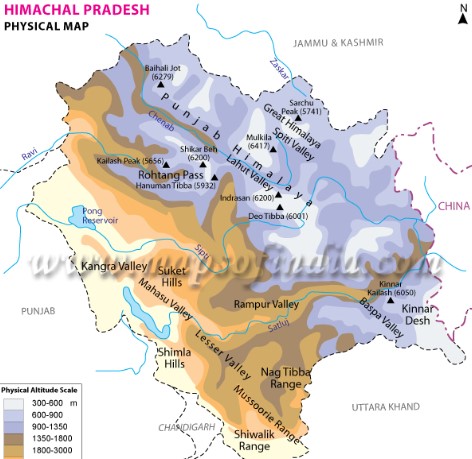
- Ramjak Mountain is a high-altitude, technically demanding peak that rises to 6,318 meters (20,728 feet) in the remote Lahaul region of Himachal Pradesh, India.
- Location – Lahaul-Spiti district, Himachal Pradesh, situated near the Shingo La pass connecting Himachal to Zanskar.
- Extreme Conditions – Temperatures at higher camps can plummet between –35°C and –40°C.
- Technical Challenges – The route features glaciers, steep ice sheets, rock bands, snowfields, crevasses, seracs, and cornices.
- Safety Protocols – Fixed ropes, strict rope discipline, staged load ferries, and dedicated acclimatization rotations are mandatory.
|
|
International Relations and Issues
|
|
Canada in EU
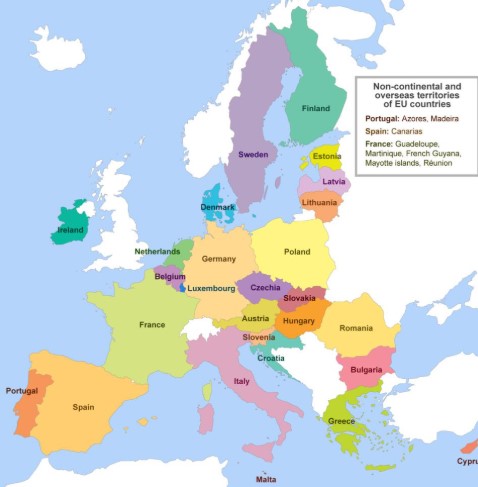
- European Union is opening the door for Canada to become its first “associate member”, a status that is not set out in the bloc’s treaties.
- Both seek to pivot away from a hostile United States under President Donald Trump.
- Recently, U.S. President Donald Trump has launched a trade war on Canada.
- European Commission President Ursula von der Leyen also proposed the setting up of a ‘European Security Council’ with partners such as Canada, Norway, the U.K. and Ukraine.
- It also said that it was time for a European security protocol similar to, and working in concert with, NATO’s Article 4.
- This article of the military alliance’s agreement outlines a consultation process when members feel they are under threat.
|
|
Artemis Accords
Djibouti Signs Artemis Accords
- The Republic of Djibouti has become the 72nd country and eighth African nation to sign the Artemis Accords, an international framework for responsible and cooperative space exploration.
- Signing Ceremony – The agreement was signed at NASA Headquarters in Washington, DC. Djibouti’s Ambassador to the United States, Mohamed Siad Douale, signed on behalf of Djibouti.
- Key Principles – The Artemis Accords, established in 2020 by the United States and seven founding countries, promote:
- Peaceful and transparent space exploration
- International cooperation
- Sharing of scientific data
- Assistance during space emergencies
- Protection of historically significant lunar and space-exploration sites
- Significance – Djibouti’s signing strengthens African participation in international space cooperation and commits the country to principles governing the safe and responsible exploration of the Moon, Mars, and beyond.

|
|
Science
|
|
India's First Fully Automated Factory Lab
- TCS (Tata Consultancy Services) launches India’s first lights-out factory lab in Pune, Maharashtra.
- Lights-Out Factory is designed to demonstrate how a manufacturing assembly line can operate with minimal human intervention.
- It is combining digital twins, robotics and industrial AI to simulate autonomous manufacturing operations.
- It aims to help manufacturers assess Industry 4.0, AI and robotics applications in a controlled environment and reduce risks linked to deployment.

|
|
SEMICON India 2026
SEMICON India 2026 was held from 17–19 September 2026.
- Semiconductors are essential to modern electronics and are strategically important for technological resilience, economic security and national self-reliance.
- Government Initiatives – The Government of India is strengthening the semiconductor ecosystem through:
- Policy support
- Infrastructure development
- Global partnerships
- SEMICON India 2026, themed “Silicon to Systems: Building the Ecosystem,”.
- Significance – The event brings together global industry leaders, policymakers, investors, academics and start-ups. It aims to advance India’s semiconductor ambitions and develop a strong ecosystem covering the entire semiconductor value chain.

|
|
Doppler Weather Radar
India's 51st Doppler Weather Radar was inaugurated at Jamadarpali in Sambalpur, Odisha,
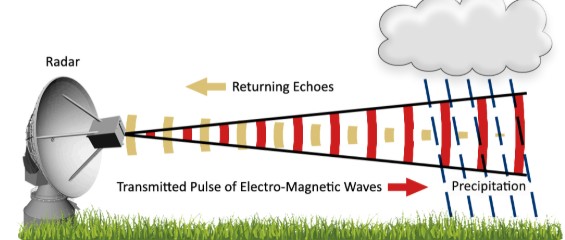
- Doppler Weather Radar (DWR) – It uses the Doppler effect to detect the location, intensity, velocity and direction of atmospheric targets such as rain, snow and ice.
How It Works
- Transmission – The radar antenna sends microwave signals through a spherical radome.
- Scattering – The signals hit raindrops or ice particles and return as echoes.
- Doppler Shift – Changes in the frequency of returning waves indicate the speed and direction of movement.
- Analysis – The frequency shift provides wind information, while pulse timing determines the distance of the weather system.
Radar Bands Used by IMD
- S-Band (2–4 GHz) – Long-range detection, up to about 500 km, useful for tracking severe cyclones.
- C-Band (4–8 GHz) – Medium-range coverage of about 250 km, suitable for regional storms and cyclones.
- X-Band (8–12 GHz) – Short-range monitoring, particularly useful for thunderstorms, lightning and cloudbursts in mountainous areas.
Key Applications
- Cyclone Tracking – Helps locate storm centres and improve landfall prediction.
- Severe Weather Warnings – Detects rotation, wind shear and other indicators of severe weather.
- Rainfall Estimation – Measures rainfall intensity and supports real-time flood forecasting.
|
|
Index
|
|
Global Financial Centres Index
GIFT City (Gujarat International Finance Tec-City) rose 9 places to 37th globally in the Global Financial Centres Index (GFCI 40).
Global Financial Centres Index
- Published by – Z/Yen Partners and the China Development Institute.
- 5 Factors – The GFCI ranks international financial centres based on factors such as:
- Business environment
- Human capital
- Infrastructure
- Financial sector development
- Reputation
- The GFCI 40 assessed 139 financial centres using 144 quantitative measures and 39,531 professional assessments.
- India’s Position – GIFT City became the only Indian financial centre among the top 15 financial hubs in the Asia-Pacific region.
- Meanwhile, Mumbai improved by 3 places to 49th globally.
- FinTech Ranking – GIFT City also improved its FinTech ranking by 3 places, reaching 26th globally in GFCI 40.
- Regulatory Framework – Financial services in GIFT City are regulated by the International Financial Services Centres Authority (IFSCA).
- Its regulatory framework supports international financial services and cross-border transactions.

|
|
Miscellaneous
|
|
‘Er’ prefix
The Karnataka government made celebration of Engineers Day an official event of the State.
- It marks the birth anniversary of the former Dewan of Mysore Princely State the late Sir M. Visvesvaraya on September 15.
- India has the highest number of engineers and more than one lakh engineers graduate in the State of Karnataka annually.
- Besides, close on the heels of allowing teachers to use the prefix “Tr.”, the State government has officially allowed use of prefix “Er.” for engineers.
- There is also a similar demand for lecturers to use the prefix “Lr”.

|
|
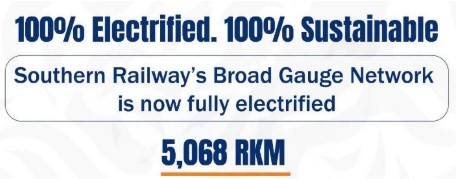
The Southern Railway’s broad-gauge network was electrified in 100%.
- Its entire 5,068 km broad-gauge network was electrified.
- This electrification milestone traces its roots to May 11, 1931, when Madras became the second metropolitan city in India, after Bombay, to introduce electric traction.
- The railway electrification in India began in 1925, when the country’s first electric train, operating on a 1,500-volt DC system, ran between Bombay Victoria Terminus and Kurla Harbour in Maharashtra.
- With the entire BG network electrified, trains can operate on electric traction across Southern Railway without the need for traction change at relevant points.
- This can help streamline operations and improve the utilisation of electric locomotives.
- The fully electrified network is also expected to provide greater operational flexibility, support more reliable train services and facilitate faster movement of trains.
|
|
FSSAI orders recall of two food products
The Food Safety and Standards Authority of India (FSSAI) has ordered an immediate market recall of two food products after laboratory tests declared them unsafe.
- Recalled Products
- Shalimar's Chef – Coriander Powder
- Maker – M/s Nilgiri Oil & Allied Industries
- Issue – Failed safety tests due to excessive pesticide residues.
- Carrageenan (Food Additive)
- Maker – M/s Aquagri Processing Pvt Ltd
- Issue – Failed standards due to high levels of cadmium (a toxic heavy metal). Regulatory Actions
- Testing and Appeals – Both manufacturers appealed the initial test results. Referral food laboratories re-tested the samples and confirmed they were non-compliant and "unsafe".
- The Law – The FSSAI took action under the Food Safety and Standards Act, 2006.
- Recall Rules – Companies must pull these products from the market following the Food Safety and Standards (Food Recall Procedure) Regulations, 2017.

|



