0.1271
7667766266
x

Shrinking Caspian Sea – Causes and Consequences

iasparliament Logo
July 14, 2026

Mains: GS I – World Geography

Why in News?

The Caspian Sea is undergoing rapid shrinkage due to the combined effects of climate change and human interventions.
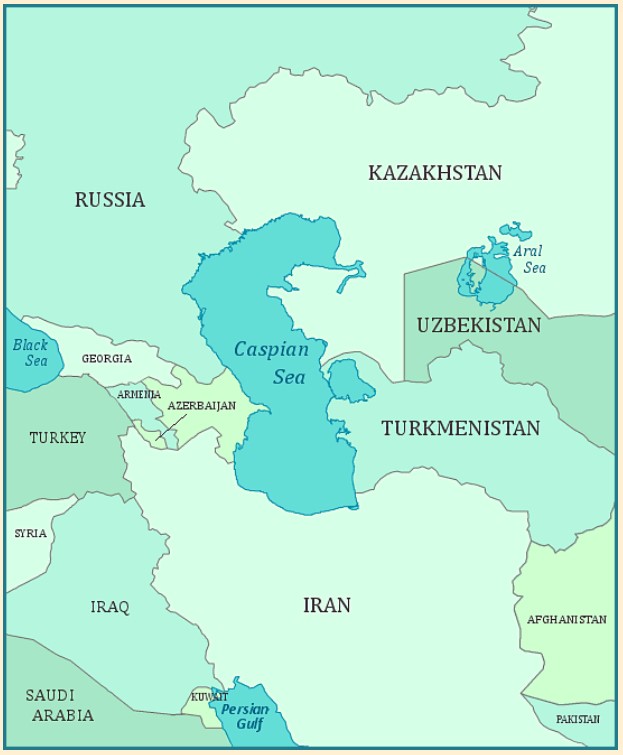
What is the Caspian Sea?

  • LocationBordered by five countries: Russia and Azerbaijan to the west, Kazakhstan and Turkmenistan to the east, and Iran to the south.

CASPIAN Sea

  • Size and Volume – It covers a surface area of about 371,000 square kilometers (143,000 square miles) with a volume of approximately 78,200 cubic kilometers.
  • Water Composition – Its water is brackish, meaning it is less salty than the ocean (about one-third as salty).
  • It gets almost 80% of its freshwater inflow from Europe's longest river, the Volga.
  • Depth – Depths vary wildly, from a shallow 5 to 6 meters in the northern basin to over 1,000 meters in the southern basin.
  • Although known as a sea, the Caspian is technically the world's largest landlocked lake.
  • Unlike oceans, it has no natural outlet, and its water balance depends on river inflows and evaporation.
  • The Caspian receives inflow from nearly 130 rivers, with the Volga River contributing almost 80% of the total freshwater inflow.

What is the ecological importance of the Caspian Sea?

  • Centre of EndemismNearly 80% of its aquatic species are endemic, meaning they are found nowhere else on Earth.
  • Notable endemic species include:
    • Caspian Seal
    • Several species of sturgeon
    • Numerous endemic fish and invertebrates
  • Global Centre for Sturgeon and CaviarThe Caspian has historically produced nearly 90% of the world's black caviar, obtained from various species of sturgeon.
  • The endangered Beluga Sturgeon depends on freshwater rivers connected to the Caspian for spawning.
  • Important Wetland EcosystemThe shallow northern Caspian functions as, a major breeding ground for fish, an important spawning habitat and a critical stopover for migratory birds travelling between Europe, Asia and Africa.
  • Climate RegulationAs a large enclosed water body, the Caspian influences, regional humidity, local temperature regulation, precipitation patterns, and microclimatic stability.
  • Economic and Geostrategic Importance
    • Energy Resources – The region possesses, vast oil reserves, significant natural gas deposits and extensive offshore energy infrastructure.
    • Trade and Connectivity – The Caspian serves as an important transport corridor connecting, Russia, Central Asia, Iran, Europe, and China.
  • It also supports strategic connectivity initiatives such as, China's Belt and Road Initiative (BRI) and India's International North-South Transport Corridor (INSTC)
  • Thus, environmental degradation of the Caspian has implications extending far beyond regional ecology.

Why is the Caspian Sea Shrinking?

  • Declining Freshwater InflowThe primary cause is the reduced inflow from the Volga River, which supplies nearly four-fifths of the seas freshwater.
  • Human activities responsible include, construction of dams, reservoir development, diversion of river water, excessive irrigation withdrawals, and upstream water regulation.
  • These interventions have significantly reduced freshwater reaching the Caspian.
  • Climate Change and Increased EvaporationClimate change has intensified water loss through evaporation.
  • Between 1979 and 2015, Surface air temperatures increased by approximately 1°C.
  • Wind patterns changed considerably and evaporation rates increased substantially.
  • Unlike oceans, which experience sea-level rise due to global warming, enclosed inland water bodies like the Caspian lose water because evaporation exceeds river inflows.

Since the mid-1990s, the Caspian Sea has lost approximately 5.5% of its surface area, equivalent to nearly 630 cubic kilometres of water.

What are the consequences?

  • Loss of BiodiversityShrinking water levels threaten several endangered species.
    • Sturgeon – Reduced river flow and pollution interfere with spawning migrations, pushing several sturgeon species closer to extinction.
    • Caspian Seal – The endangered Caspian Seal is losing critical coastal habitats due to the disappearance of shallow waters.
  • Algal Blooms and Water Quality DeclineScientists have observed increasing concentrations of chlorophyll-a, indicating, greater algal growth, nutrient enrichment and rising risk of harmful algal blooms.
  • These developments reduce water quality and disturb aquatic ecosystems.
  • Wetland DegradationShrinking shorelines threaten, coastal wetlands, fish nurseries, and migratory bird habitats.
  • Loss of these ecosystems reduces regional biodiversity and weakens ecosystem services.
  • Socio-Economic Consequences
    • Impact on Fisheries – Fishing communities across the five littoral states depend heavily on the Caspian.
    • Declining fish populations affect, food security, employment, traditional livelihoods, and local economies.
    • Navigation and Trade – lower water levels reduce navigability.
  • This leads to difficulty in operating commercial ports, reduced shipping efficiency and increased transport costs.
  • Disruptions to regional trade routes connecting Europe and Asia.
  • Emerging Public Health Risks – If water levels decline by approximately 5 metres, nearly 20% of the seabed could become exposed.
  • This may result in, toxic salt storms, dust pollution, air quality deterioration and respiratory health hazards.
  • The situation resembles environmental disasters observed in the shrinking Aral Sea.

What are the measures adopted to conserve Caspian Sea?

  • The Tehran ConventionRecognising the ecological significance of the Caspian Sea, the five coastal states adopted the Framework Convention for the Protection of the Marine Environment of the Caspian Sea (Tehran Convention) in 2003.
  • It remains the only legally binding regional agreement dedicated to protecting the Caspian Sea.
  • Guiding Principles
    • Precautionary Principle.
    • Polluter Pays Principle.
    • Information sharing and transparency.
    • Regional cooperation.
  • Other Major ProtocolsThe Convention is supported by four protocols:
    • Aktau Protocol – Oil pollution preparedness and response.
    • Moscow Protocol – Control of land-based pollution.
    • Ashgabat Protocol – Biodiversity conservation.
    • Environmental Impact Assessment Protocol – Environmental safeguards for development projects.
  • However, these agreements were negotiated primarily to address pollution and did not adequately anticipate climate-induced water level decline.
  • COP29 DeclarationRecognising climate change as the principal driver of shrinking water levels, the five littoral countries adopted the Declaration on Strengthening Cooperation to Address the Caspian Sea Water Level Decline at COP29 (2024).
  • The declaration emphasizes, joint scientific research, coordinated environmental monitoring, regional working groups, better understanding of climate impacts and enhanced cooperation among coastal states.
  • This represents an important shift from pollution control towards climate adaptation.

What could be done?

  • Strengthening implementation of the Tehran Convention.
  • Establishing a comprehensive transboundary monitoring system.
  • Sharing hydrological and climate data among all littoral states.
  • Coordinating management of the Volga River basin.
  • Regulating dam construction and excessive upstream water withdrawals.
  • Restoring wetlands and degraded coastal habitats.
  • Conserving endangered species through sustainable fisheries management.
  • Integrating climate adaptation into regional environmental governance.
  • Promoting ecosystem-based management and scientific cooperation.
  • Long-term success depends upon translating political declarations into concrete institutional action.

What lies ahead?

  • The shrinking Caspian Sea represents one of the clearest examples of the combined impacts of climate change and unsustainable human interventions on inland water ecosystems.
  • Beyond biodiversity loss, it threatens regional climate regulation, fisheries, public health, trade and energy security.
  • While initiatives such as the Tehran Convention and the COP29 Declaration demonstrate growing regional awareness, effective conservation requires stronger legal cooperation, coordinated river basin management and sustained climate action.
  • The Caspian crisis also offers an important global lesson: protecting transboundary ecosystems demands collective responsibility, scientific collaboration and long-term environmental governance to ensure ecological sustainability for future generations.

Reference

The Indian Express| Caspian Sea


Login or Register to Post Comments
There are no reviews yet. Be the first one to review.

ARCHIVES

MONTH/YEARWISE ARCHIVES

sidetext
Free UPSC Interview Guidance Programme
sidetext