Prelims: Current events of national and international importance | Environment
Why in News?
Recently, the World-Wide Fund for Nature (WWF) released the Living Planet Report 2026.
- Living Planet Index – It is a biodiversity indicator used to track changes in the relative abundance of monitored vertebrate populations over time.
- This report was produced in collaboration with the Zoological Society of London (ZSL).
- Key Findings
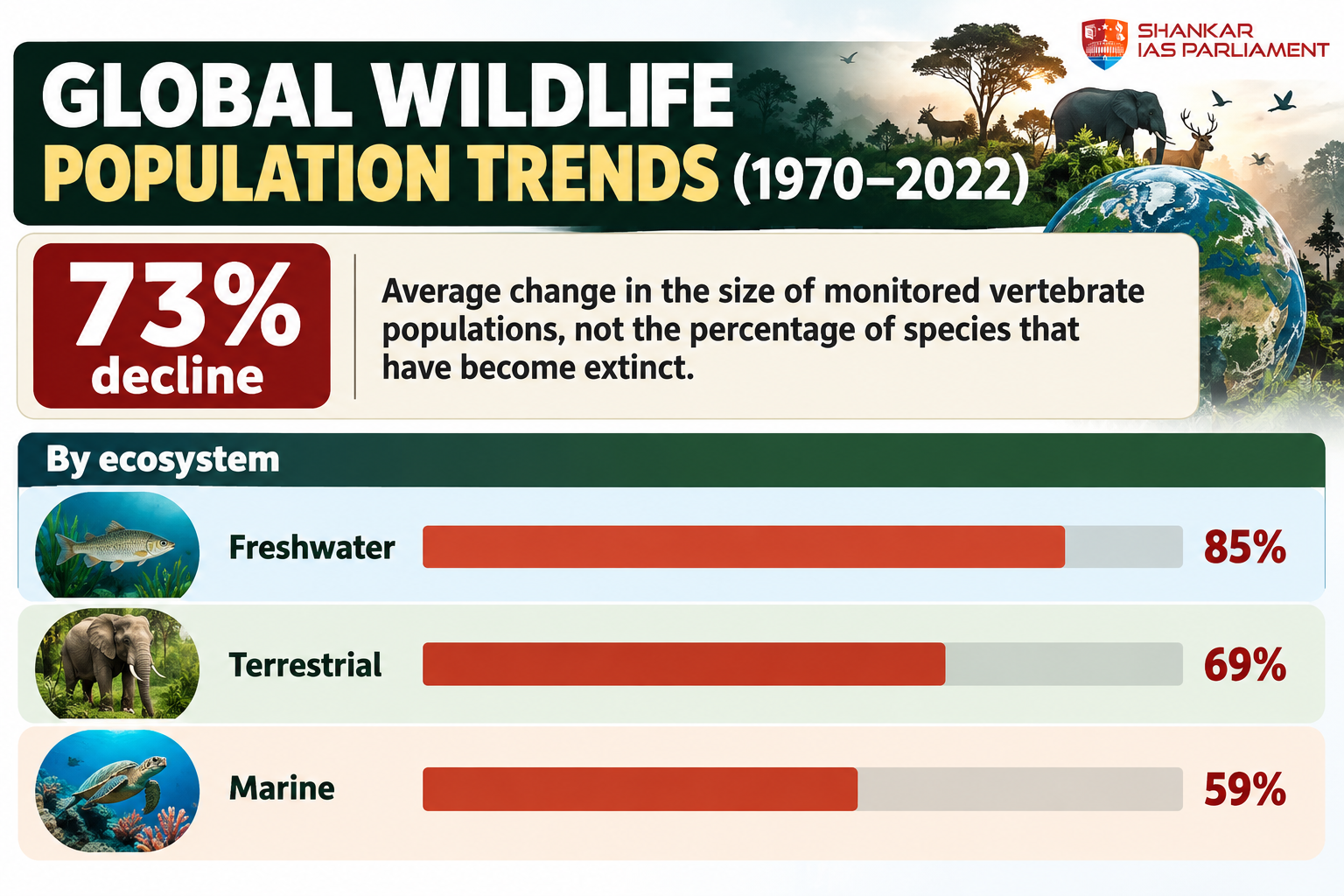
- The report identified a 73% decline in the average size of monitored wildlife populations worldwide between 1970 and 2022.
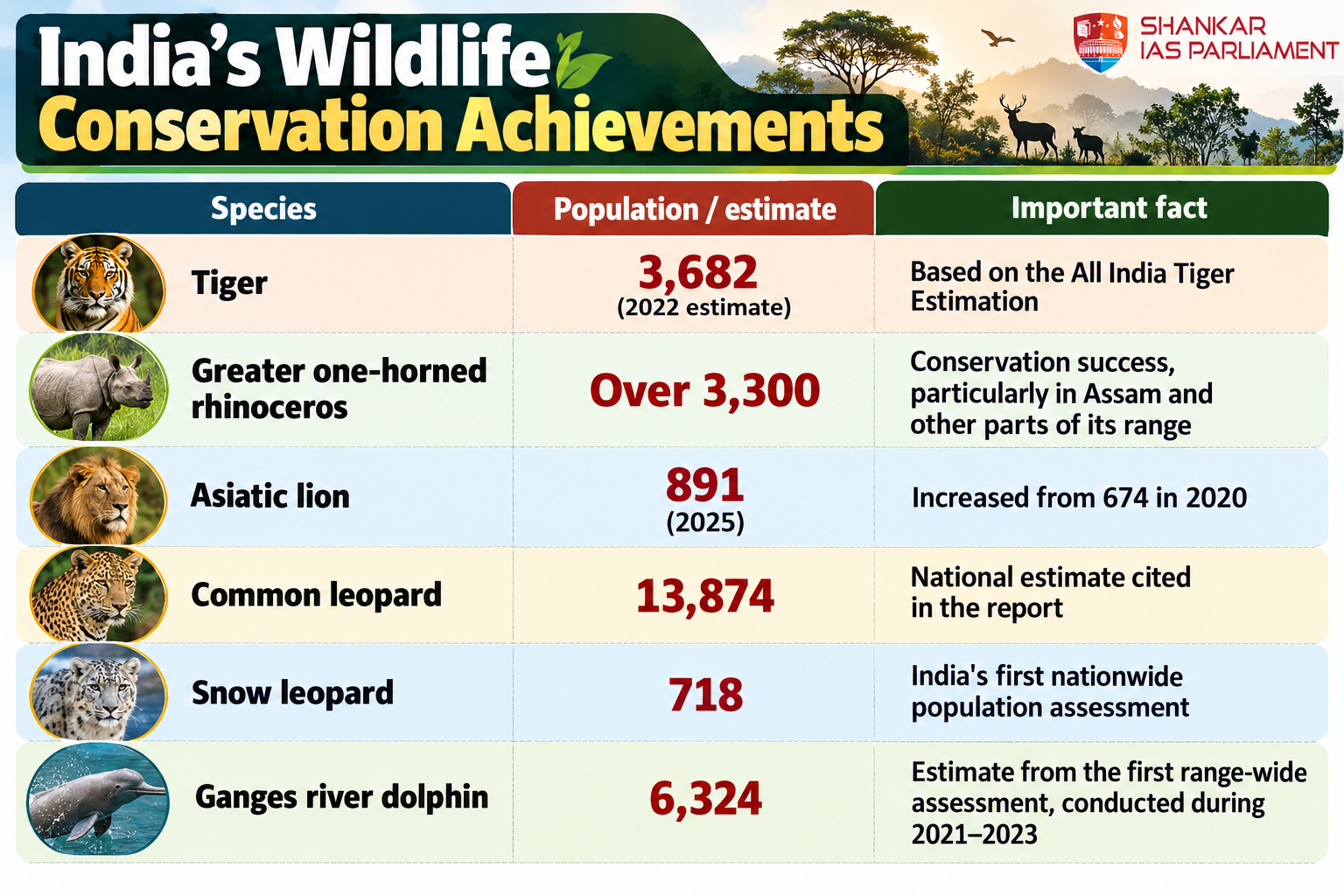
- Conversely, India has documented population increases in several key wildlife species, such as tigers, Asiatic lions, and greater one-horned rhinoceroses.
- The report underscores the severity of the global biodiversity crisis and emphasizes the critical role of sustained conservation initiatives.
- Major threats to wildlife
- Habitat loss and ecosystem degradation.
- Overexploitation of wildlife populations and natural resources.
- Anthropogenic climate change.
- Environmental pollution.
- Introduction and spread of invasive alien species.
- Emergence and transmission of wildlife diseases.
- These pressures are interconnected with broader challenges in food production, energy infrastructure, and financial systems.
- Assessment of River Dolphins
- The survey encompassed 8,507 kilometers across 28 rivers between 2021 and 2023.
- A science-based estimate identified 6,324 Ganges river dolphins within the surveyed range.
- These findings underscore the significance of monitoring freshwater biodiversity.
- Asia-Pacific regional findings
- The Living Planet Report 2026 documented an average 49% decline in monitored vertebrate populations in Asia and the Pacific from 1970 to 2022.
- The regional index comprised 4,664 monitored populations representing 787 species.
Reference
Down to Earth | WWF Living Planet Report 2026



