Prelims: Current events of national and international importance | International relations
Why in News?
Venezuela has formally notified the United Nations of its “irrevocable” decision to withdraw from the International Criminal Court.
The ICC had been conducting a multi-year investigation into members of its armed forces and other officials.
But the withdrawal does not affect investigations or legal proceedings that have already begun before the withdrawal takes effect.
The ICC can continue its ongoing investigation into alleged crimes against humanity in Venezuela.
The government justified the move by alleging a “geographical bias” within the court.
It was claiming it disproportionately targets nations in the Global South, specifically across Africa and Latin America.
Chad also announced plans to withdraw from the ICC.
Chad’s withdrawal follows similar moves by Burkina Faso, Mali and Niger last year.
Israeli Prime Minister Benjamin Netanyahu is wanted by the ICC over alleged war crimes and crimes against humanity in Gaza.
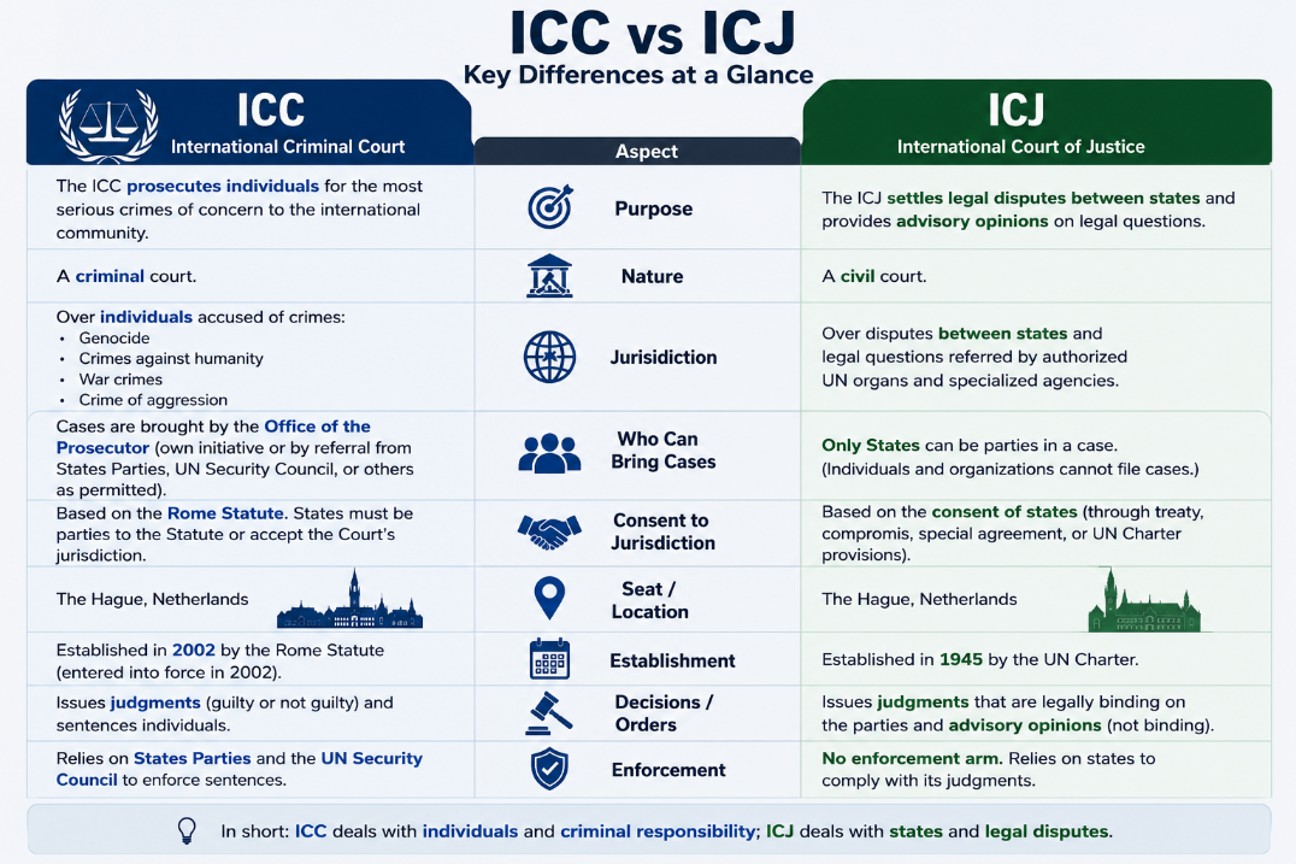
The International Criminal Court (ICC) is an intergovernmental organisation and international tribunal seated in The Hague, Netherlands.
It was established in 2002 under the multilateral Rome Statute.
The court was established to prosecute war crimes, crimes against humanity, genocide and the crime of aggression when member states are unwilling or unable to do so themselves.
The ICC is the first and only permanent international court with jurisdiction to prosecute individuals for the international crimes.
The ICC can generally exercise jurisdiction in cases where the accused is a national of a state party, the alleged crime took place on the territory of a state party, or a situation is referred to the Court by the United Nations Security Council.
Countries that are not party to the Rome Statute and do not recognise the court's jurisdiction include China, India, Russia, and the United States.