Vikram-S
Mission Prarambh’s Vikram-S India’s first private rocket, lifts off from ISRO’s Launchpad in Sriharikota.
Vikram-S rocket is named after Vikram Sarabhai, the father of Indian space science.
- Vikram-suborbital (VKS) is the first of the Vikram series of launch vehicle developed by Hyderabad-based start-up Skyroot Aerospace Private Limited.
- The rocket has been built using advanced technologies including carbon composite structures and 3D-printed components.
- Vikram-S is a sub-orbital launch vehicle.
- The solid fuelled rocket is single-staged.
- It has a gross lift off mass of 545kg and payload mass of 80 kg.
- Vikram series of orbital class space launch vehicles includes Vikram I, Vikram II and Vikram III.
- Vikram-1 orbital vehicle is planned for launch next year.
- Orbital velocity is the speed that an object must maintain to remain in orbit around a planet
- An orbital rocket achieves orbital velocity, whereas a suborbital rocket flies at a speed below that.
- In simple words, a sub-orbital vehicle travel high enough to reach the ‘edge’ of outer space but do not have the energy to achieve orbit.
Mission Prarambh
- It is the maiden mission of launching 3 payloads to the sub-orbit in Vikram-S.
- The 6-metre tall vehicle hit a peak altitude of 89.5 kilometres and then splashed into the Bay of Bengal in about 5 minutes after the launch.
- It marks the first launch of a launch vehicle developed by a private company in India.
- The mission was authorized by IN-SPACe.
In June 2020, the space sector was opened up for private stakeholders and enabled to unlock the immense potential of the Indian Space Sector.
References
- The Hindu | Vikram-S lifts off from ISRO spaceport
- The Indian Express | Mission Prarambh’s Vikram-S rocket
- ISRO | Mission Prarambh
No Money for Terror
India hosted the 3rd Ministerial Conference on Countering Financing of Terrorism themed ‘No Money For Terror (NMFT)’.
- The Conference offers a unique platform to deliberate on the effectiveness of the current international regime on Counter Terrorism Financing as well as steps required to address emerging challenges.
- In 2018 France mobilized countries determined to identify and drain all the sources of terrorist financing, thus started NMFT.
- The Ministerial Conference on Countering Financing was first held in Paris in 2018, followed by Melbourne in 2019.
- India hosted the 3rd conference of NMFT at New Delhi.
- About 450 delegates from across the world including Financial Action Task Force, Heads of Delegations participated in the conference.
- Agenda – To discuss about the use of crowdfunding platforms to finance terrorist activities and weak control mechanisms of social media platforms.
- The 2 day conference focuses on –
- Global trends in terrorism and terrorist financing
- Use of formal and informal channels of funds for terrorism
- Emerging technologies and terrorist financing
- International cooperation to address challenges in combating terrorist financing
References
- PIB | 'No Money for Terror' Ministerial Conference
- Live Mint | ‘No Money for Terror’ meet
- The Hindu | Third edition of the ‘No Money For Terror’ Conference
Lake-effect Snow
Lake-effect snow, the extreme snowfall events happen periodically along the eastern edges of the Great Lakes.
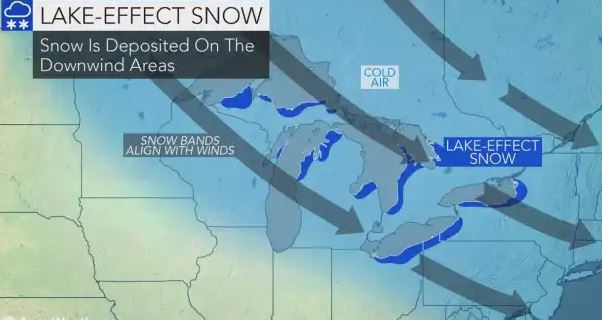
- Lake effect snow forms when cold, dry air mass moves over the unfrozen and relatively warm waters of a lake.
- The warmth and moisture from the lakes are transferred into the atmosphere.
- After cooling, moisture then gets dumped downwind as snow.
- This phenomenon is called ‘Lake-effect snow’.
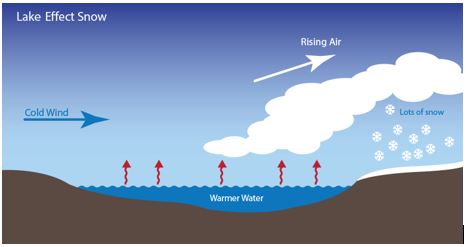
- Factors - Lake-effect snow is strongly influenced by the differences between the amount of heat and moisture at the lake surface and in the air a few 1000 feet above it.
- Higher difference (14°C or more) favours the conditions to suck water up from the lake, thus more snowfall happens.
- Lake-effect snow often happens in late fall, when lake water is still warm from summer and cold air starts sweeping down from Canada.
- Role of Climate change - To an extent, climate change plays a role in the lake-effect snow.
- Models predict that with additional warming, more lake-effect snow will occur.
References
- The Hindu | What is lake-effect snow?
Battle of Rezang La
India has recently observed the 60th anniversary of Battle of Rezang La.
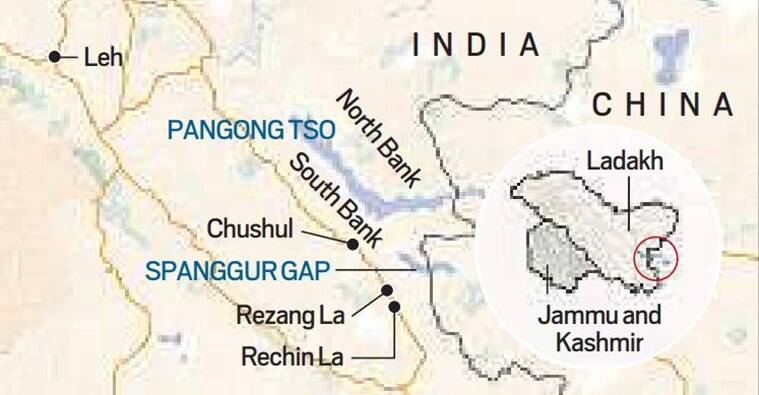
- The battle was fought between Indian and Chinese troops on the south-eastern ridge of the Chushul Valley of Eastern Ladakh.
- 120 brave soldiers from the Charlie (C) Company of 13 Kumaon Regiment led by Major Shaitan Singh fought against the Chinese People’s Liberation Army.
- In 2021, Union Defence Ministry inaugurated the revamped Rezang La war memorial in Eastern Ladakh.
Rezang La
- Rezang La is a mountain pass on the Line of Actual Control between Indian-administered Ladakh and the Chinese-administered Spanggur Lake basin.
- The pass is located on the eastern watershed ridge of the Chushul Valley.
- Rezang La is, therefore, vital for the defence of the crucially important Chushul.
- Any invader reaching there would have had a free run to Leh.
- With Rezang La, India gets a clear view of the Spanggur Gap, China’s Moldo Garrison and also of the Spanggur Lake.
References
- First Post | India revamps Rezang La memorial
- Indian Express | Battle of Rezang La
Melocanna baccifera
A study spanning 13 years has shed interesting light on flowering in Melocanna baccifera, a tropical bamboo species.
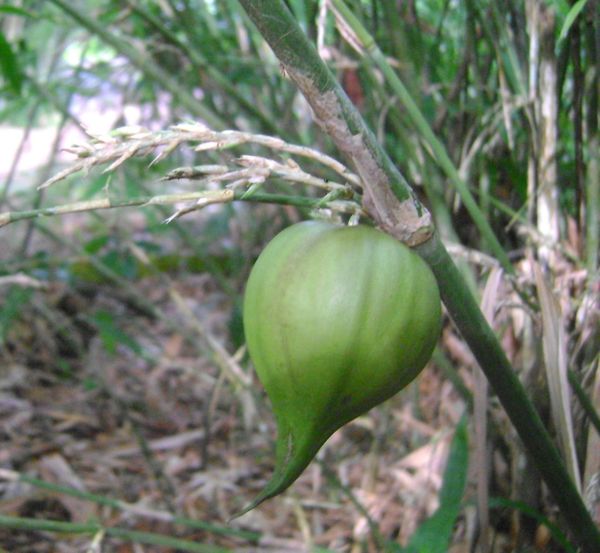
- Melocanna baccifera, also called as ‘Muli’ in northeast India, is the largest fruit-producing tropical bamboo species.
- It is native to the northeast India-Myanmar region.
- During its gregarious flowering, the bamboo produces large fruits which draw animal visitors/predators.
- Of these, black rats greatly relish the fleshy, berry-like fruit.
Gregarious flowering refers to the phenomenon when all populations of a particular species flower roughly at the same time.
- During this period, rats also multiply rapidly, a phenomenon dubbed as ‘rat flood.’
- Once the fruits are gone, they start devouring standing crops, causing famines that have claimed thousands of human lives.
- Earlier, it was presumed that ‘high protein in fruits/seeds’ was attracting the rats.
- But, a study in 2016 found that the fruit actually contains very little protein and the predation is mainly due to the high content of sugars.
- The bamboo fruit and flower entice an astonishing variety of visitors/predators.
- They include pollen predators (honey bees), fruit predators (millipedes, slugs and snails, fruit borers, monkeys, rats, porcupines, wild boars and palm civets), seedling predators (rabbits, deer), and insect/pest predators (ants, mantis).
Reference
The Hindu | Sweet not Protein in Bamboo Fruits



