Prelims: Current events of national and international importance | Art & Culture | History
Why in News?
Recently, Prime Minister and Myanmar’s President, U Min Aung Hlaing visited the Mahabodhi Temple, one of Buddhism’s holiest sites and a UNESCO World Heritage Site.
- Mahabodhi Temple Complex – It is considered as the Cradle of Buddhism in history of mankind.
- It is one of the 4 holy sites related to the life of the Lord Buddha, and particularly to the attainment of Enlightenment (Nirvana).
- UNESCO Recognition – 2002.
- Situated in– Bodh Gaya, Bihar (115 km south of Patna, 16 km from Gaya.)
- Constructed– 1st temple by Emperor Asoka (3rd century BCE); present brick temple dates to 5th –6th century CE (late Gupta period).
- Architecture – One of the earliest surviving brick temples in India; influenced later brick architecture.
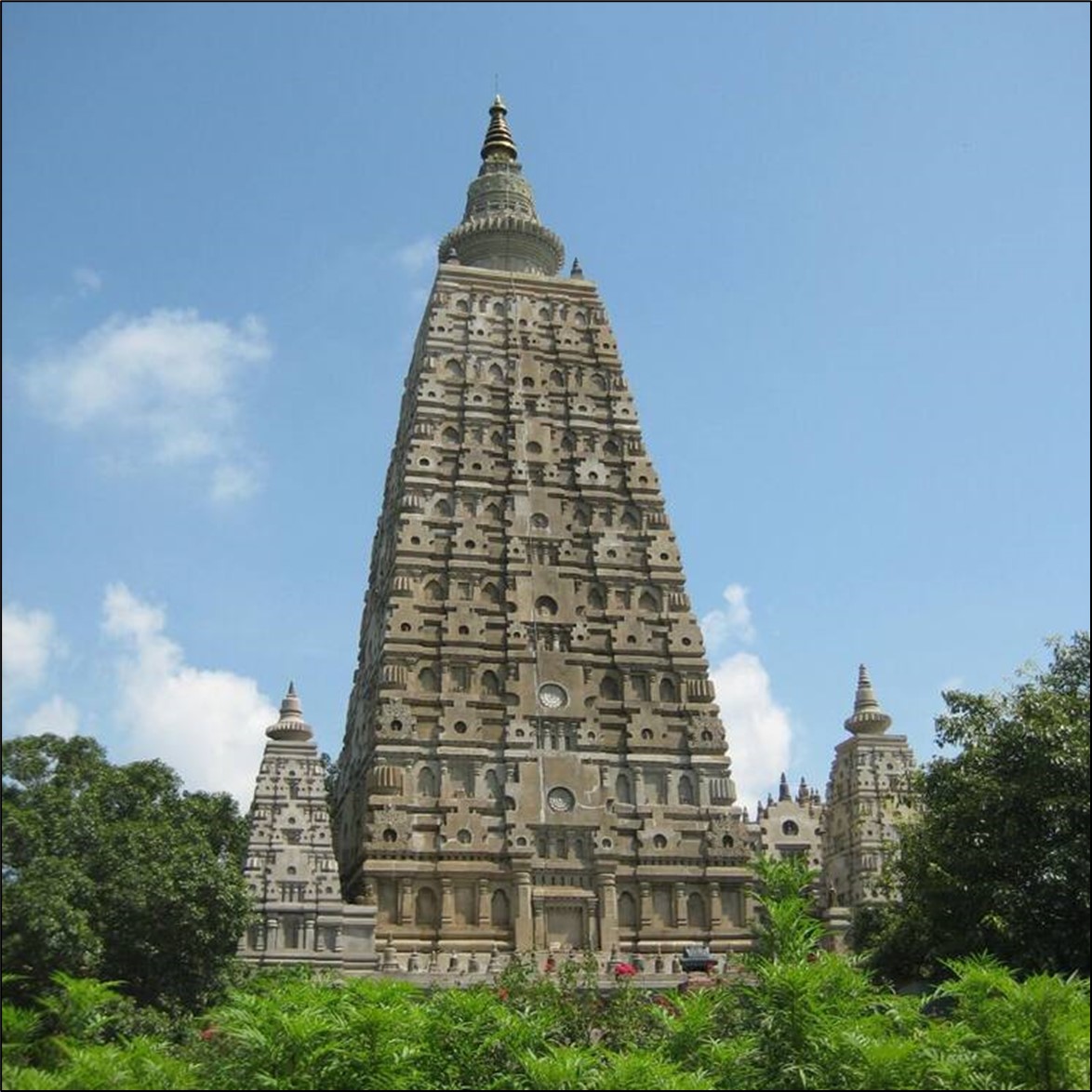
Architectural Features
- Main Temple – 50 m high, classical Indian style; curvilinear shikhara topped by amalaka and kalasha.
- Sanctum – Houses gilded seated Buddha (over 5 ft), depicting Enlightenment.
- Walls – 11 m high, niches with Buddha images, chaitya motifs, honeysuckle and geese designs.
- Vajrasana (Diamond Throne) – Polished sandstone throne installed by Asoka to mark the site of Buddha’s meditation.
- 7 Sacred Sites – It refers to the places around Mahabodhi Temple Complex where Buddha spent seven weeks meditating after achieving enlightenment, these spots mark the 7 sacred weeks.
- The Bodhi Tree & Vajrasana, Animeshlochan Chaitya (prayer hall), Ratnachakrama (Jewelled Ambulatory), Ratnaghar Chaitya, Ajapala Nigrodh Tree, Muchalinda Lake (Lotus Pond, Rajyatana Tree.
- Authenticity – Documented in Buddhist texts and architecture is largely unaltered.
Reference
UNESCO | Mahabodhi Temple Complex



