Prelims: Current events of national and international relations | Species
Why in news?
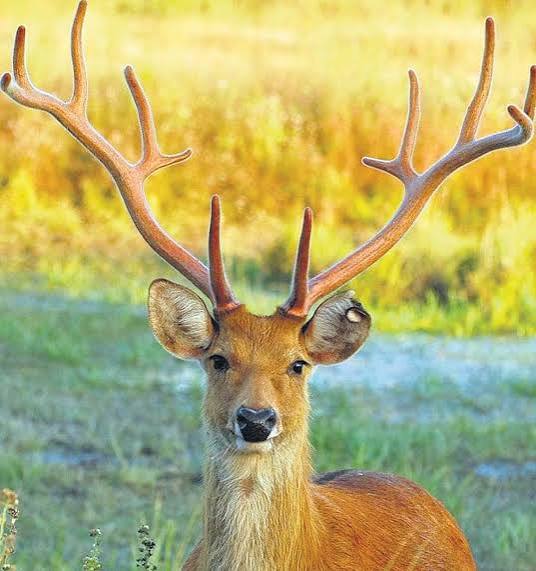
A decade after reintroduction, the Satpura tiger reserve's Barasingha population tops around 303, with three population units established across the landscape.
- Reintroduction programme – The forest department of Madhya Pradesh launched the reintroduction programme in 2015, bringing animals from Kanha tiger reserve to Satpura.
- Need for reintroduction – Disappeared from the Satpura landscape because of habitat loss and hunting.
- Objective – To reduce dependence on a single stronghold population in Kanha (principal natural stronghold), the species was reintroduced into Satpura.
- Between 2015 and 2026, approximately 135 barasingha were translocated to the reserve.
- The population has now increased to about 303 animals through successful natural breeding.
- Initial acclimatisation – Initially, the animals were kept in a predator-protected enclosure in the Bori landscape to help them acclimatise, breed and adapt before being released into the wild.
- 3 population units – Bori enclosure, Bori grasslands and Malini grasslands in the Churna range.
- Establishing multiple populations reduces dependence on a single location and creates opportunities for the species to expand across suitable habitats.
- Next phase – To link at least six grasslands, allowing barasingha to move between habitat patches in search of seasonal forage, water and breeding grounds.
- It is intended to reduce pressure on individual grasslands as the population grows.
- The next priority was to strengthen habitat connectivity and develop grassland corridors to secure the species' long-term future.
- Key activities undertaken – Management measures include
- Promoting palatable native grasses,
- Removing invasive weeds, maintaining open grasslands, and
- Improving water availability.
- Forest managers are focusing on breeding and fawning areas, where adequate cover and protection are essential for the survival of young animals.
- Success of the programme – The initiative starts with simple translocation, but has resulted in the establishment of a naturally breeding and self-sustaining population.
- The success reflects the combined efforts of frontline forest personnel, senior officers, scientific collaborators and communities.
- Challenges – To ensure that habitat availability, connectivity and protection keep pace with the growing herd.
Reference
TOI | Decade after reintroduction, Satpura reserve’s Barasingha population tops 300



