Why in News?
World Bank has recently released the ‘Poverty, Prosperity and Planet: Pathways out of the Polycrisis’ report.
What is the global poverty situation ?
- Pathways out of the Polycrisis – The report released by World Bank provides the first post-pandemic global assessment of poverty and shared prosperity.
Polycrisis a complex situation where multiple, interconnected crises converge and amplify each other, resulting in a predicament which is difficult to manage or resolve.
- Global Poverty Level - Almost half the global population(44%) – around 3.5 billion people – live today on less than $6.85 per day, the poverty line for upper-middle-income countries.
- Global Extreme Poverty - 8.5% of the global population (almost 700 million people) live today in extreme poverty, on less than $2.15 per day.
According to World Bank, the people in extreme poverty is who live on less than $2.15 per day.
- Global Poverty Concentration - Extreme poverty in Sub-Saharan Africa and fragile countries is increased.
- In 2024, Sub-Saharan Africa accounted for 16 % of the world’s population, but 67 % (2/3rd) of the people living in extreme poverty.
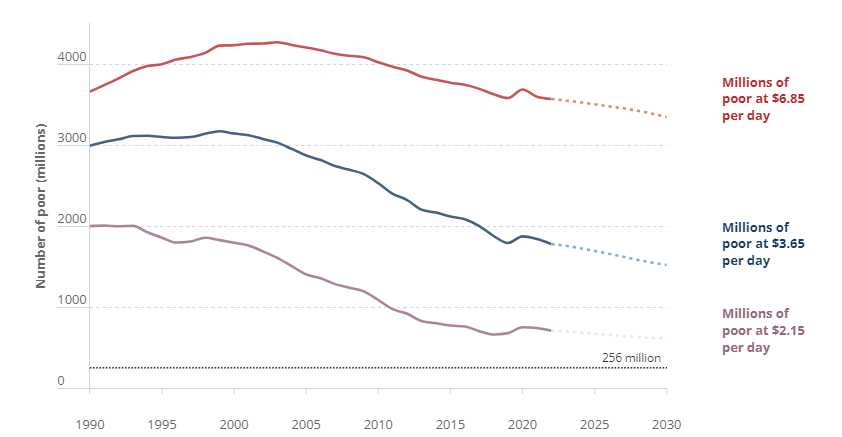
- Poverty Level in India - More Indians are living below the poverty line in 2024 than in 1990, primarily driven by ‘population growth’.
Poverty threshold standard for middle-income countries is $6.85 (about Rs 576) per day.
- Extreme Poverty in India - 129 mn Indians living in extreme poverty in 2024 down from 431 million in 1990.
- Cessation of Poverty Reduction - Global poverty reduction had slowed to a near standstill, with 2020–2030 set to be a lost decade.
- Poverty Forecast - At the current pace of progress, it would take decades to eradicate extreme poverty and more than a century to lift people above $6.85 per day mark.
- Based on the current trajectory, 622 million people (7.3 % of the global population) are projected to live in extreme poverty in 2030.
Global poverty reduction target is 3 % by 2030.
- Projection for India - India’s contribution to global extreme poverty was projected to decline significantly over the next decade.
- Extreme poverty rate in India will be 2030 to zero.
- Causes of Stagnant Poverty - Interconnected Crisis of slow economic growth, conflict and fragility, and climate-related shocks.
- Recommendation - It is critical to promote sustainable investments, mitigate climate risks, and create opportunities that foster inclusive growth.
What is the Global Prosperity Gap ?
- Shared prosperity – It is a measure of the inclusiveness of growth.
- Global Prosperity Gap – It is a new indicator of shared prosperity used by the World Bank.
- It tracks how far the world is, on average, from a threshold of $25 per person per day with a specific emphasis on the incomes of the poorest.
- Slowdown in Inclusive Growth - Progress in reducing the Prosperity Gap stalled since the pandemic, highlighting a slowdown in inclusive income growth over this period.
- Impact - High inequality can reflect a lack of opportunities for socioeconomic mobility, which can further hinder prospects for inclusive growth and poverty reduction over time.
- Level of Inequality - Around one-fifth of the world’s population lives in countries with high inequality.
- High levels of income or consumption inequality are concentrated among countries in Sub-Saharan Africa and in Latin America and the Caribbean.
- Forecast - At current growth rates, a typical upper-middle-income country will need 100 years to close the Prosperity Gap.
- Recommendation - Faster and more inclusive growth is needed to accelerate progress in achieving shared prosperity.
What are the climate change risk to poverty and inequality reduction?
- Climate Risk - One in five people are at risk of an extreme weather event in their lifetime and faces severe setbacks in their livelihoods, significantly hindering poverty reduction efforts.
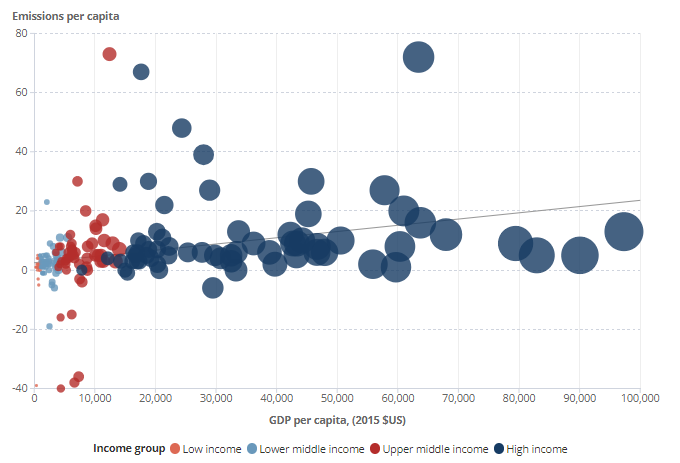
- Increasing threat - People’s risks to climate hazards are expected to increase unless resilience is strengthened and greenhouse gas (GHG) emissions decline.
- Protecting people from extreme weather events requires acting on two fronts
- Lowering vulnerability by enhancing risk management
- Preventing the escalation of future climate hazards by accelerating transformations to reduce the emissions intensiveness of growth.
- Trade-offs - Eradicating poverty and boosting shared prosperity requires managing trade-offs between growing incomes and lowering GHG emissions.
- Recommendations
- Low-income Countries - Prioritize poverty reduction by delivering economic growth and reduce multidimensional poverty.
- Middle-income countries - Prioritize income growth that reduces vulnerability and synergies to reduce the carbon intensity of growth.
- Upper-middle- and high-income countries - They account for four-fifths of global GHG emissions.
- These countries need to act fast in transitioning to low-carbon intense economies while managing transition costs.
What lies ahead?
- Faster and more inclusive growth is needed to accelerate progress in achieving shared prosperity.
- Fostering international cooperation and closing financing gaps for sustainable development is critical to enable the transition toward more sustainable, low-carbon, and resilient economies.
- Achieving a world free of poverty on a liveable planet is possible but requires serious and immediate efforts.
References
- Business Standard | 129 mn Indians living in extreme poverty in 2024
- World Bank | Poverty, Prosperity, and Planet Report 2024



