Why in News?
Google announced the “first corporate agreement” to buy nuclear energy from multiple small modular reactors (SMR).
What is the need for nuclear power in tech companies?
- Artificial Intelligence - Training AI models and keeping them online requires a huge amount of energy.
A ChatGPT query needs nearly 10 times as much electricity to process as a Google search.
- Increasing Demand - AI market is expected to grow at 25-35 %.
- Managing Data Centers - Maintaining growing data centres are energy-hungry tasks.
At present, data centers worldwide consume 1-2% of overall power, but this percentage will likely rise to 3-4% by the end of the decade.
- Reduce GHG Emission – Relying on fossil fuels emits huge amount of greenhouse gases.
Google admitted that its total global greenhouse gas emissions rose by 13% in 2023 year-over-year.
What are the benefits of small modular reactors ?
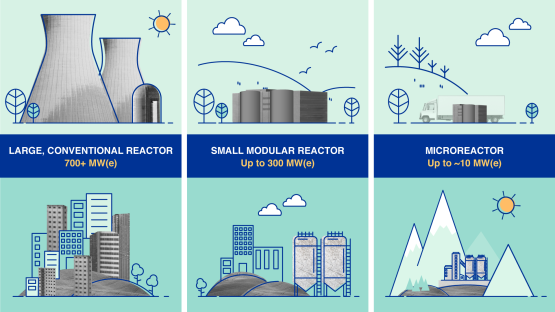
- Small Modular Reactors - SMRs are advanced nuclear reactors designed to be smaller and more flexible than traditional large reactors.
- Size and Capacity - SMRs have a power output of up to 300 MW (electric) per unit, which is about one-third the capacity of traditional reactors.
- Lower costs – They have lower building and operational costs.
- Compact Designs – They can function in areas unable to withstand larger or older nuclear power plants that require huge volumes of water.
- Safer - Components of SMR can be manufactured in a factory and then assembled closer to where power is needed, reducing the safety risks compared to their larger, more complex predecessors.
- Reliable – Nuclear energy can be availed round the clock without supply chain and feed interruption.
- Clean Energy – Nuclear energy is carbon free and do not directly emit greenhouse gases.
- Better Power Output – Nuclear energy has high power intensity than any other renewable sources.
- Faster Deployment - Smaller sizes and modular designs further help the tech giant in faster deployment cycles.
What are the challenges in adopting nuclear energy ?
- High Initial Costs - Building nuclear power plants requires significant capital investment, making it a costly option compared to other energy sources.
- Regulatory Hurdles - Obtaining regulatory approvals for nuclear projects can be a lengthy and complex process, involving stringent safety and environmental standards.
- Public Perception – Nuclear energy projects are often met with opposition from public and civil society groups.
- Technological Complexity - Operating and maintaining nuclear reactors require highly skilled personnel and advanced technology, adding to the operational challenges
- Waste Management - Handling and disposing of nuclear waste is a major challenge due to its long-term radioactivity and potential environmental hazards.
- Long Construction Time - Nuclear plants take a long time to construct, often a decade or more, which can delay the benefits of the investment.
- Reputation problem - Public memory of past nuclear accidents and crises that span generations.
- For example, Ukraine’s Chernobyl explosion (1986) and Japan’s Fukushima accident (2011) resulted in extensive environmental destruction that lasted for years.
- Natural Disaster Threat – Fukushima Incident demonstrates how natural disasters beyond human control such as a tsunami can lead to a devastating nuclear accident.
- Earthquake Threat - Nuclear infrastructures are highly vulnerable to earthquakes.
What lies ahead?
- Continued investment in advanced nuclear technologies for enhanced safety, efficiency, and flexibility compared to traditional reactors.
- Collaboration between governments, private companies, and research institutions can accelerate the development and deployment of nuclear technologies.
- Streamlining regulatory processes and providing clear guidelines can help reduce the time and cost associated with nuclear projects.
- Educating the public about the benefits and safety of nuclear power can help build support for nuclear projects.
References
- The Hindu | Big Tech scouting for nuclear power
- Finshot | Nuclear for AI



