Prelims: Current events of national and international importance | Reports & Indices
Why in News?
The most recent Global Multidimensional Poverty Index (MPI), reported that 238 million individuals in India were multidimensionally poor in 2024.
Global Multidimensional Poverty Index (MPI)
- Introduced – 2010.
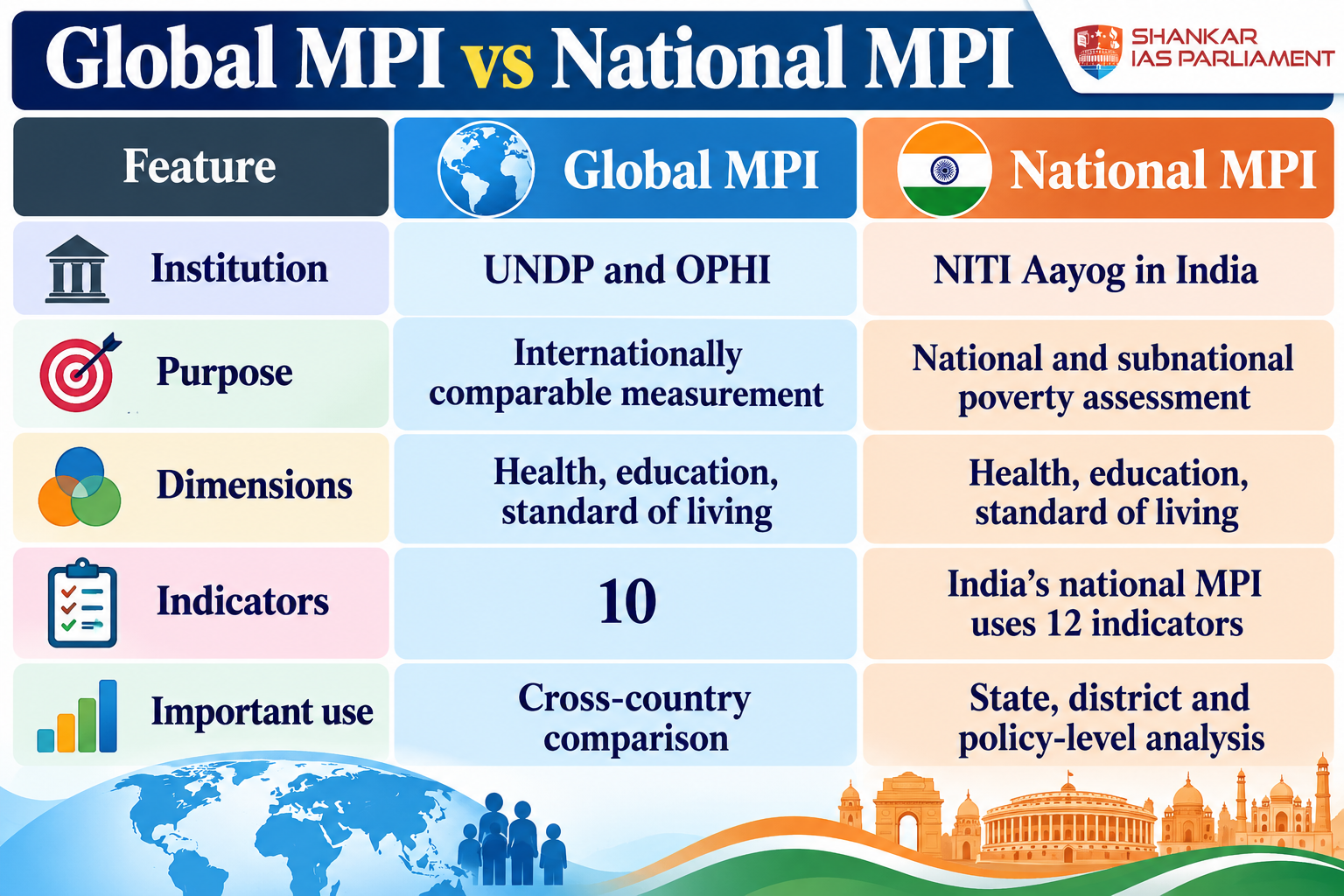
- Published by – United Nations Development Programme (UNDP) and the Oxford Poverty and Human Development Initiative (OPHI), University of Oxford.
- Purpose – To measures poverty beyond income by identifying overlapping deprivations experienced by individuals and households.
- Coverage – 108 countries, representing 78% of the global population.
- Approach – It measures multiple deprivations in health, education and standard of living.
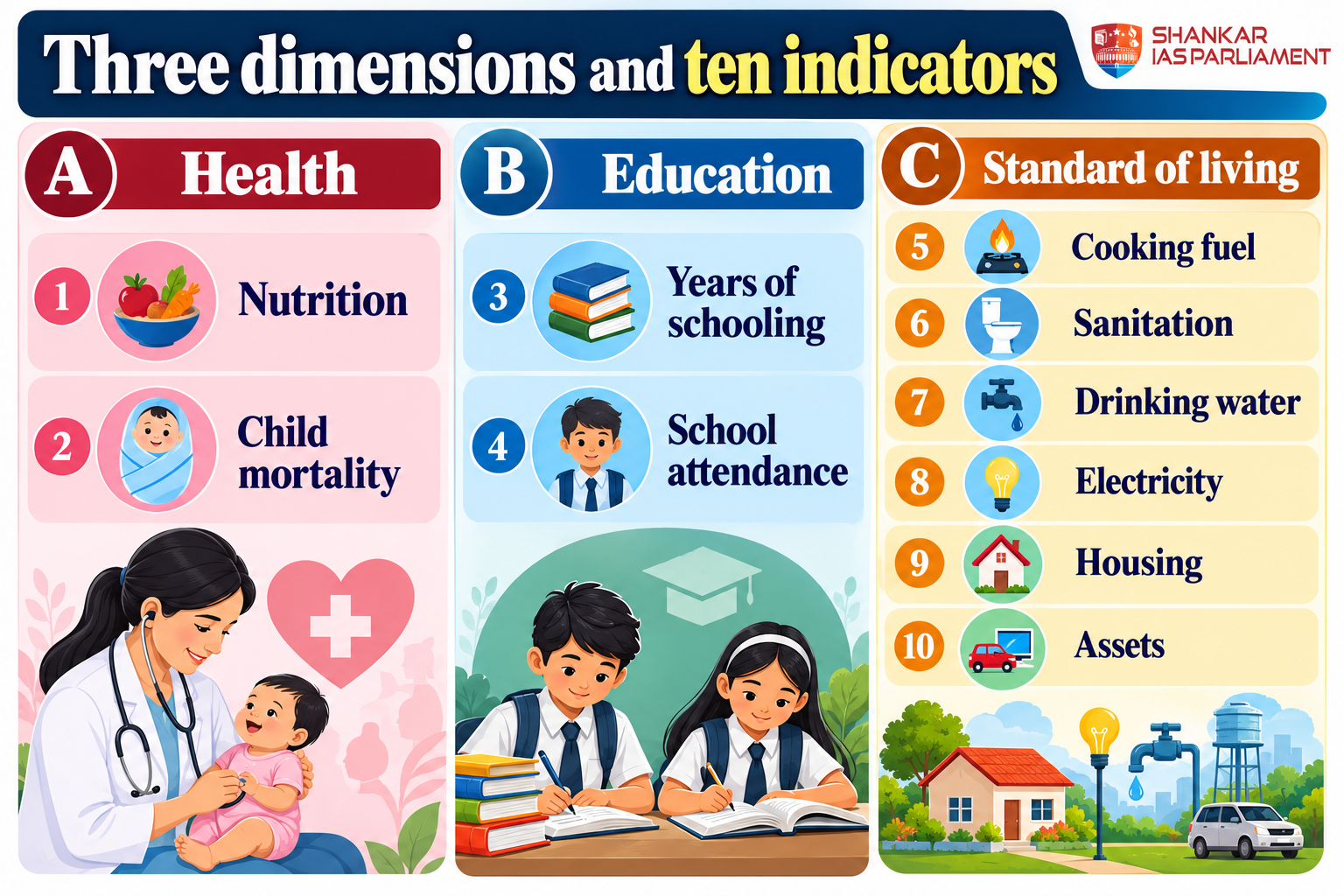
A person is considered multidimensionally poor if they are deprived in at least one-third of the weighted MPI indicators.
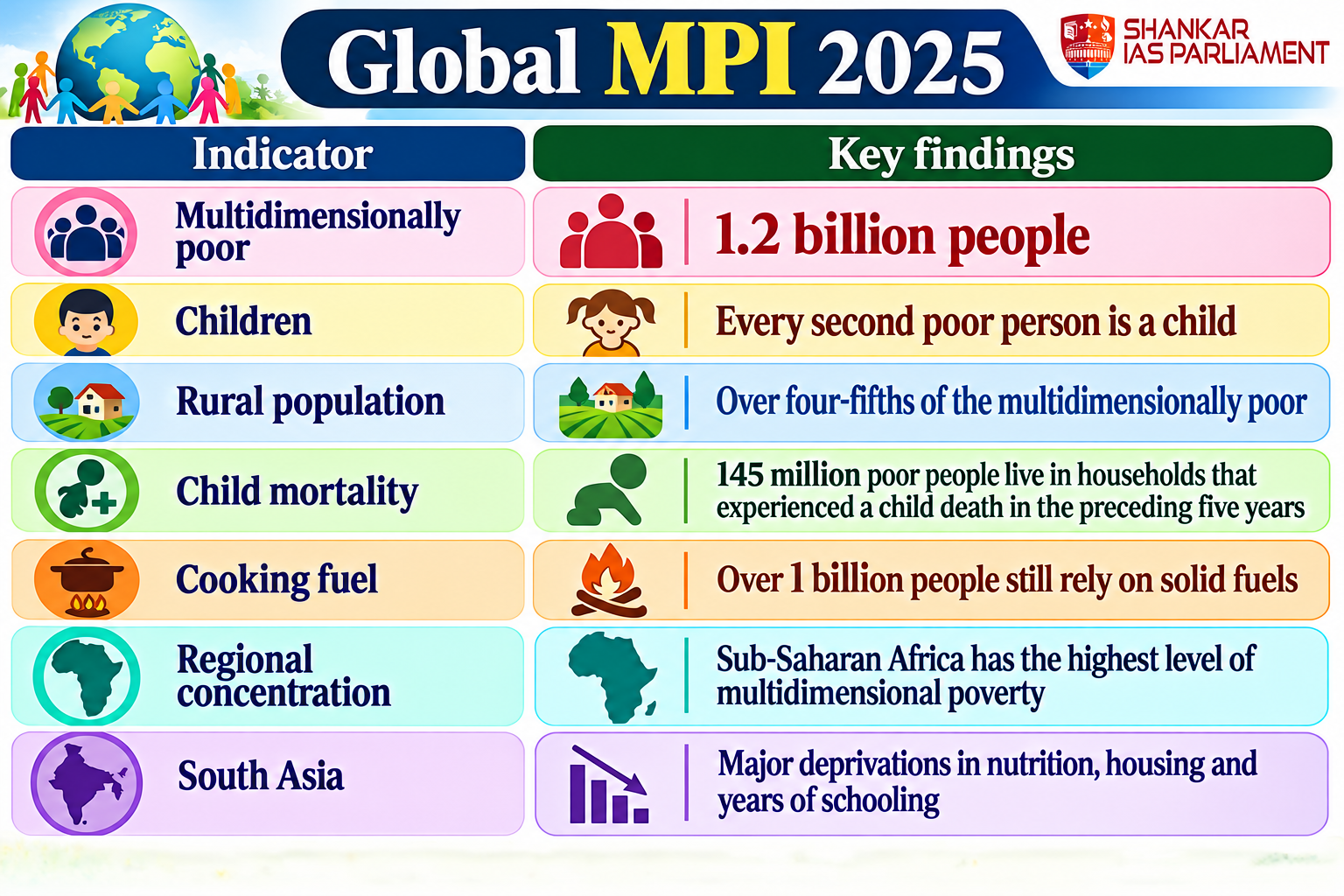
- Key Drivers of Global Multidimensional Poverty
- Population growth – In some regions, poverty reduction has not kept pace with population growth.
- Interconnected deprivations – Poor nutrition negatively impacts school attendance, learning outcomes, and future employment opportunities.
- Inadequate basic services – Many communities face limited access to clean water, sanitation, electricity, and healthcare.
- Rural disadvantage – A significant proportion of people experiencing multidimensional poverty reside in rural areas.
An increase in the number of people living in poverty does not always indicate a higher poverty rate. Population growth can raise the absolute number even if the incidence of poverty declines.
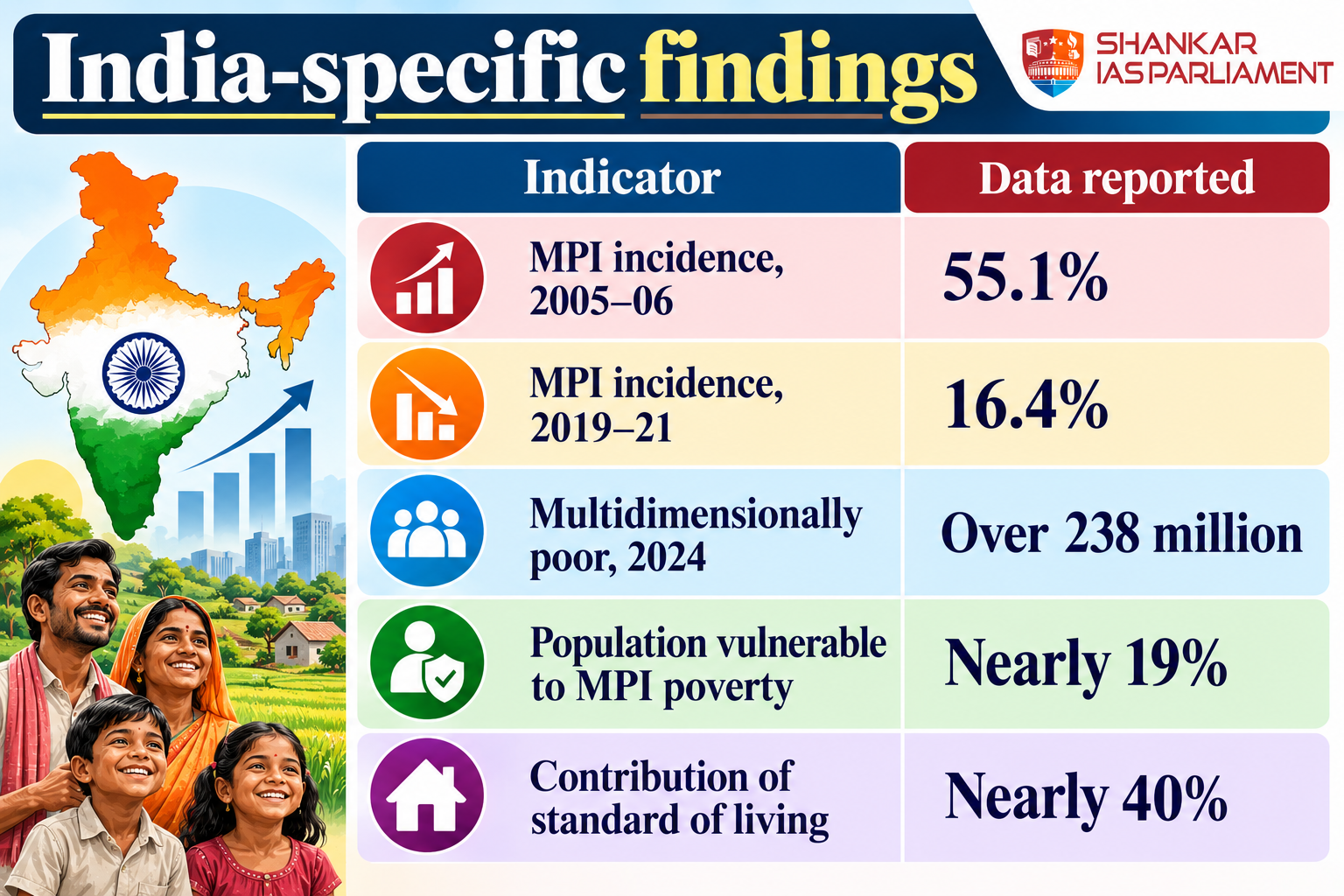
- Key Findings Relevant to India
- In 2025, 1.2 billion people worldwide experienced multidimensional poverty, with an additional 51.5 million people entering this category.
- India has made progress in reducing poverty and improving basic amenities, though persistent deprivation remains a concern.
- India has significantly reduced multidimensional poverty during the reporting period.
- However, the total number of people living in poverty remains high due to India's large population.
- Approximately 19% of India's population was classified as vulnerable to multidimensional poverty.
- Vulnerable groups remain at risk of falling into multidimensional poverty due to economic, social, or environmental shocks.
- The standard of living accounts for approximately 40% of India's multidimensional poverty.
- Lack of access to cooking fuel, sanitation, drinking water, housing, and assets continues to pose significant development challenges.
Reference
Down to Earth | Multidimensional Poverty Index (MPI)



