0.1286
7667766266
x

House lizards: A hygiene risk, not a venomous threat

iasparliament Logo
November 14, 2026

Prelims: Current events of national and international importance | Environment

Why in News?

Reports across India linking illness to house lizards falling into meals have fuelled widespread misconceptions about their toxicity.

Key Highlights
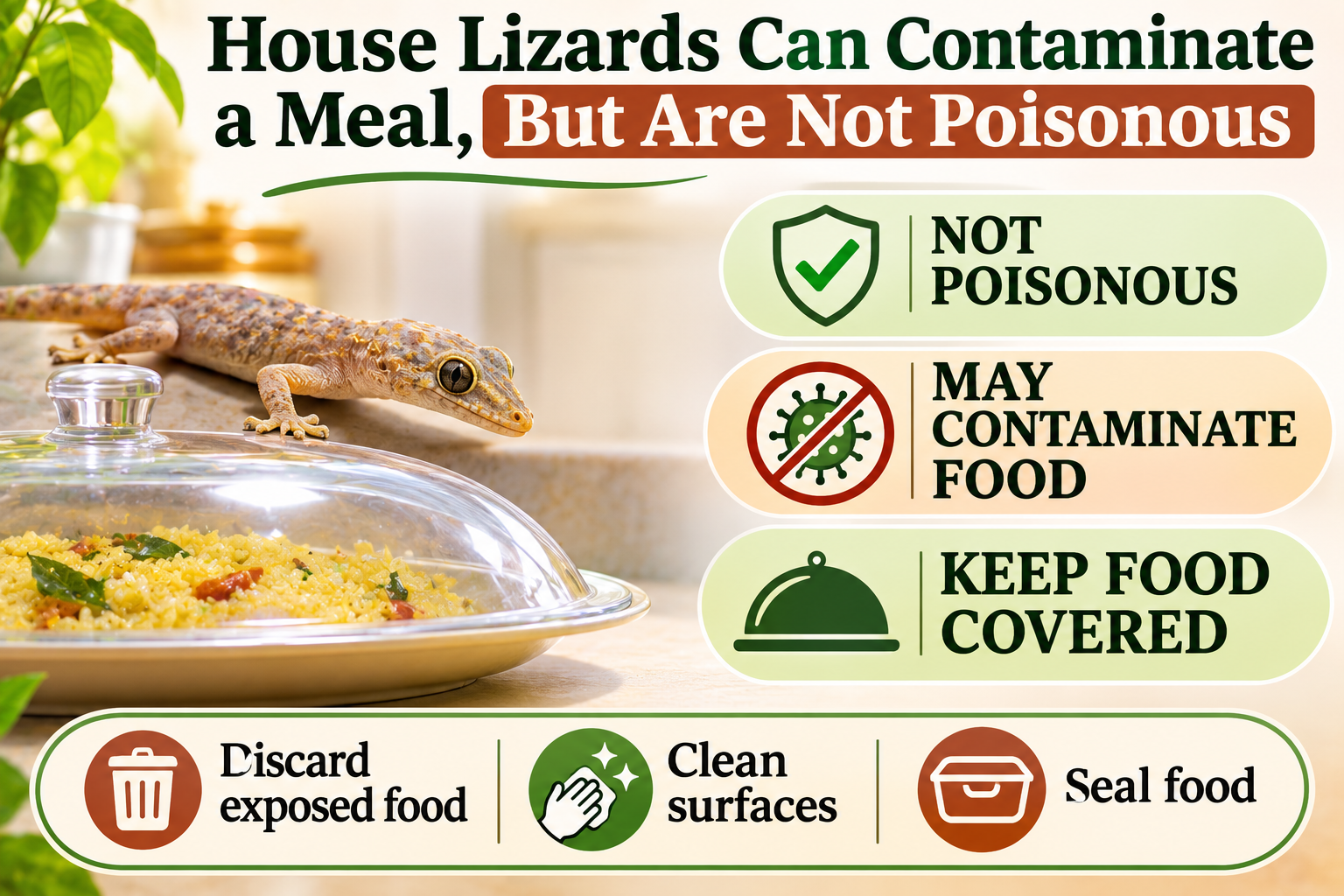
  • Species name - Common House Gecko (Hemidactylus frenatus).
  • Common house geckos (Hemidactylus frenatus) can contaminate exposed food with pathogens; they are completely non-poisonous and non-venomous.
  • Absence of Toxins or Venom - House geckos do not possess venom glands or secrete inherent toxins on their skin, breath, or body parts that cause fatal poisoning upon contact or accidental ingestion.
  • Microbial Contamination Risk - House lizards carry overlapping bacterial and parasitic flora, most notably Salmonella, Staphylococcus, and non-tuberculous mycobacteria in their digestive tract, skin, and droppings.
  • Falling into uncovered food or water transfers these microbes, leading to standard food-borne gastroenteritis (salmonellosis) rather than chemical poisoning.
  • Psychosomatic Reactions - Medical case studies note that many acute hospital admissions (nausea, vomiting, retching) following the discovery of a lizard in food are triggered by intense psychological revulsion and panic stemming from deep-seated cultural myths.
  • Ecological Benefits- House geckos are docile, nocturnal insectivores that act as natural indoor pest controllers, feeding on mosquitoes, flies, spiders, and disease vectors.

House Lizards

Poisonous

Venomous

Pathogen Carrier

Organisms whose tissues contain toxins that cause harm when ingested, inhaled, or absorbed through touch (e.g., pufferfish, poison dart frogs).

Organisms that actively inject toxins into another creature via a specialized delivery mechanism such as fangs, stingers, or grooved teeth (e.g., cobras, Gila monsters).

An organism that is neither venomous nor poisonous itself, but mechanically or biologically transfers disease-causing microbes (bacteria, parasites) to food or surfaces.

Reference

The Hindu | House lizards can contaminate a meal

There are no reviews yet. Be the first one to review.

ARCHIVES

sidetext


