Prelims: Current events of national and international importance | Environment
Why in News?
The COP31 “35‑by‑35” pledge is economically viable, as a recent report from the International Energy Agency (IEA) confirms that declining technology costs render global electrification achievable.
COP31 “35-by-35” Electrification Goal
31st Conference of the Parties (COP31) – It is scheduled to take place in Antalya, Türkiye, from 9 to 20 November 2026.
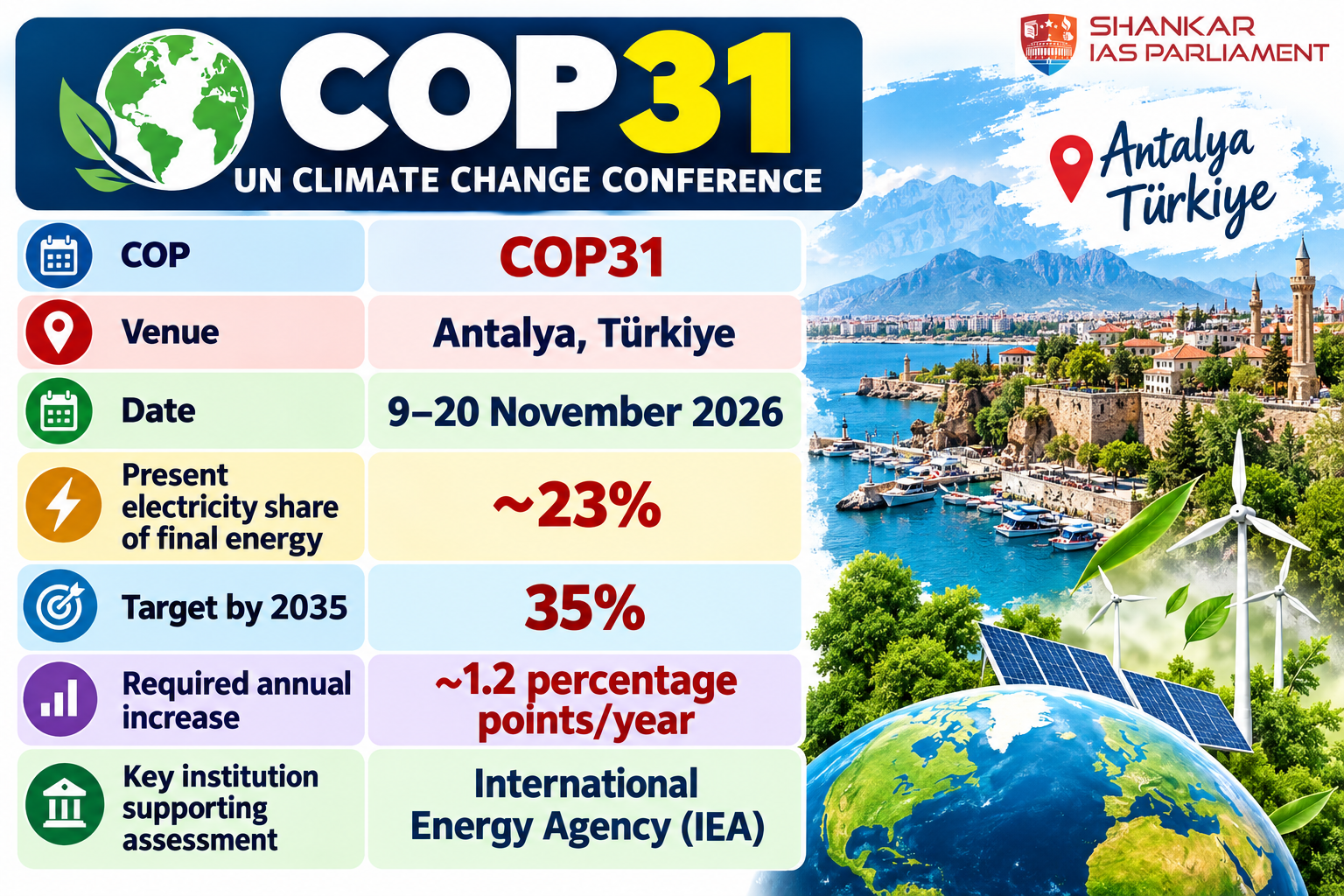
The COP31 Presidency of Türkiye has identified global electrification as one of its 3 primary objectives, together with waste reduction and the development of climate-resilient buildings.
Proposed target – To increase the share of electricity in global final energy demand from approximately 23 percent to 35 percent by 2035.
This initiative is referred to as the “35-by-35” Global Electrification Pledge.
Electrification refers to the conversion of devices, systems, or entire sectors from fossil fuel dependence to electricity as the primary energy source.
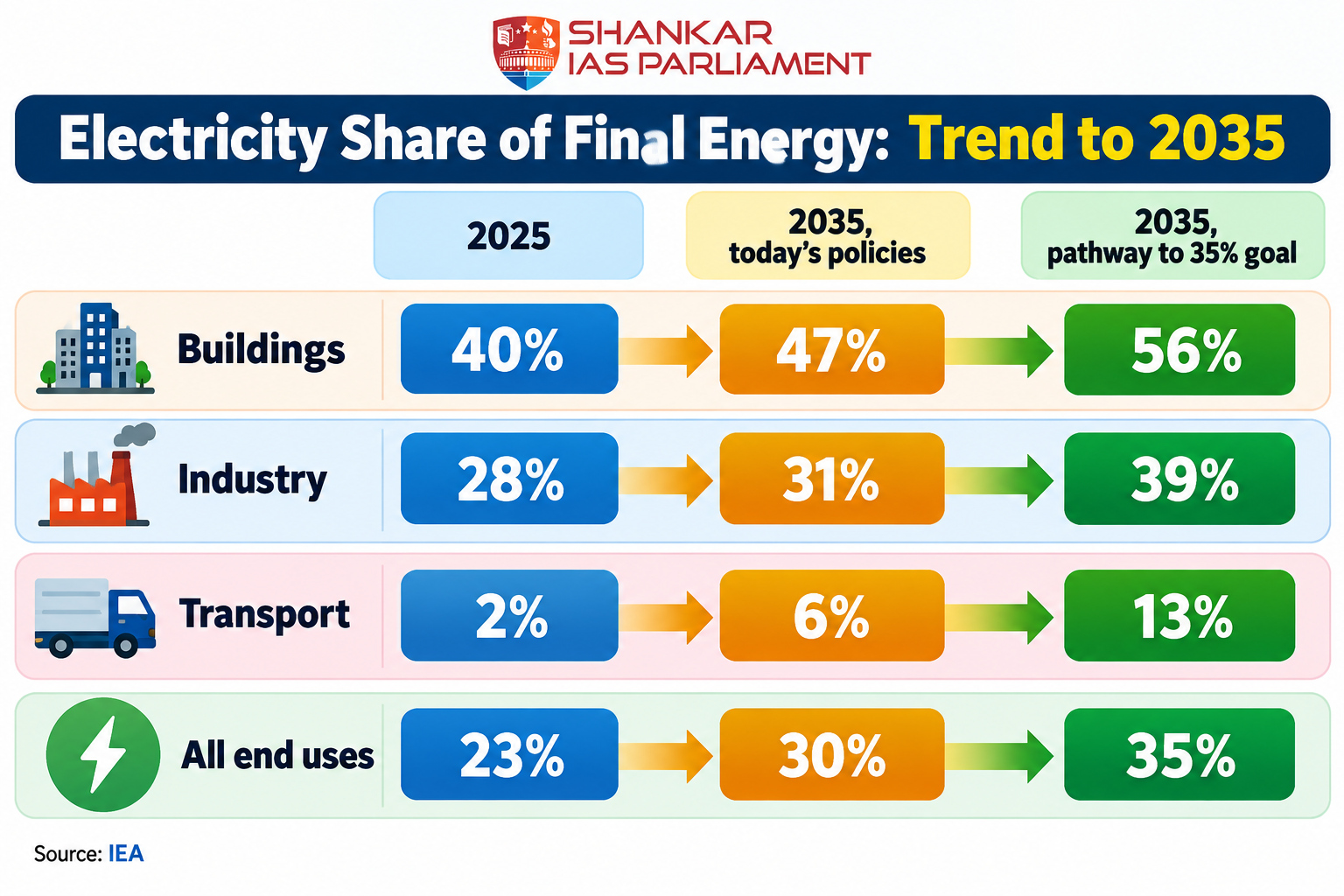
Significance
Climate Objectives – The Intergovernmental Panel on Climate Change (IPCC) identifies widespread electrification as a key component of net-zero energy systems.
Modelled pathways consistent with limiting global warming to 1.5°C indicate that electricity could supply 48 to 58 percent of final energy consumption by 2050.
Emission Reductions – According to the International Energy Agency (IEA), in a High Electrification Scenario, end-use emissions are projected to decrease by approximately 40 percent by 2035.
Energy Access – Approximately 730 million people worldwide still lack access to electricity.
Therefore, electrification serves not only as a climate mitigation strategy but also as a means to advance development and improve energy access.
Reference



