Prelims: Current events of national and international importance | Science & Technology | Health
Why in News?
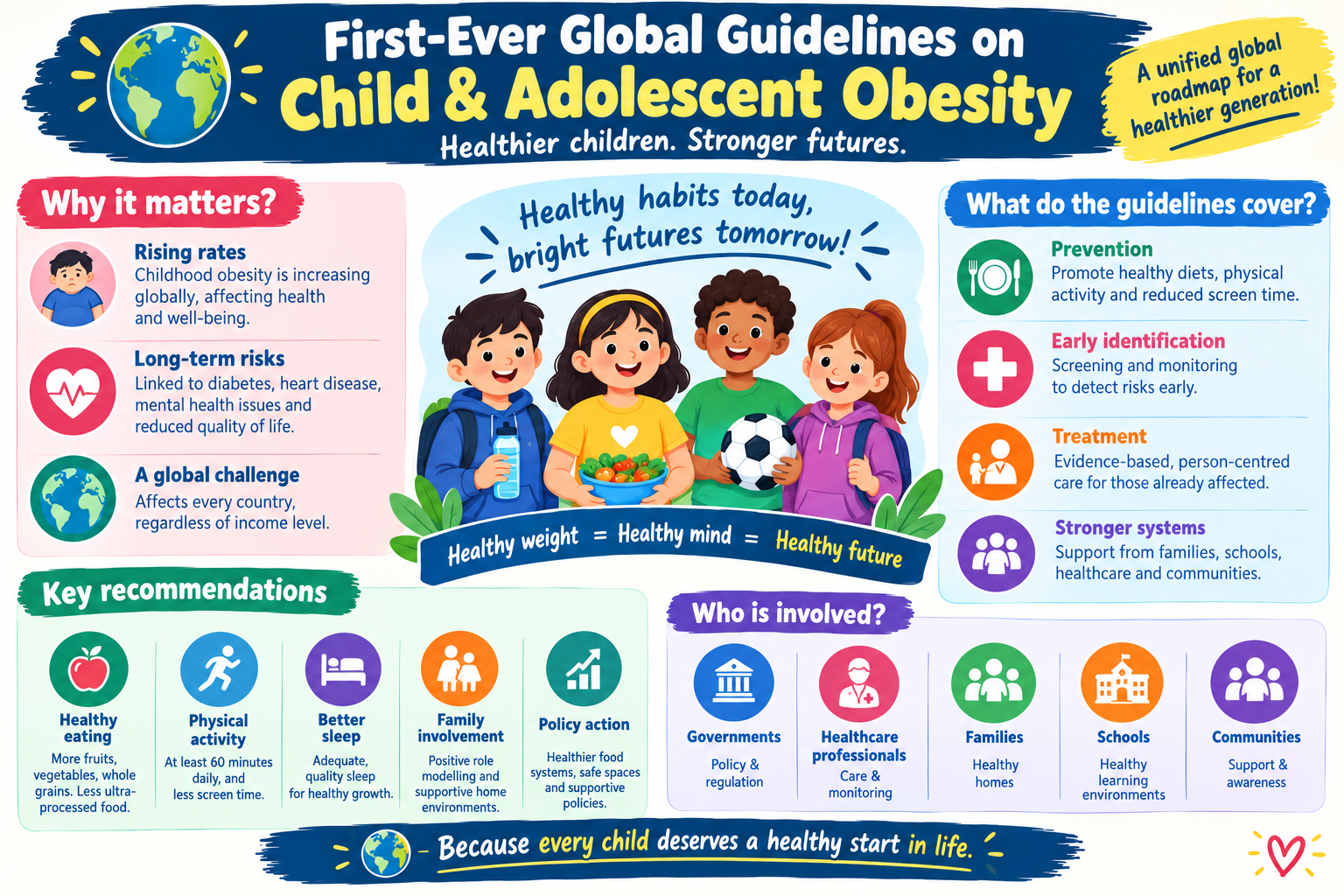
Recently, the World Health Organization (WHO) released its first-ever global guidelines on the integrated management of obesity in children and adolescents.
Key Recommendations
- Age-Specific Clinical Interventions
- Children Under 10 Years (Ages 0–9) - Strongly against anti-obesity drugs, bariatric surgical procedures (e.g., gastric bypass), or invasive weight-management devices.
- Treatment must focus exclusively on multi-modal lifestyle programs combining structured nutrition, physical activity, and behavioral modifications.
- Adolescents (Ages 10–19) - Conditionally permits approved anti-obesity drugs (GLP-1 receptor agonists) and bariatric surgery.
- But, only in cases of severe/morbid obesity accompanied by co-morbidities (such as Type-2 diabetes, insulin resistance, or uncontrolled hypertension) where a supervised 6-month lifestyle program has failed.
- Mental Health & Stigma Reduction - Categorizes obesity as a chronic, relapsing disease driven by biological, genetic, environmental, and social determinants rather than an individual behavioral failure.
- Mandates that health systems simultaneously address psychological factors (stigma, bullying, anxiety, depression) alongside physical weight management.
- Digital Health Interventions - Conditionally supports caregiver-supervised digital health tools including gamified physical activity applications, exergames, and accelerometers/pedometers.
- It is to encourage movement while limiting passive, sedentary screen time.
Global Burden Shift
- According to WHO data, 170 million children and adolescents (ages 5–19) were living with obesity in 2024.
- The prevalence quadrupled from 2% in 1990 to 8% in 2024, with the steepest growth currently occurring in low- and middle-income countries (LMICs).
Impact on India
- Data from the Comprehensive National Nutrition Survey (CNNS) projects that India will be home to over 27 million obese children by 2030, accounting for 11% of the total global burden.
- NFHS data highlights a sharp surge in overweight/obesity among under-5 children, shifting India's public health challenge toward a dual burden of undernutrition and early-onset metabolic disorders.
Significance
- Citing an absence of long-term safety, efficacy, and safety-rebound data for GLP-1 drugs in young children, the guidelines establish strict regulatory boundaries against medicalizing childhood obesity.
- Expands prior WHO guidance (which focused primarily on prevention in under-5s) to define comprehensive, lifelong clinical care pathways for already-affected pediatric populations.
- Stresses that clinical care must be matched by structural policy interventions, such as taxing sugar-sweetened beverages, restricting junk-food marketing targeting children, and improving urban sports infrastructure.
Reference
The Indian Express | First ever guidelines on child & teen obesity



