|
Aspect
|
Key Research Insights
|
|
Disruption of Feeding Routines
|
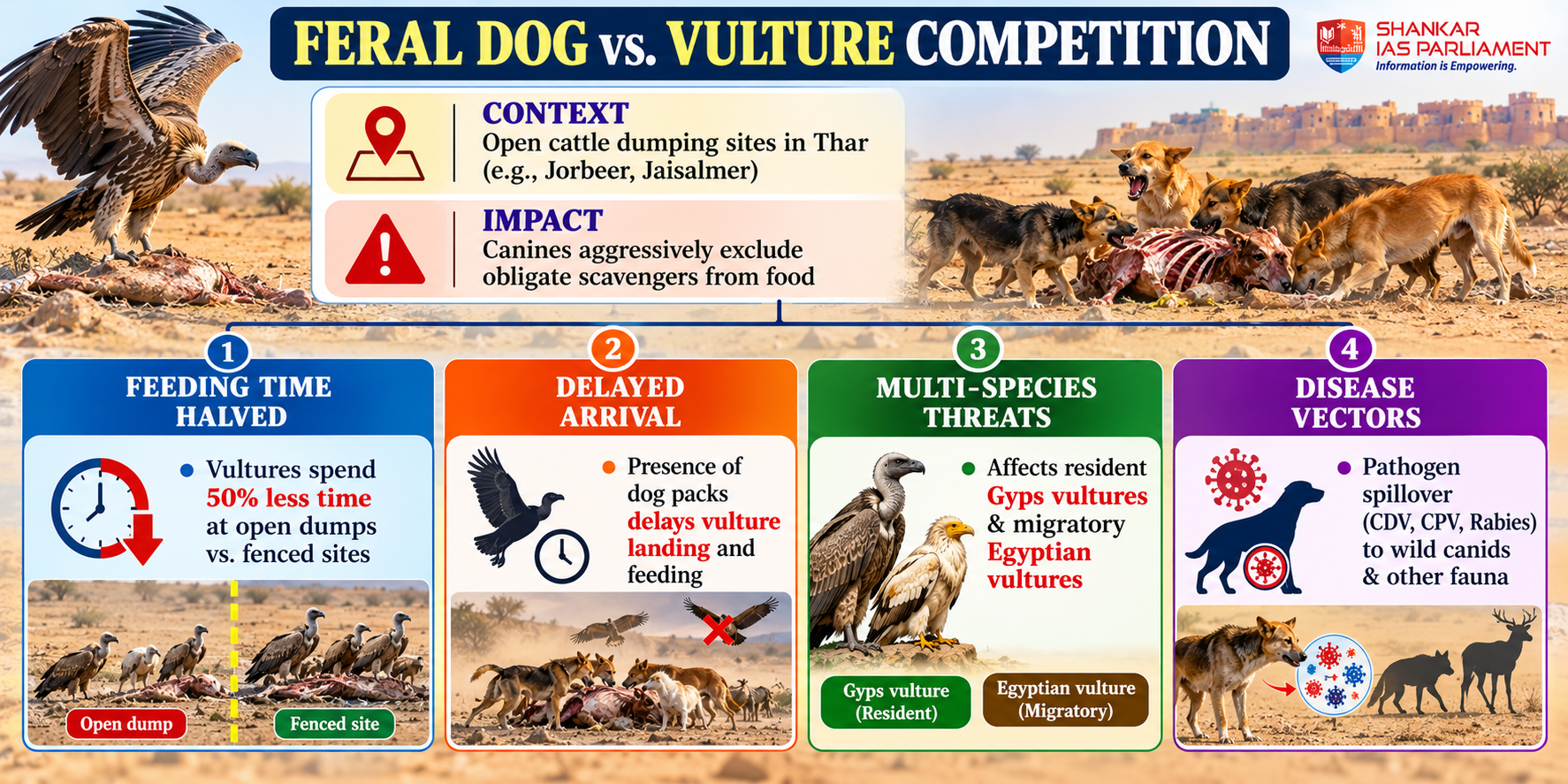
- Vultures spend roughly half as long feeding on carcasses at open, un-fenced dumping sites compared to dog-free protected enclosures.
- Packs of aggressive stray dogs’ mob and chase down landing vultures, forcing birds to abandon meals or restrict feeding to short, high-stress windows.
|
|
Historical Irony & Vulture-Dog Vacuum
|
- The crash of Indian Gyps vulture populations in the 1990s (caused by veterinary Diclofenac poisoning) left an ecological void in carcass disposal.
- Unclaimed livestock remains led to a surge in feral dog populations, which now actively block the recovery of surviving and migratory vulture species.
|
|
Affected Species
|
- Threatens resident critically endangered species (White-rumped Vulture, Indian Vulture, Long-billed Vulture) as well as endangered/migratory raptors (Egyptian Vulture, Steppe Eagle) that rely on desert carcass dumps like Jorbeer (Bikaner) during winter.
|
|
Secondary Threat Vectors
|
- Direct Physical Attacks- Dogs frequently attack grounded or heavy-laden birds attempting to take off.
- Pathogen Transmission - Feral packs act as reservoirs for Canine Distemper Virus (CDV), Canine Parvovirus (CPV), and Rabies, posing biosecurity risks to desert wildlife (e.g., Desert Fox, Chinkara, Great Indian Bustard).
|