Why in news?
The COP27 meet brought to fore a circular economy’s relevance in mitigating carbon emissions by ensuring responsible consumption and sustainable resource management.
What is circular economy?
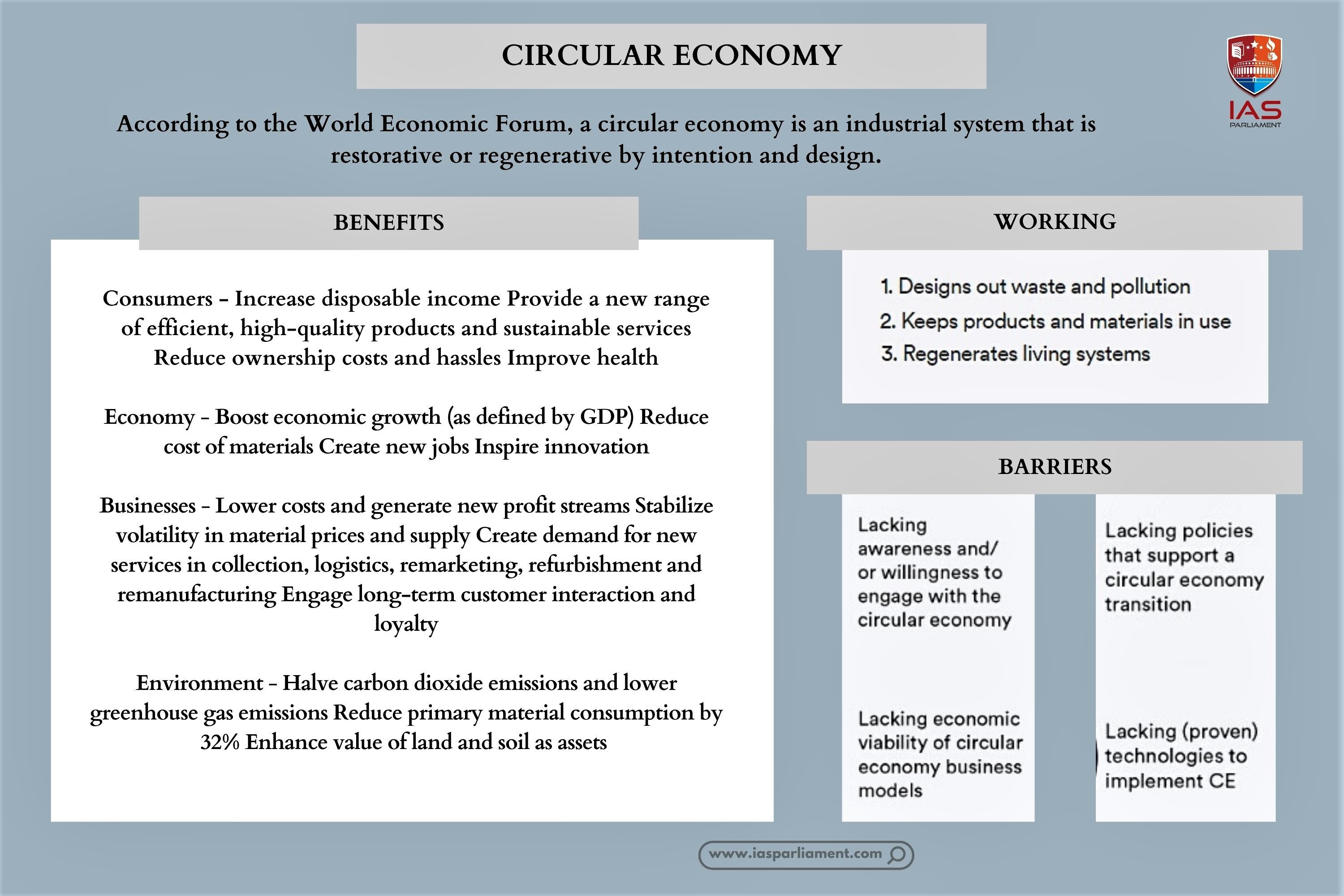
- Circular economy - According to the World Economic Forum, a circular economy is “an industrial system that is restorative or regenerative by intention and design.”
- It is a model of production and consumption, which involves sharing, leasing, reusing, repairing, refurbishing and recycling existing materials and products as long as possible.
- In practice, it implies reducing waste to a minimum.
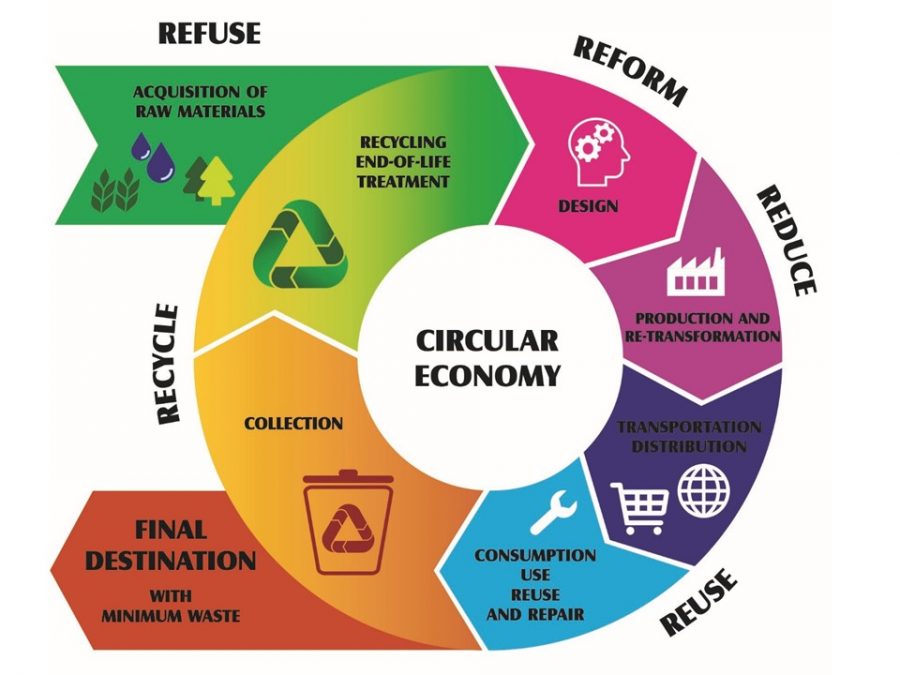
- Need to switch to a circular economy - The world's population is growing with the demand for raw materials but the supply of crucial raw materials is limited.
- Extracting and using raw materials has a major impact on the environment.
- It also increases energy consumption and CO2 emissions.
How does circular economy work?
- Designs out waste and pollution - Circular economy designs out economic activities that negatively impact human health and natural systems.
- Keeps products and materials in use - Circular economy favors designing products for durability, reuse, remanufacturing, and recycling to keep materials circulating for as long as possible.
- Regenerates living systems - Circular economy avoids the use of fossil fuels and non-renewable energy.
What about the picture in India?
- Rules - In sync with a circular economy, the government formulated
- Battery Waste Management Rules 2022
- Plastic Waste Management Rules as amended in 2022
- e-Waste Management Rules 2022
- These rules promote utilisation of waste generated by setting out target waste disposal standards for stakeholders along with enabling transactions for extended producer responsibility certificates.
- Budget - The Budget recognises the action plans formulated across 10 sectors including electronic waste, lithium-ion batteries, end-of-life vehicles, scrap metal, municipal solid waste, etc.
- They emphasise the importance of reusing secondary materials recovered from waste, implementation of an extended producer responsibility framework and tax rebates.
 What are the challenges?
- Lack of clear vision - There is a lack of clear vision towards the end-goal of India’s circular economy mission and gaps in actual implementation of the policies.
- Reluctance of industries - Industry is also reluctant in adopting the circular economy model due to supply chain limitations, lack of incentives to invest, complex recycling processes.
- Sub-optimal outcomes - The efforts are made at the very end of value chains, resulting in sub-optimal economic and environmental outcomes.
What more needs to be done?
- There must be legislative mandates for the procurement of recycled/ secondary raw materials in the initial stages of the production cycle.
- A streamlined framework on circular economy for providing fiscal incentives to businesses to complete the supply chain will also help.
- The government’s initiatives need to be in conjunction with industry collaboration to reap the benefits of the circular economy.
References
- The Hindu Businessline | Circular economy
- RTS | How does circular economy work?



