Mains: GSII – Social Justice
Why in News?
The current era of digital world highlighting the impact of screen time, social media and AI on children's development and the need for responsible digital use.
Why is Digital Technology and Child Development an Important Issue for India?
- Current scenario – India has approximately 65 crore people below 25 years of age, making child and adolescent development crucial for harnessing its demographic dividend.
- Digital dependence – The COVID-19 pandemic accelerated children's dependence on digital devices for education, entertainment and social interaction.
- Access at tips – Smartphones, social media and generative AI provide unprecedented access to information, educational resources and creative opportunities.
- Concerns – Engagement-driven digital platforms and increasing dependence on AI raise concerns about children's attention, independent thinking and emotional well-being.
How Can Digital Technology Affect Children's Development?
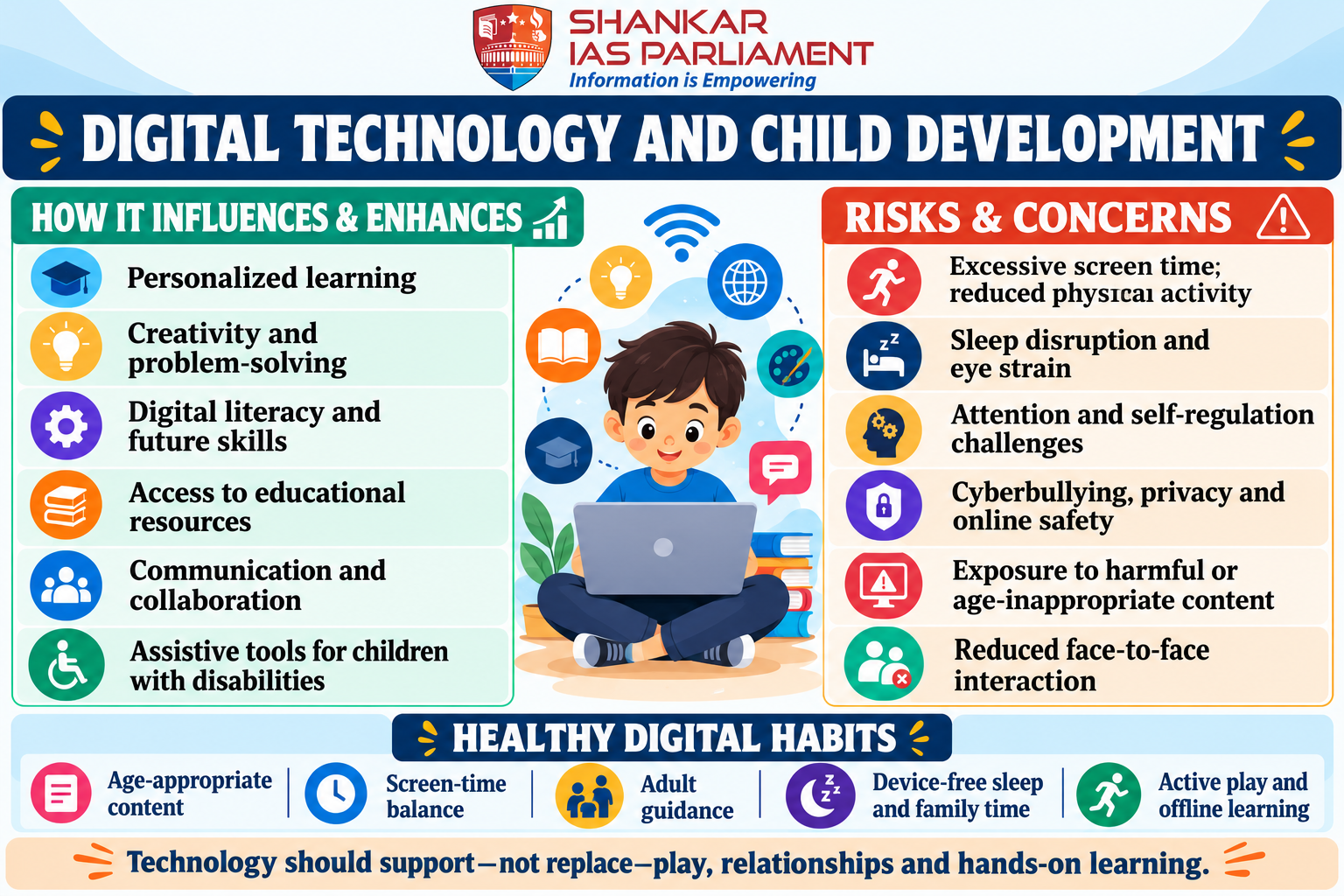
- Cognitive Development and Learning
- The prefrontal cortex, responsible for attention, memory and decision-making, continues to mature into early adulthood.
- Short videos, autoplay and notifications may affect sustained attention and concentration.
- Excessive dependence on AI may weaken independent thinking, critical reasoning and problem-solving.
- Learning through mistakes and effort is essential for deeper understanding.
- Emotional and Social Development
- Likes, comments and shares may increase dependence on social approval.
- Excessive screen use may reduce face-to-face interaction and interpersonal skills.
- Constant stimulation may limit boredom, reflection and opportunities for creativity.
- Neuroplasticity and Cognitive Adaptation
Neuroplasticity is the brain's ability to adapt through experience and learning.
-
- Digital exposure may improve rapid information processing but also affect other cognitive abilities.
- Research has not conclusively established that screen time directly causes harmful brain changes; its effects depend on the duration, content and context of use.
What are the Major Challenges in Managing Children's Digital Exposure?
- Engagement-driven design – Digital platforms have financial incentives to maximise user engagement through algorithmic recommendations and reward mechanisms.
- AI dependency – Students may use AI to complete tasks without developing the reasoning and analytical skills those tasks are intended to build.
- Insufficient safeguards – Rapid technological advances may outpace research, regulation and parental awareness.
- Evidence gaps – The long-term effects of emerging technologies on children's developing brains and behaviour are not yet fully understood.
What Measures are Needed for Responsible Digital Adoption?
- Families and parents
- Establish device-free periods, protected study time and healthy sleep routines.
- Encourage outdoor play, reading, physical activity and face-to-face interaction.
- Teach children responsible online behaviour and age-appropriate use of digital platforms.
- Educational institutions
- Use AI to support learning, feedback and revision without replacing independent thinking.
- Promote supervised writing, oral examinations, applied problem-solving and critical analysis.
- Strengthen digital literacy to help students evaluate online information, recognise misinformation and use AI responsibly.
- Government and technology companies
- Strengthen accountability and scrutiny of digital platforms used by children.
- Encourage transparency regarding engagement-driven design and its potential effects on young users.
- Support independent research into the cognitive, emotional and social effects of digital technologies.
- Develop evidence-based, age-appropriate safeguards and guidelines for digital access and AI use in education.
What could be done?
- Adopt a balanced approach – Maximise the educational benefits of technology while minimising potential developmental risks.
- Promote child-centred digital design – Ensure that children's well-being is prioritised alongside user engagement and commercial interests.
- Preserve independent learning – Use AI as an educational assistant rather than a substitute for intellectual effort.
- Follow an evidence-based approach – Avoid both outright rejection of technology and its uncritical adoption.
What lies ahead?
- India's digital transformation must be accompanied by safeguards for children's cognitive, emotional and social development.
- The objective is not to eliminate screen use but to ensure that technology complements the experiences through which children develop critical thinking, creativity, self-control and meaningful relationships.
Reference
The Hindu| Developing minds in digital world



