Prelims: Current events of national and international importance | Science & Technology
Why in News?
Recently, scientists from IASST, Guwahati, have demonstrated for the use of borophene, as a high-performance lubricant additive in castor oil.
Definition – Borophene is a two-dimensional (2D) nanomaterial composed of a single atomic layer of boron atoms.
Properties
High mechanical strength
Excellent thermal conductivity
High electrical conductivity
Superior chemical stability
Excellent load-bearing capability
Innovation – A minimal concentration of 0.1 wt.% borophene was incorporated into castor oil by the researchers.
The incorporation of the nano-additive resulted in a substantial improvement in lubrication performance, without necessitating chemical modification of the oil.
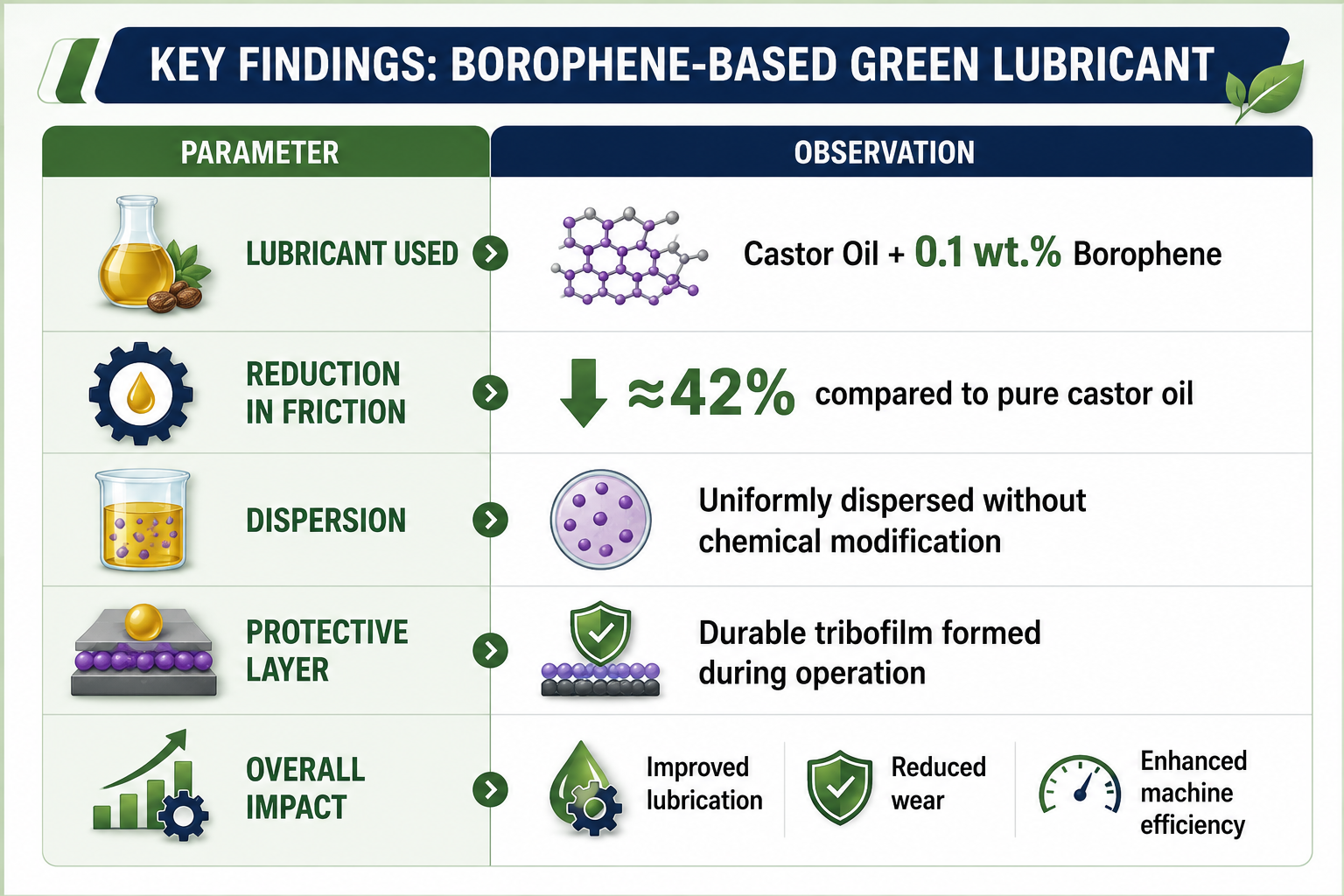
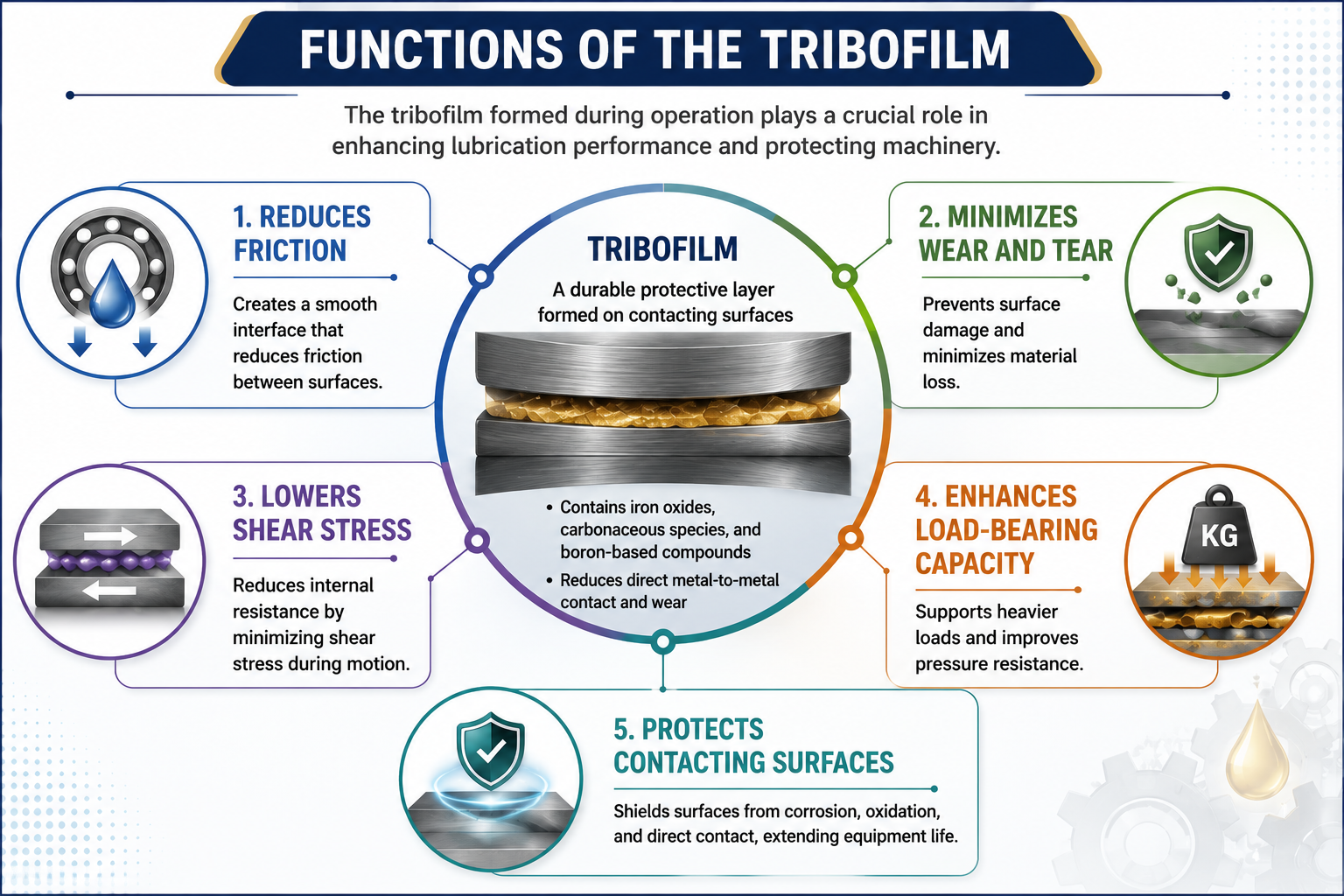
Mechanisms – During operation, borophene generates a protective tribofilm composed of the following components:
Iron oxides
Carbonaceous compounds
Boron-based compounds
Key Advantages
Energy Efficiency – Borophene-based bio-lubricants reduce energy losses associated with friction.
These lubricants contribute to improved operational efficiency in machinery.
Sustainability – They utilize renewable and biodegradable castor oil as a base component.
Their use reduces reliance on petroleum-based lubricants.
Equipment Protection – Borophene-based bio-lubricants minimize wear and surface degradation of mechanical components.
This protection extends the operational lifespan of machinery.
Environmental Benefits – Borophene-based bio-lubricants are environmentally friendly alternatives to conventional lubricants.
Their adoption supports sustainable manufacturing practices.
Applications
Renewable energy systems, including wind and solar power equipment
Marine industry applications
Heavy industrial machinery and equipment
Automotive lubrication systems
Green manufacturing processes
Sustainable lubrication technologies
|
Institute of Advanced Study in Science and Technology (IASST) |
|
Reference