Prelims: Current events of national and international importance | Species
Why in the news?
A new species of Begonia, a genus of perennial flowering plants, has been described from the Keyi Panyor district of Arunachal Pradesh.
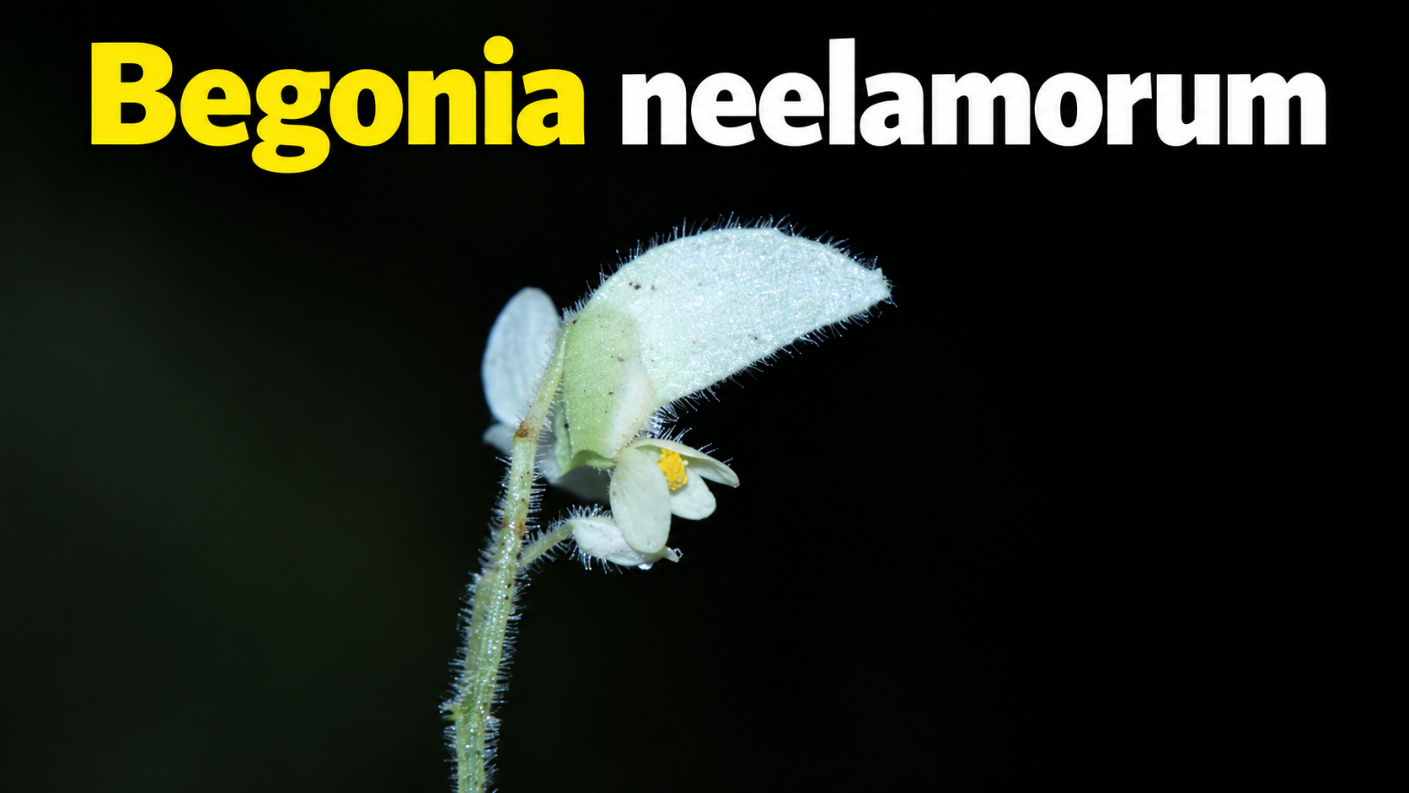
- Scientific Name – Begonia neelamorum, a flowering plant species.
- Begonia – It is one of the largest angiosperm genera and has about 2,200 accepted species distributed across tropical and subtropical regions worldwide.
- Family – Begoniaceae.
- Location – Growing on steep, moist walls along the Keyi River at about 1,000 metres above mean sea level, in the Keyi Panyor district, Arunachal Pradesh.
- Naming – Named after the Neelam clan of the Nyishis, the dominant community of Keyi Panyor district, who helped the researchers collect the plant.
- Locals call the plant “kobiirhopu baabrai”.
- Features
- It is a small tuberous plant measuring about 10-12 cm tall, with a single, sessile, light-green leaf.
- Its leaves have distinctive double-serrated margins and glandular hairs.
- The plant produces white male and female flowers on an inflorescence emerging from the stem apex.
- Association – Morphological examination and comparison with herbarium specimens showed it was closely related to Begonia prolifera but differed in several characteristics, including leaf shape, flower arrangement, and shorter styles.
- Conservation Status – It has been provisionally assessed as data deficient under the International Union for Conservation of Nature (IUCN) criteria.
- Significance – Begonia neelamorum has become the 54th Begonia species recorded from India’s northeastern region.
Reference
The Hindu | New Begonia species described from Arunachal Pradesh



