0.1076
7667766266
x

Addressing India's Anaemia Burden

iasparliament Logo
November 05, 2026

Mains: GS-III – Health

Why in news?

Anaemia remains one of India's most persistent public health challenges, affecting a vast proportion of women, children, and adolescent girls across urban and rural demographics.

What is Anaemia?

  • Anaemia is a condition characterized by a low concentration of hemoglobin or reduced red blood cell count, leading to a decreased capacity of the blood to carry oxygen to tissues.
  • The Common Misconception- Anaemia is frequently conflated with basic iron deficiency.
  • The Multi-Factorial Reality- While iron deficiency is a primary driver, anaemia is often non-nutritional or caused by deficiencies in other vital micronutrients (such as Vitamin B12, Folic Acid, and Vitamin A), chronic inflammatory diseases, parasitic infections, or genetic blood disorders.

What are the multi-dimensional drivers of Anaemia?
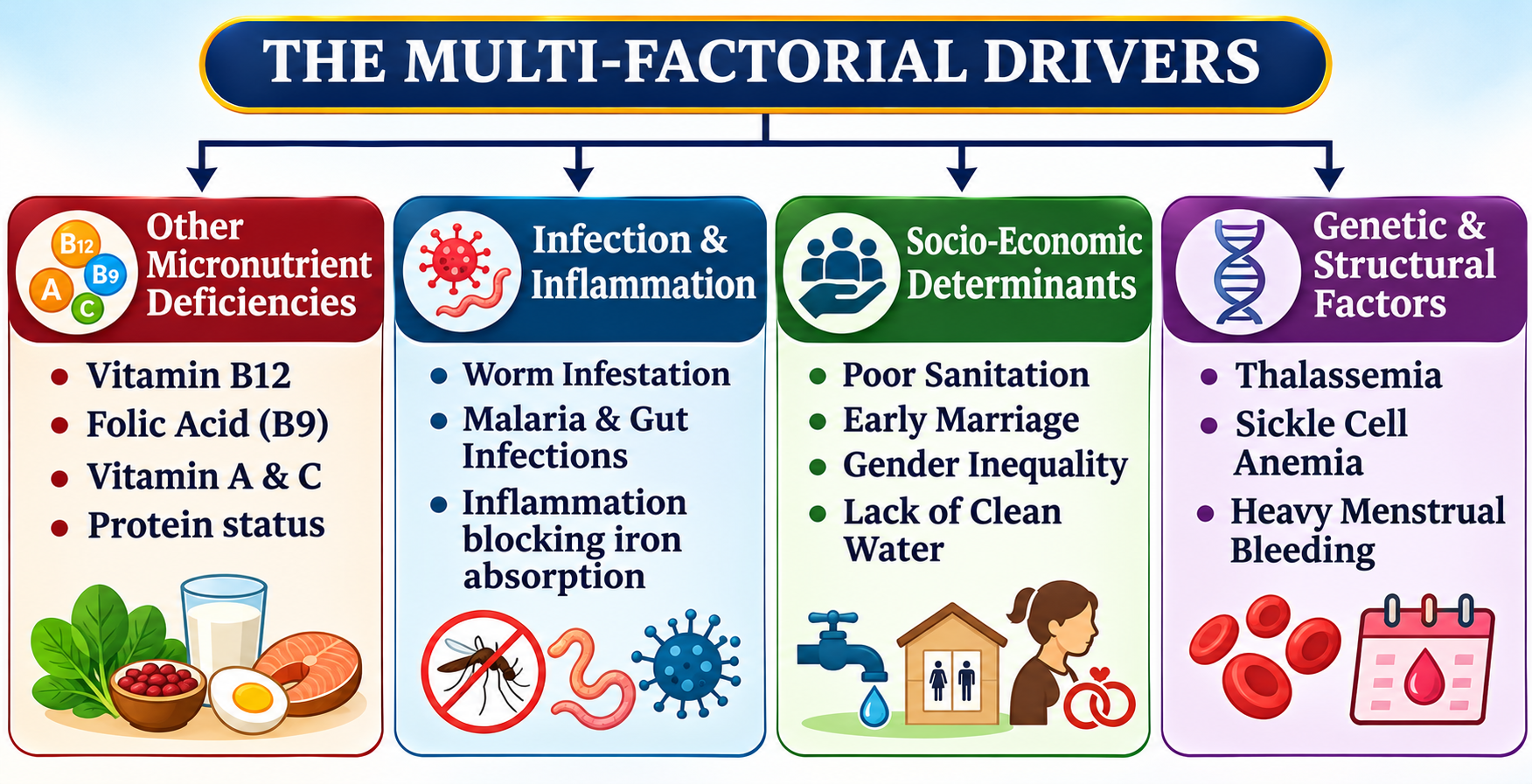
  • Co-existing Micronutrient Deficiencies- Vitamin B12 and Folic Acid (B9) are critical for red blood cell maturation.
  • High rates of vegetarianism combined with low animal-protein consumption make Vitamin B12 deficiency widespread.
  • Additionally, Vitamin C is necessary for proper intestinal absorption of plant-based (non-heme) iron.
  • Infection and Inflammation- Intestinal parasitic worms (helminths), malaria, and recurring gastrointestinal infections cause chronic blood loss or systemic inflammation.
  • Inflammation raises levels of hepcidin (a regulatory hormone), which actively prevents the body from absorbing iron from the gut.
  • Socio-Economic & Environmental Determinants - Poor Water, Sanitation, and Hygiene (WASH) infrastructure leads to frequent diarrheal illnesses, preventing nutrient absorption.
  • Gender disparities, early marriage, adolescent pregnancies, and lack of dietary diversity exacerbate the condition among women.
  • Genetic Hemoglobinopathies - Conditions like Thalassemia Minor and Sickle Cell Trait are widespread in specific populations and geographies, presenting as anaemia that cannot be resolved with iron therapy.

Anaemia

Comparative Framework

Dimension

Iron-Centric Strategy (Conventional)

Holistic Multi-Sectoral Strategy (Recommended)

Primary Intervention

Mass distribution of Iron-Folic Acid (IFA) tablets & iron-fortified rice

Diversified diets, multi-micronutrient supplementation, WASH programs

Diagnostic Focus

Basic Hemoglobin (Hb) testing alone

Comprehensive diagnostics (Serum Ferritin, B12, Inflammatory markers, Hemoglobinopathy screening)

Addressing Underlying Drivers

Minimal focus on gut health or sanitation

Deworming campaigns, malaria control, clean drinking water, and sanitation hygiene

Sustainability

Short-term reliance on pill supplementation

Long-term dietary transformation and community-level nutritional security

What are the key public health challenges with iron-only programs?

  • Risk of Over-Supplementation - High doses of iron in non-iron-deficient individuals can lead to gastrointestinal side effects, reduced compliance, and altered gut microbiomes.
  • Diagnostic Limitations - Relying solely on field hemoglobinometers fails to distinguish between iron-deficiency anaemia and anaemia caused by inflammation, B12 deficiency, or genetic traits.
  • Non-Compliance - Side effects of oral iron tablets such as nausea, constipation, and metallic taste frequently cause high dropout rates among adolescent girls and pregnant women.

What are the government initiatives?

  • Anaemia Mukt Bharat (AMB) Strategy - Institutionalized a 6x6x6 matrix (6 target beneficiary groups, 6 interventions, 6 institutional mechanisms), incorporating deworming, IFA supplementation, and testing.
  • POSHAN Abhiyaan- Aims to improve holistic maternal and child nutrition by driving behavior change toward dietary diversity.
  • National Deworming Day (NDD) - Bi-annual mass administration of Albendazole tablets to eliminate soil-transmitted helminth infections among children.

What is the way forward?

  • Promoting Dietary Diversity - Shift public communication away from pills toward natural dietary sources encouraging consumption of green leafy vegetables, millets, pulses, citrus fruits (for Vitamin C), and protein-rich foods.
  • Strengthening WASH Infrastructure - Integrate clean water supply and sanitation projects directly into public health targets to reduce gut infection burdens.
  • Targeted Diagnostic Testing - Upgrade Primary Health Centres (PHCs) with multi-parametric diagnostic tools to identify the specific etiology of anaemia before initiating treatment.
  • Addressing Gender & Social Inequalities - Empower women and adolescent girls with nutrition literacy, delayed age of marriage, and equitable access to healthcare.

Reference

The Hindu | Anaemia burden

There are no reviews yet. Be the first one to review.

ARCHIVES

sidetext


