Why in News?
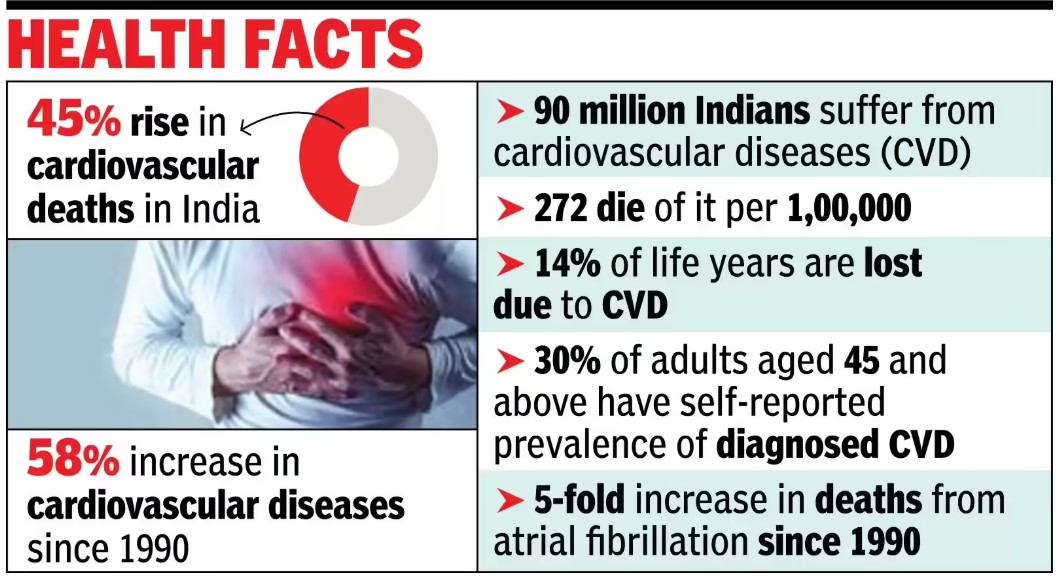
Recently, there has been a manifold increase in the cardiovascular disease and the world heart health day stresses the need to address the issue.
What is heart health day?
- World heart day – It is celebrated annually on September 29.
- Aim – To raise awareness about cardiovascular diseases, their risk factors, and preventive strategies.
- Genesis – The history of World Heart Day goes back to 1999, when the World Heart Federation (WHF) teamed up with the World Health Organization (WHO) to designate a day for global heart health awareness.
- 1st heart health day – The first World Heart Day was held on September 29, 2000.
- 25th heart health day – This year will mark 25 years of World Heart Day.
- This World Heart Day, we are telling the world: Don’t miss a beat
What is the status of heart health?
- World data – Each year, cardiovascular disease (CVD) claims over 20.5 million lives.
- Up to 80% of premature CVD deaths are preventable through affordable access to care, early screening, increased opportunities to make healthy choices in nutrition, and by staying active.
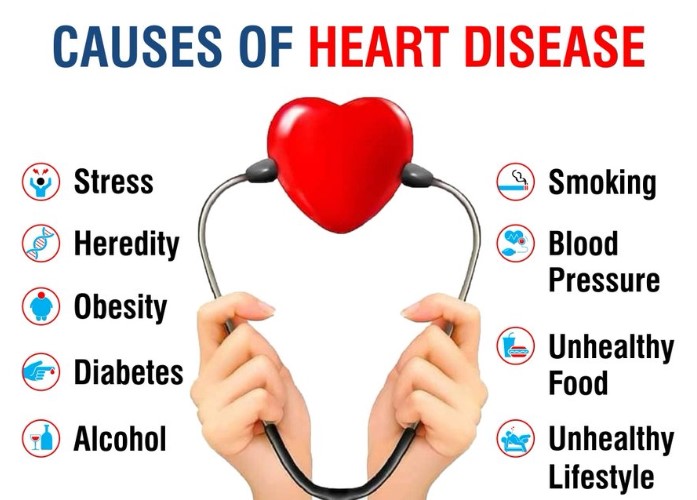
- Causes
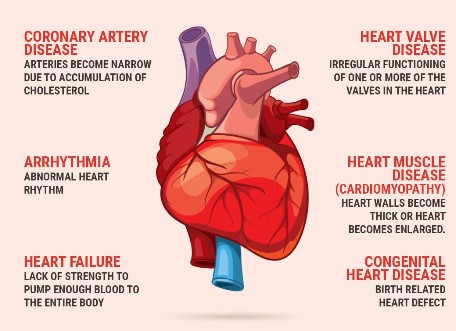
What are the Common heart diseases?
- Coronary Artery Disease (CAD) – It arises when blood vessels supplying the heart narrow or become blocked due to plaque buildup.
- This reduces oxygen and nutrient flow to the heart muscles, causing chest pain (angina), shortness of breath, or heart attacks.
- Heart Attack (Myocardial Infarction) – It happens when a coronary artery suddenly becomes completely, 100% blocked.
- Symptoms include severe chest pain, sweating, and breathlessness.
- Rapid medical response with treatment such as Primary PCI (percutaneous coronary intervention) or thrombolysis can save lives.
- Cardiac Arrest – It is a sudden loss of heart function, breathing, and consciousness.
- Often triggered by electrical disturbances, it can be fatal within minutes without immediate intervention such as CPR or defibrillation.
- Training and readiness for such emergencies is vital.
- Hypertension (high blood pressure) – It occurs when blood pumps through arteries at persistently high pressure.
- Often called a silent killer, if left untreated, hypertension can lead to a heart attack, stroke, kidney failure, or heart failure.
- Heart Failure & Arrhythmias – It arises when the heart cannot pump blood efficiently, resulting in fluid retention, fatigue, and breathlessness.
- Arrhythmias involve irregular heartbeats: too fast, too slow, or erratic.
What are the Heart-healthy habits?
- Adopting healthy routines – Simple practices such as regular check-ups, medication adherence, avoiding tobacco, limiting alcohol, and staying socially engaged reinforce heart protection.
- A balanced diet – It plays a central role in heart disease prevention.
- Focus on lean proteins, whole grains, fruits, vegetables, and healthy fats such as olive oil and nuts. Limit salt, red meat, sugary drinks, and trans fats.
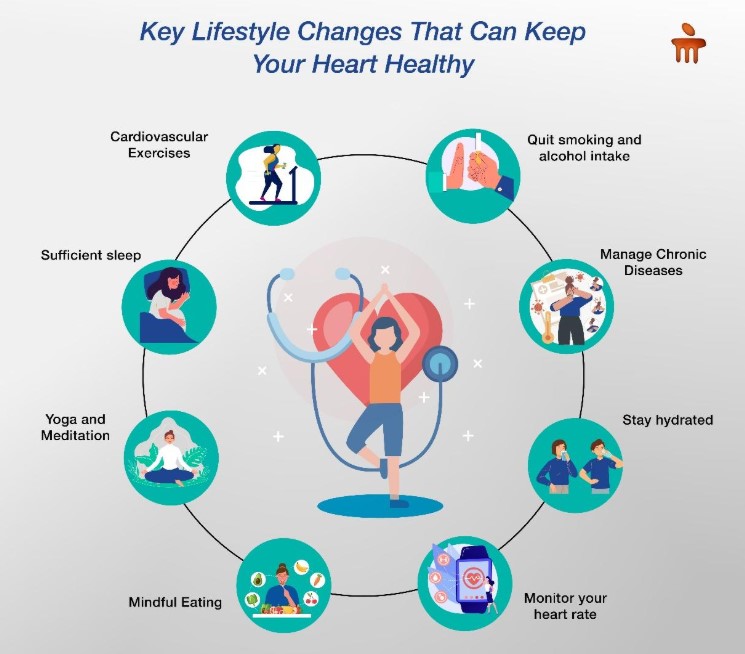
- Physical activity – It strengthens the heart, lowers blood pressure, improves cholesterol, and aids weight control.
- Aim for at least 150 minutes of moderate aerobic activity or 75 minutes of vigorous exercise weekly, plus muscle-strengthening activities at least twice per week.
- Mental health factors – These are critical, yet often overlooked risk modulators.
- Prioritise 7–9 hours of quality sleep each night.
- Use relaxation techniques, mindfulness, or counselling to manage stress
- Building the heart’s endurance through cardiac rehabilitation
- Preventive care – Cardiologists play a vital role in the diagnosis, management, and prevention of cardiovascular disease.
- At cardiac care units and cardiology centres, experts use tools including ECGs, echocardiograms, stress tests, blood tests, and cardiac catheterisation to assess heart health.
- The importance of World Heart Day lies in its power to raise mass awareness about heart diseases.
- Encourage early screening and detection, inspire governments and policymakers and motivate individuals to adopt healthier lifestyles
Reference
The Hindu| Heart Health in India



