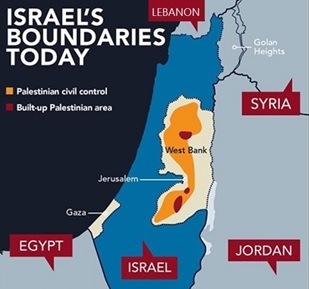
- Iran was one of the first countries in the region to recognise Israel after its formation in 1948.
- First Arab Israeli war- In 1948, the opposition of Arab states to Israel led to the first Arab-Israeli war. Iran was not a part of that conflict, and after Israel won, it established ties with the Jewish state. It made Iran the second Muslim-majority country after Turkey to take such a step.
- Israel’s diplomacy- It was part of Israel’s “periphery doctrine”, a strategy that aims to build alliances with non-Arab countries in the Middle East.
- Pahlavi dynasty- Under Shah Mohammad Reza Pahlavi, Iran maintained close ties with the US and Israel, even selling oil to Israel during Arab economic boycott.
- Islamic Revolution, 1979- The overthrow of the Shah led to the establishment of a religious state in Iran, altering its stance on Israel to view it as an occupier of Palestinian territories.
- Iran’s regional ambitions- Post revolution, Iran aimed to expand its influence, challenging regional powers like Saudi Arabia and Israel, both US allies.
- Iran Iraq accord, 1975- Iran ceased support for Kurdish-Iraqi separatists, reduced hostilities and affected Israel’s strategic value to Iran.
- Nuclear facility attack- Israel periodically targeted Iran’s nuclear facilities to hinder Iran’s potential development of nuclear weapons.
- Stuxnet cyberattack, 2010 US and Israel reportedly created Stuxnet, a computer virus that disrupt Iran’s Natanz nuclear facility, marking a significant moment in cyber warfare.
- Iran’s proxy support- Iran's support for militant groups like Hezbollah and Hamas, which oppose Israel and the US further escalate tensions between two countries.
|