Mains: GS II – International organisation
Recent, 36th NATO Summit reflects America's growing focus on the Indo-Pacific while Europe prepares for greater military self-reliance.
NATO – It means “North Atlantic Treaty Organization”.
Founding Member – Belgium, Canada, Denmark, France, Iceland, Italy, Luxembourg, the Netherlands, Norway, Portugal, the United Kingdom and the United States.
Aim – To guarantee the freedom and security of its members through political and military means.
Core Principle – Article 5 “An attack against one of its members is considered as an attack against all”.
So far, Article 5 has been invoked only once – in response to the 9/11 terrorist attacks in the United States in 2001.
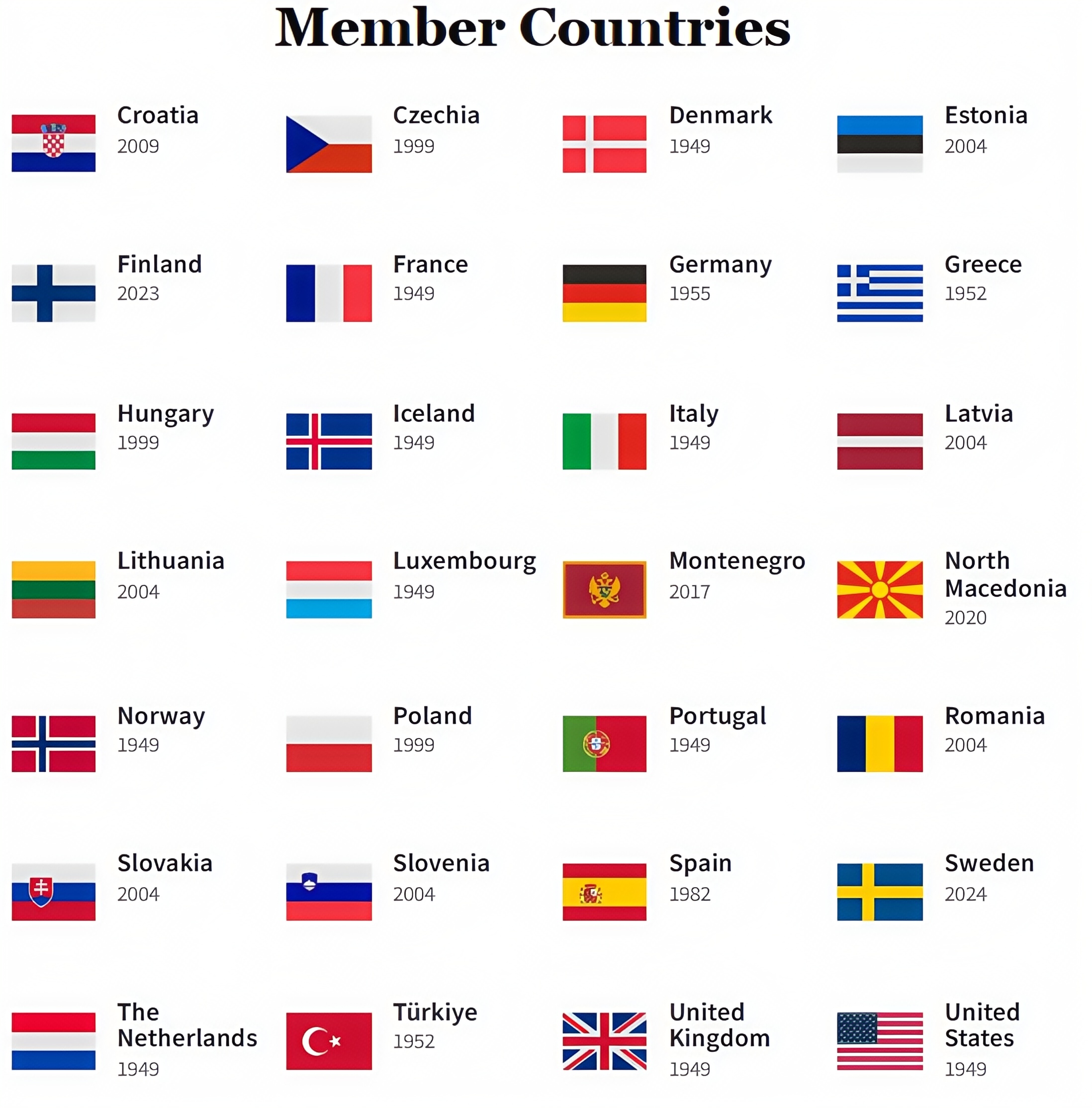
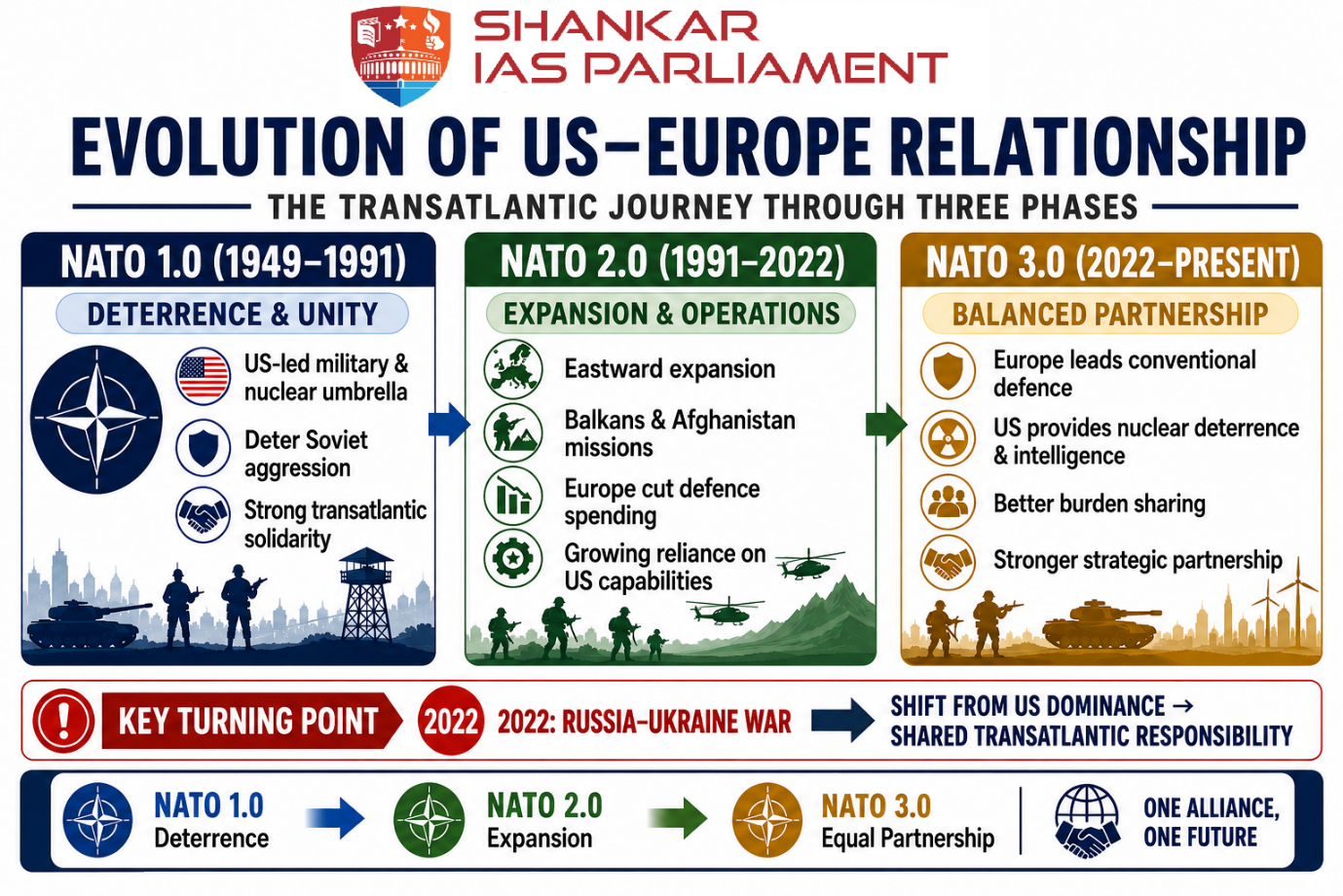
Collective Defence and Unity – They reaffirmed their unwavering commitment to Article 5 of the Washington Treaty"An attack on one is an attack on all."
They expressed commitment to comprehensive, 360-degree deterrence and defence.
Security Challenges and Defence Investments – Addressing the long-term threat posed by Russia and the persistent challenge of terrorism.
Allied nations fulfilling The Hague defence commitment.
Hague defence commitment – Member nations pledged to increase their total annual defence and security investments to 5% of Gross Domestic Product (GDP) by 2035.
Expansion of manufacturing capacity and acceleration of defence innovation.
Elimination of defence trade barriers and enhanced utilisation of NATO partnerships.
Modernisation and Capabilities – Shared responsibility among European Allies, Canada, and the United States
A comprehensive deterrence mix including nuclear, conventional, missile defence, as well as space and cyber assets
Key areas of investment include:
Advanced deep precision strike capabilities
Integrated air and missile defence systems
Deployment of uncrewed systems
Adoption of cutting-edge technologies
Enhancement of intelligence capabilities
Development of an interoperable transatlantic warfighting cloud.
Adoption of advanced artificial intelligence models.
Support for Ukraine – Ukraine plays a significant role in ensuring transatlantic security.
European Allies and Canada provide the majority of financial assistance to Ukraine.
A pledge of €70 billion for equipment, assistance, and training has been made for 2026.
These commitments are expected to be sustained through 2027.
The European Union’s multi-year Ukraine Support Loan is welcomed as a significant contribution.
Iran & Regional Security – Allies reaffirm that Iran must never acquire a nuclear weapon.
The Alliance calls on Iran to respect the freedom of navigation in the Strait of Hormuz.
At the 2025 Hague Summit, NATO member states committed to allocating 3.5% of their GDP to defence spending by 2035.
A formal review of progress toward this target is scheduled for 2029.
Germany has doubled its defence expenditure since 2023 and aims to meet the established target by 2029.
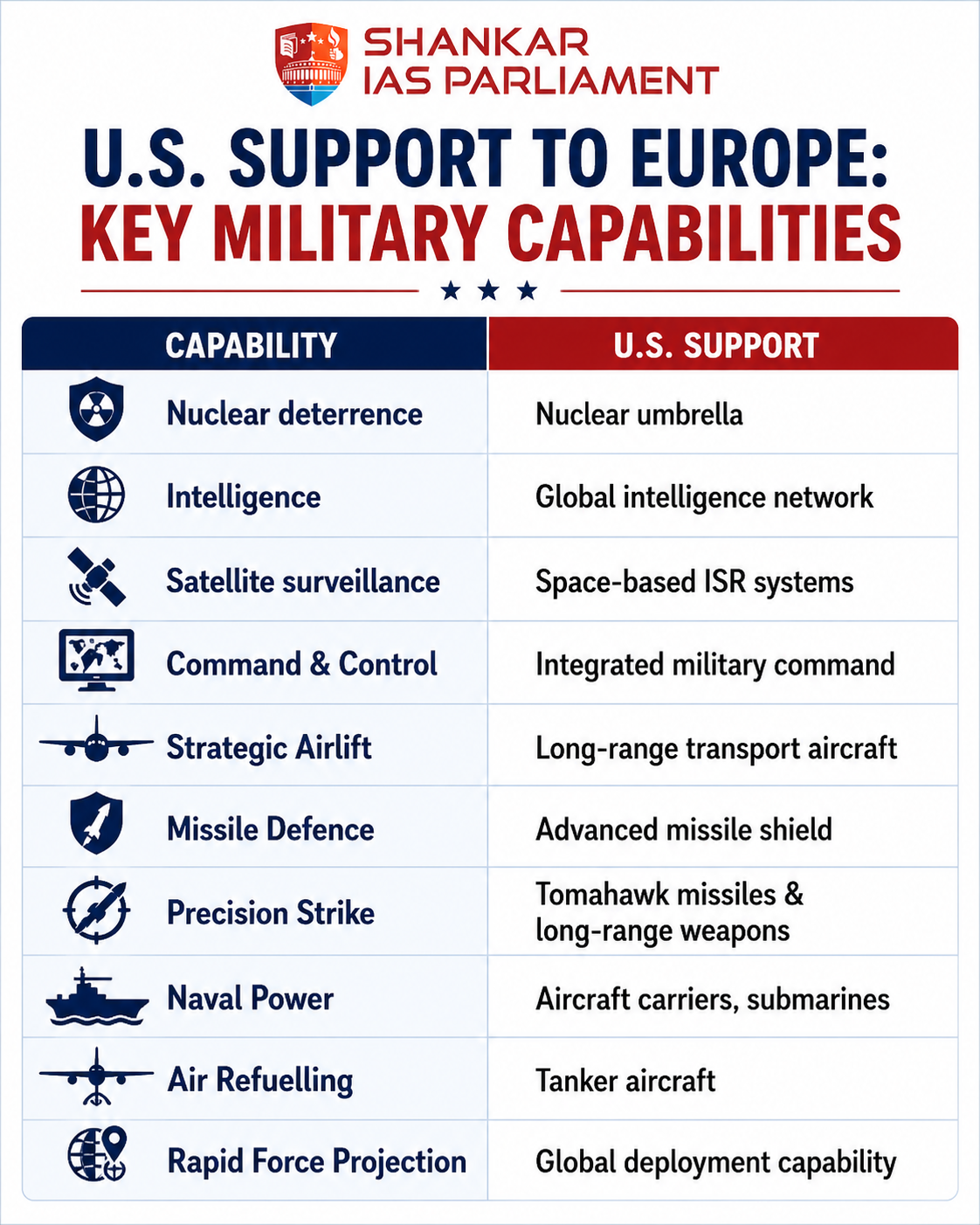
Although defence budgets in Europe have increased, several key strategic capabilities remain insufficient.
It replicates the integrated United States military ecosystem is a process that will require significant time.
Europe dependence on the U.S
Partnerships over Alliances – NATO’s transformation presents India with an opportunity to broaden its partnerships rather than perceiving it as external pressure to join formal alliances.
Enhancing Capabilities – Cooperation with the United States and European countries can enhance India’s capabilities while maintaining its strategic autonomy.
For India, NATO’s transformation is less about Europe than about the redistribution of American strategic attention.
Indo‑Pacific Focus – A Europe’s greater responsibility for its own security would enable Washington to devote more diplomatic attention, military resources and strategic investments to the Indo-Pacific.
It reinforcing the regional balance amid China’s growing assertiveness.
Europe could emerge as an important partner for India in
Defence manufacturing,
Advanced technologies,
Artificial intelligence,
Cybersecurity,
Semiconductors and space.
NATO’s new strategic model – It can expand the followings: -
India’s defence industrial partnerships,
Accelerate technological modernisation and
Strengthen its position as a leading power in an increasingly multipolar world.
Strategic Engagement – India should leverage NATO’s transformation to strengthen its relationships with the United States and Europe.
This approach positions India as a key Indo-Pacific partner while maintaining its strategic autonomy.
Defence and Industrial Cooperation – Expand joint ventures in defence manufacturing and pursue technology transfers.
Diplomatic Balancing – Develop triangular cooperation among India, the United States, and Europe to balance China’s assertiveness.
Global Positioning – Leverage NATO’s new model to reinforce India’s role as a multipolar leader.
It positions India as a bridge between the West and the Global South.
The Hindu | NATO Enters a New Strategic Era of Transformation



