Why in news?
As Earth’s climate warms, more storms are undergoing rapid intensification, growing quickly from relatively weak tropical storms to Category 3 or higher hurricanes in under 24 hours.
What is a hurricane?
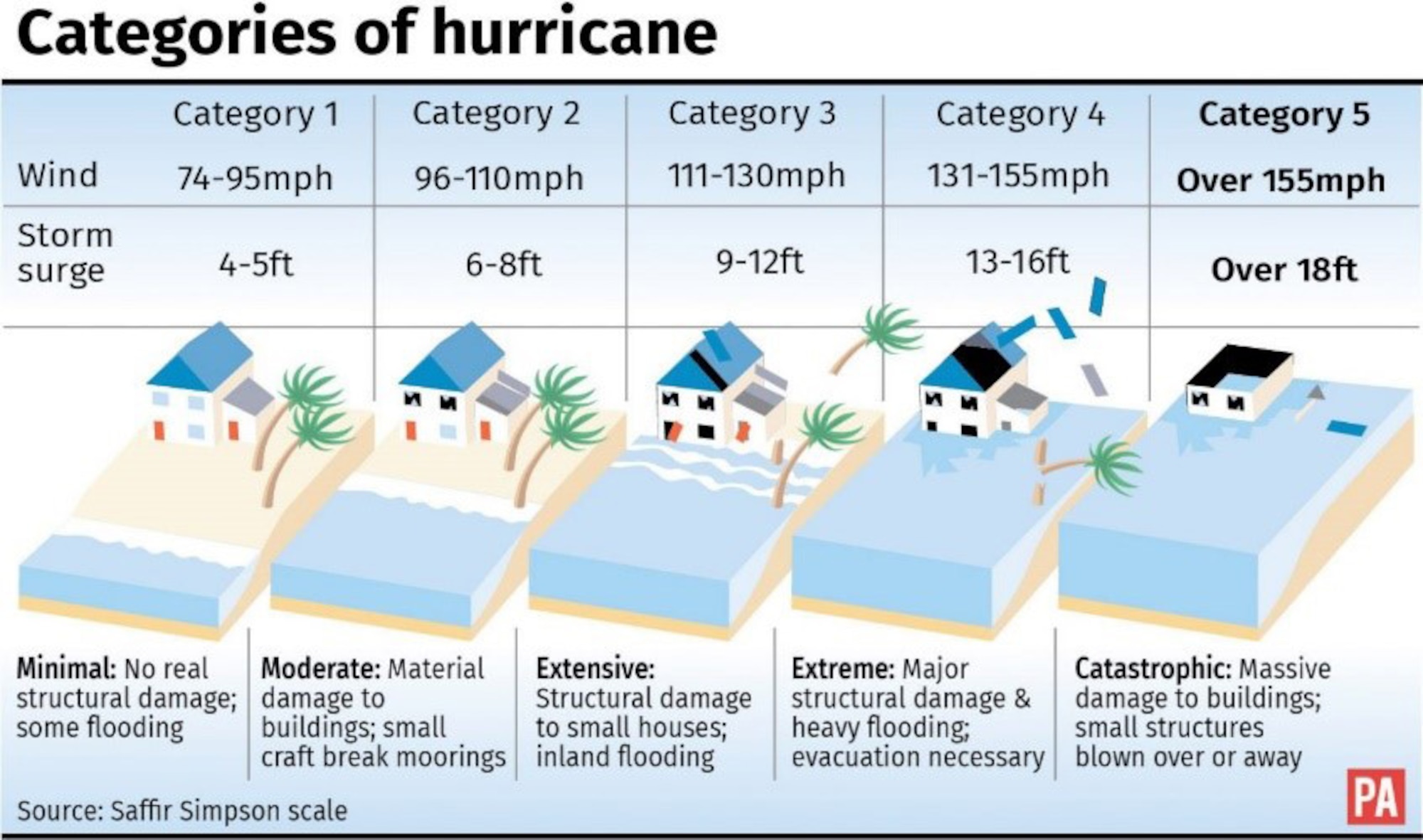
- Tropical storms that form over the Atlantic Ocean or central and eastern North Pacific, with sustained winds of at least 74 mph are called “hurricanes”.
- Hurricane formation - When warm seawater evaporates, its heat energy is transferred to the atmosphere.
- This fuels the storm’s winds to strengthen and intensifies hurricanes.
How climate change intensifies tropical storms?
- Warming oceans - More than 90% of the excess heat from human-caused global warming over the past 50 years has been absorbed by the oceans.
Since 1901, sea surface temperatures have risen an average of 0.14 degrees Fahrenheit per decade.
- Higher surface temperatures allow hurricanes to reach higher levels of maximum sustained wind.
- Rate of intensification - Warmer oceans makes the rate of intensification more rapid.
- Rapid intensification refers to an increase of at least 30 knots, or 35 mph, in the maximum sustained winds over a 24-hour period.
- For example, in 2021, Hurricane Ida strengthened from a Category 1 with 85 mph winds into a near-Category 5 hurricane with 150 mph winds less than 24 hours later.
The likelihood of a hurricane undergoing rapid intensification has increased to 5% from 1% since the 1980s.
- Vertical wind shear – It is a measure of how much the wind changes in speed or direction at increasing heights in the atmosphere.
- Strong vertical wind shear can inhibit the development of hurricanes by tilting the structure of a storm and by forcing cool, dry air into its core.
- Warming temperatures may lead to weakening vertical wind shear, allowing hurricanes approaching the East Coast of the United States to intensify more rapidly.
How it impacts forecasting and preparedness?
- The increase in the number of hurricanes that intensify quickly and unpredictably presents a problem for forecasters.
- The window of time to make a decision gets smaller.
- Short notice raises the stakes and can affect a community’s preparedness.
How else is climate change affecting storms?
- As climate warms, the typical season for hurricanes is shifting and more months of the year are conducive to storms.
- The Seasons for tropical storms are usually between June and November, but now they start three weeks earlier.
- Hurricanes are also shifting its landfall pattern farther north than in the past.
- Owing to the rising global air and ocean temperatures, there is a poleward shift in the landfall of hurricanes.
References
- https://indianexpress.com/article/explained/explained-climate/hurricane-ian-climate-change-tropical-storm-explained-8174996/
- https://indianexpress.com/article/explained/explained-climate/hurricane-fiona-puerto-rico-dominican-republic-climate-change-8163340/



