Prelims: Current events of national and international importance| Space
Why in News?
Recently the scientists identified a new dwarf planet candidate, 2026 ED138, using the Chile-based Vera C. Rubin Observatory.
Key Facts
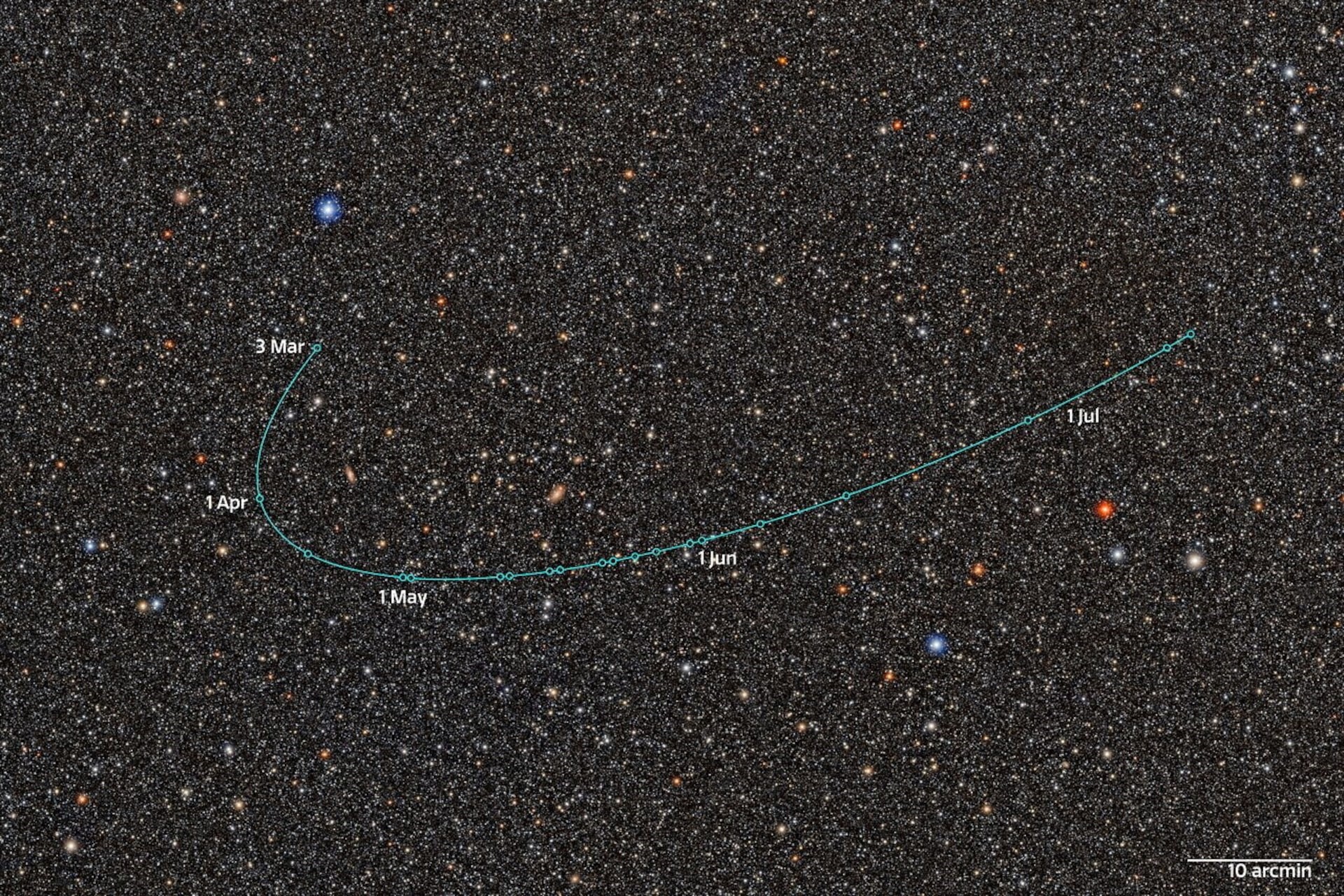
- Location – Orbits beyond Pluto, approximately 46 times farther from the Sun than Earth.
- Size – Estimated diameter ranges between 600 and 1,500 km.
- Discovery – First identified by astrophysicist Matt Holman of the Center for Astrophysics, Harvard & Smithsonian.
- Confirmation – Further observations are required to establish its physical size and dwarf planet status.
- ALMA Telescope – The Atacama Large Millimeter/submillimeter Array can help determine its size by detecting radiation emitted by the object.
- If confirmed, it could become one of the largest recognised dwarf planets.
About Dwarf Planets
- According to the International Astronomical Union (IAU), a dwarf planet must –
- Orbit the Sun.
- Possess sufficient gravity to attain a nearly spherical shape.
- Not have cleared its orbital neighbourhood.
- Not be a satellite of another celestial body.
- Five officially recognised dwarf planets –
- Pluto, Eris, Haumea and Makemake – located beyond Neptune.
- Ceres – located in the main asteroid belt between Mars and Jupiter.
Pluto was reclassified from the ninth planet to a dwarf planet by the IAU in 2006.
Reference
Rubinobservatory| First Dwarf Planet Candidate in Our Solar System



