Why in news?
Green hydrogen is a critical industrial fuel of the 21st century and India is well-positioned to show leadership.
What is green hydrogen?
- It is a type of hydrogen produced by splitting water through electrolysis, using electrolyser powered entirely by renewable power sources.
- Advantages – It could replace fossil fuels and decarbonize a range of sectors such as petroleum refining, fertiliser production, steel production, chemicals, transport, etc.
- Disadvantages – It is not commercially viable at present and is expensive to be manufactured.
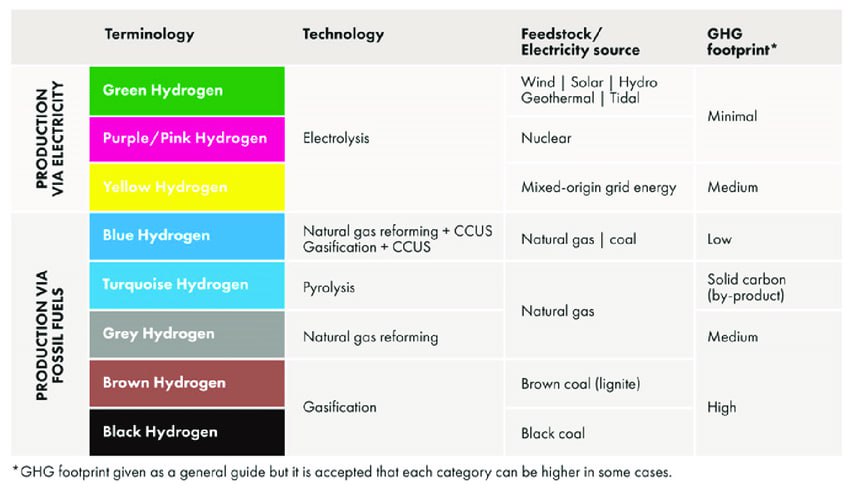
All about Green Hydrogen.
What is the National Green Hydrogen Mission?
- The National Green Hydrogen Mission was first announced by the Prime Minister in his Independence Day speech in 2021.
- Objectives – The mission is aimed at making India a global hub for the production of green hydrogen.
- The mission also aims to:
- Creation of export opportunities for green hydrogen.
- Decarbonisation of the energy sector.
- Development of indigenous manufacturing capacities.
All about National Green Hydrogen Mission.
What are India’s commitments?
- Electricity – India has committed to 50% electricity capacity from non-fossil sources by 2030.
- Most industrial greenhouse gas emissions in India come from steel, cement, fertilizers and petrochemicals.
- Green hydrogen – India is targeting at least 5 million tonnes of production of green hydrogen by 2030, which is larger than that of any single economy.
How can the targets be achieved?
- Domestic demand – If we are not a big player domestically, we cannot be a major player in the international market.
- SIGHT – The mission introduces a Strategic Interventions for Green Hydrogen Transition (SIGHT) fund for five years, with ₹13,000 crore as direct support to consume green hydrogen.
- This will encourage heavy industries to increase demand, offering economies of scale by which suppliers can reduce prices.
- Government procurement – A share of government procurement of steel could be nudged towards green steel, which could help India to later position itself as a green steel exporter.
- Investments – India can be an attractive destination for domestic and foreign investment.
- A mission secretariat can ensure project clearance is streamlined and reduce financial risks.
- Electrolyser manufacturing – The SIGHT fund offers ₹4,500 crore to support electrolyser manufacturing under the performance-linked incentive scheme.
- Not targeting value addition would result in electrolyser technologies and production again getting concentrated.
- China could end up controlling 38% of electrolyser capacity by 2030.
- Bilateral partnerships – India must cooperate with like-minded countries on trade, value chains, research and development, and standards.
- Trade in local currency – Using yen or euro for trade, could reduce the cost of capital and help us become export competitive.
- Rules for green hydrogen economy – India must coordinate with major economies to develop rules for a global green hydrogen economy.
- Attempts for rules and standards are being driven by private corporations rather than structured intergovernmental processes.
What is the way forward?
- G20 – India’s G20 presidency is an opportunity to craft rules for a global green hydrogen economy.
- These rules must address operational threats, industrial competitiveness and strategic threats.
- Global network – India should promote a global network on green hydrogen via which companies could collaborate.
- India’s geography – With abundant sunshine and significant wind energy resources, India is geographically blessed to become one of the lowest-cost producers of green hydrogen.
- India is well-positioned to show leadership, in our collective interest and that of the planet.
Reference
- The Hindu │ How to become a green hydrogen superpower



