Prelims: Current events of national and international importance | History
Why in News?
The veena, today regarded as inseparable from Saraswati’s identity, appears to have emerged as her dominant symbol only in the later period.
The Pala Dynasty Saraswati
- Location - Goddess Saraswati is notably observed without the veena (Musical instrument) at the Arthamandapam of the Brihadiswara Temple, Ariyalur district, Tamil Nadu.
- Origin - Brought to Tamil Nadu by Rajendra Chola I as a war trophy following his famous military campaign to the Ganges (North India/Pala Empire).
- Unique Iconography - Seated in padmasana with 4 arms holding the suvadi (manuscript) in one hand and the akka mala (rudraksha rosary) in another.
- The remaining 2 hands hold an ankusha (goad) and a pasha (noose).
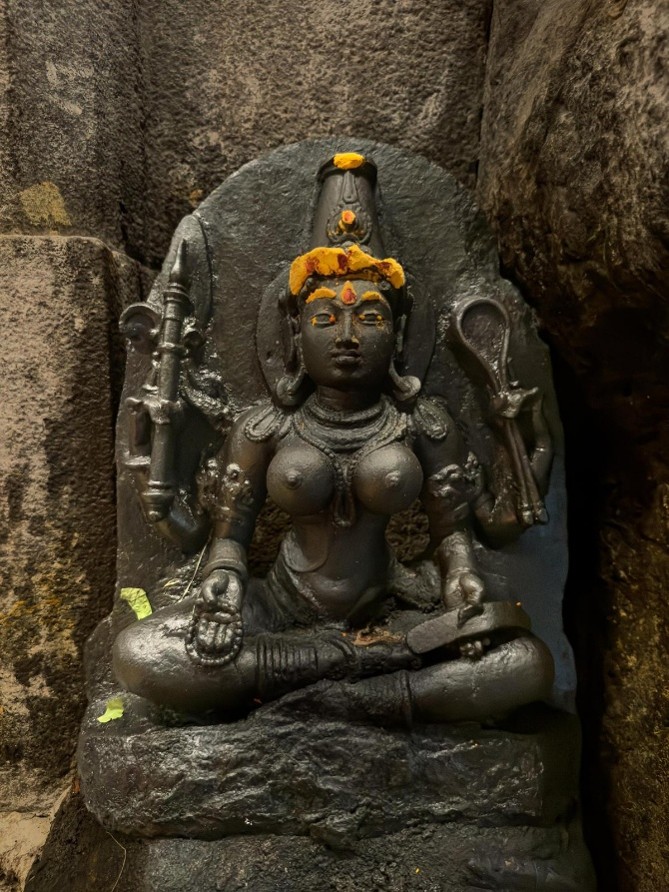
- She wears a crown, kundalams in her ears and ornaments on her neck, chest, shoulders, arms and legs.
- She is entirely different from the Saraswati images sculpted in Tamil Nadu and represents the north Indian style.
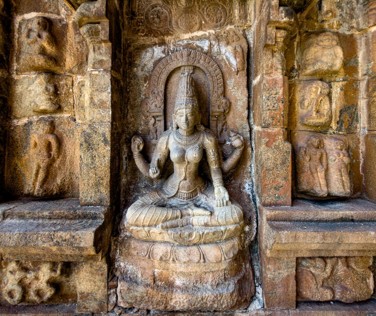
The Chola Gnanasaraswati
- Location - Carved on the outer walls near the steps leading to the Arthamandapam of Brihadiswara Temple.
- It is indigenous Chola craftsmanship.
- Unique Iconography - She is seated on a lotus with her hair arranged in an elaborate jata makuta.
- She is richly adorned with necklaces, shoulder ornaments, bangles and makara kundalams.
- Instead of a veena, she holds a suvadi in one hand and an akka mala in another, underscoring her identity as the embodiment of learning and spiritual wisdom.
- Of the remaining two hands, one carries a kundigai (kamandalu), while the other is shown in tarjani mudra—a rare and striking gesture in Saraswati iconography.
Veena-less Temples in Tamil Nadu
-
- Koothanur (Maha Saraswathi Temple).
- Darasuram (Airavatesvara Temple).
- Thanjavur (Brihadisvara Temple & Palace Complex).
- Kanchipuram (Kailasanathar Temple).
- Tiruvalanchuzhi (Sadaiva Muktheeswarar Temple).
Reference
The Hindu | Saraswati without veena



