Prelims: Current events of national and international importance | Health
Why in News?
Recently, scientists have created a detailed molecular map of gene activity in the brain’s prefrontal cortex.
Gene Activity Map of the Prefrontal Cortex
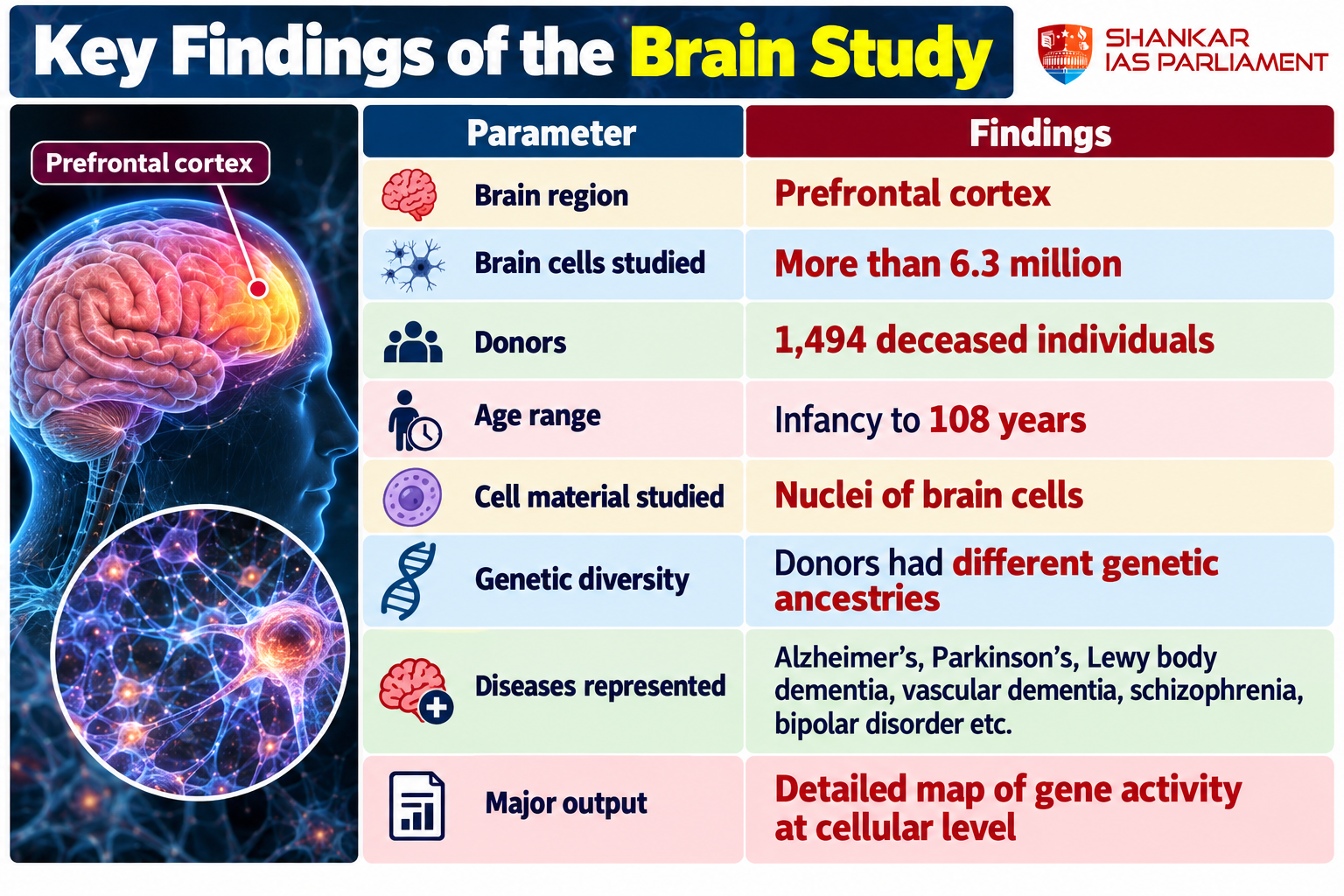
- Objective – To understand normal brain development, ageing and disorders such as Alzheimer’s, Parkinson’s, schizophrenia and dementia.
- Conducted under – PsychAD research consortium with support from the U.S. National Institute on Aging (NIA).
|
Prefrontal Cortex
|
- The prefrontal cortex is situated in the anterior region of the brain's outer layer, directly behind the forehead.
- Major functions
- Planning
- Decision-making
- Regulation of emotions
- Behavioural adaptation
- Higher cognitive functions
- Notably, the prefrontal cortex is especially susceptible to age-related changes and plays a significant role in various psychiatric and neurodegenerative disorders.
|
|
Gene Activity
|
- Gene activity, also known as gene expression, refers to the process by which cells utilize genetic information to synthesize functional molecules, primarily proteins.
- In this study, researchers analyzed gene activity across various brain cell types to elucidate the following relationships:
- Gene activity influences cell function, which in turn affects brain development and ageing, ultimately contributing to disease processes.
|
- Key Findings
- Similarities among Brain Disorders – Significant similarities in gene expression profiles were identified among the following disorders:
- Alzheimer’s disease
- Lewy body disease
- Vascular dementia
- Parkinson’s disease
- The following biological processes were commonly affected:
- Nerve-cell development
- Neuronal communication
- Blood-vessel biology
- Microglia – Researchers identified shared molecular pathways in microglia between Alzheimer’s disease and Parkinson’s disease.
Microglia are the resident immune cells of the central nervous system.
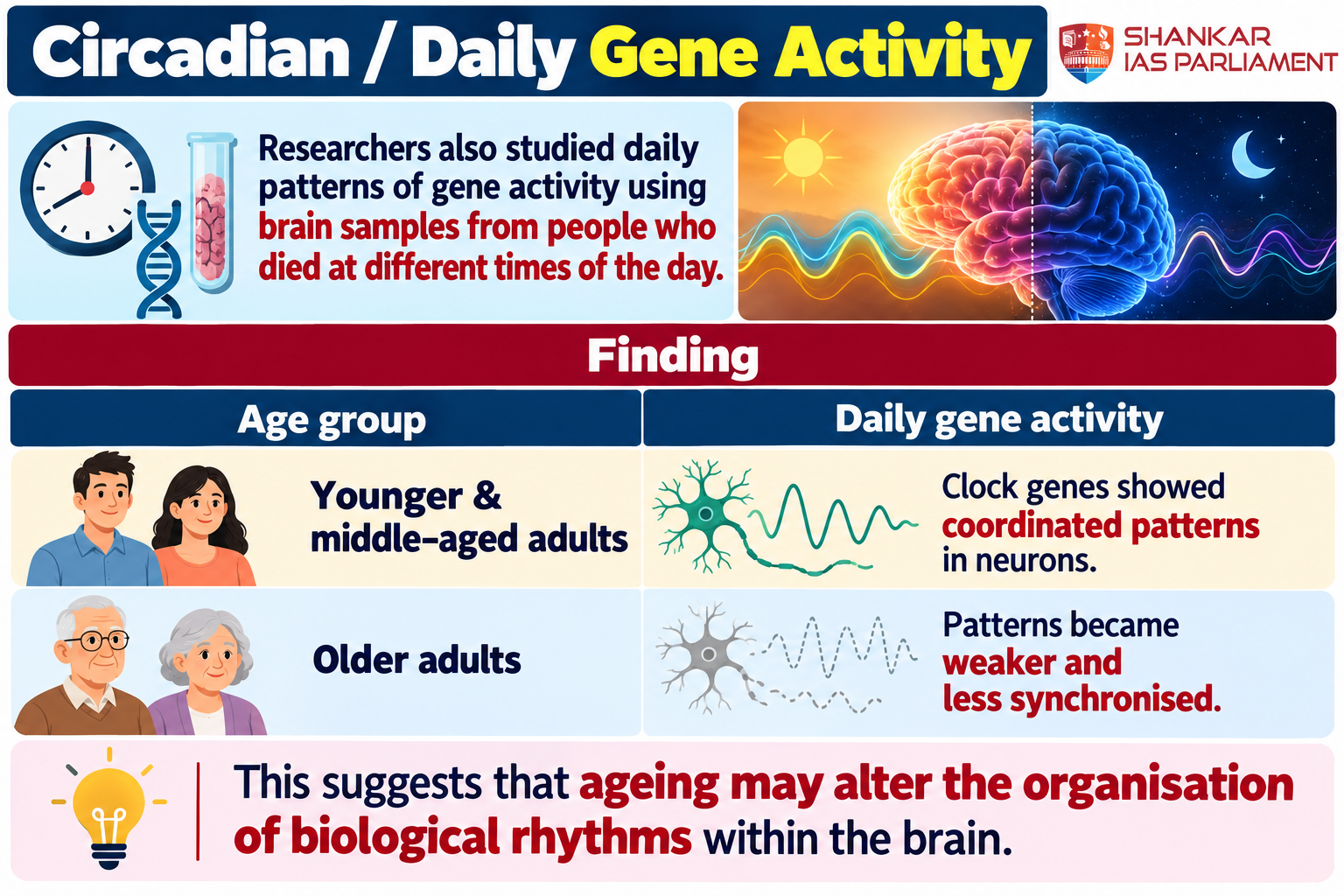
- Transition from infancy to adulthood – Significant molecular changes occur in the prefrontal cortex during this period.
- Throughout most of adulthood – There is relative molecular stability across various cell types.
- In later life, renewed molecular changes are observed, particularly in immune and support cells.
- Transition point – The study identifies approximately 24 years of age as the point at which a molecular shift occurs, marking the onset of the stability phase.
- Cognitive Resilience in Alzheimer's
- Certain individuals maintain relatively preserved cognitive function even in the presence of significant Alzheimer’s pathology.
- Researchers have identified differences in energy-related cellular processes within the brains of these individuals.
- These findings may offer insights into the following areas:
- Protective mechanisms, cognitive resilience, and potential therapeutic targets.
- However, further research is necessary to elucidate these mechanisms.
- Inherited Genetic Risk – Researchers established connections between the following elements:
- Inherited genetic risk, particular genes, and specific cell types.
- The study mapped genetic influences that affect the activity of over 14,000 genes.
- Significance – These findings may facilitate the identification of the following:
- Genes associated with disease
- Cell populations that are particularly vulnerable
- Relevant molecular pathways
- Potential targets for therapeutic intervention
Reference
DD India | Gene Activity Map of the Prefrontal Cortex



