What is the issue?
Frustration still lingers in Okinawa even after 50 years of its reversion to Japan from US rule.
What is Okinawa?
- Okinawa is an island group in Okinawa Prefecture of Japan.
- They are part of the larger Ryukyu Islands groups.
- A prefecture in Japan is similar to states in USA and Provinces in Canada.
- Japan is divided into 47 prefectures which rank immediately below the national government.
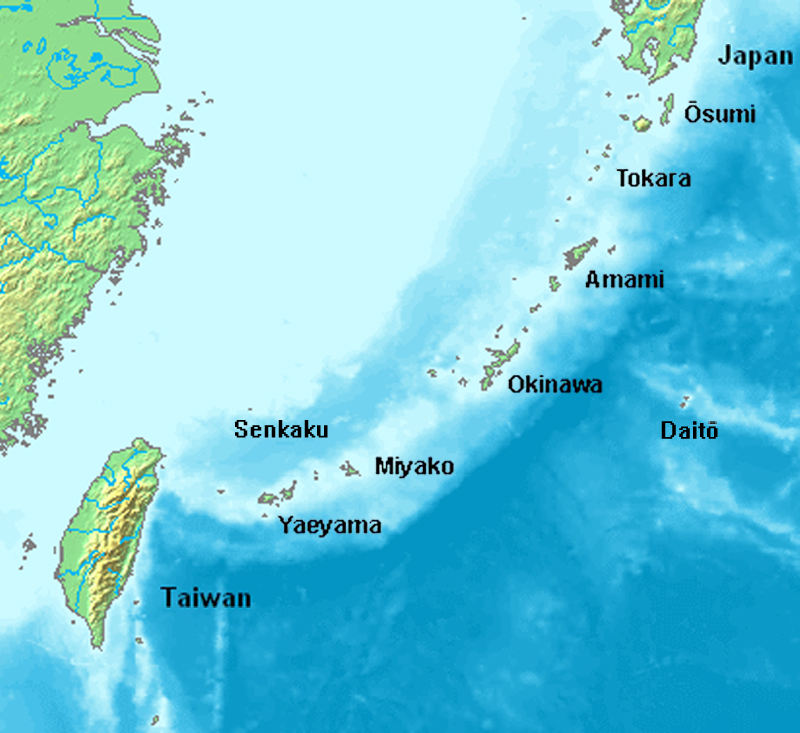
What is the history behind Okinawa islands?
- During WW2 - U.S. troops, in their push for mainland Japan, landed on Okinawa’s main island on April 1, 1945.
- After an intense battle of 3 months Okinawa was sacrificed by Japan’s imperial army to defend its mainland.
- The island group remained under U.S. occupation for 27 years until its return to Japan on May 15, 1972.
Why was Okinawa occupied?
- U.S. military considered Okinawa’s strategically important to maintain its troop to deter Russia and communism in the region.
- So while ending the 7 year U.S. occupation in Japan USA separated Okinawa and several other south western remote islands from the rest of Japan under San Francisco treaty in 1952.
- U.S. military occupation of Okinawa helped Japan to address its worries about Russia and concentrate on the post-war economic surge lowering its defence spending.
How did this affect the Okinawans?
- Under U.S. military occupation local Okinawan government had little decision-making power.
- Demands for reversion to Japan rose in the late 1950s across Okinawa over the confiscation of local land for U.S. bases.
- Many Okinawans demanded tax reform, wage increases and better social welfare systems to correct disparities between Okinawa and the rest of Japan.
- But the delayed reversion, the heavy U.S. military presence and mismanaged development funds have hampered the island’s economic, educational and social development.
What are Okinawa’s main problems today?
- The island is not free of military bases.
- Under bilateral security pact majority of US Troops and military facilities in Japan are still stationed in Okinawa.
- Okinawa’s average household income is the lowest and its unemployment is the highest of Japan’s 47 prefectures.
- If land taken by the U.S. military is returned for other use, it would produce 3 times more income for Okinawa than the island now makes from bases.
- Because of the U.S. bases, Okinawa faces noise, pollution, aircraft accidents and crime related to American troops.
- The decision of central government of Japan to move Futenma air station within Okinawa instead of moving it elsewhere as demanded by many Okinawans.
- The construction of a new runway at Henoko Bay off Okinawa’s eastern coast despite 72% opposition in Okinawa’s 2019 referendum citing environmental destruction and soaring costs.
- Rapid deployment of Japanese missile defense and amphibious capabilities on Okinawa’s outer islands, including Ishigaki, Miyako and Yonaguni, which are close to geopolitical hotspots like Taiwan.
What are the implications?
- All these has created resentment between Okinawa and the Japanese mainland.
- There are complaints of discrimination and claims that Okinawans are forced to serve an expendable role to protect mainland Japan.
- Some people have started calling for independence from Japan.
Reference
https://indianexpress.com/article/explained/explained-why-frustration-lingers-in-okinawa-50-years-later-7918304/



