Prelims: Current events of national and international importance | Health
Why in News?
Recent studies in parts of rural India have detected traces of environmental contaminants, raising concerns about early-life exposure to pollutants.
- Breast Milk – It is a unique bioactive fluid produced by mammalian mothers.
- Composition – Contains all the nutrients that an infant needs in the first 6 months of life, including fat, carbohydrates, proteins, vitamins, minerals and water
The World Health Organisation (WHO) recommend exclusive breastfeeding for the first 6 months of life, followed by continued breastfeeding alongside complementary foods up to 2 years of age or beyond.
- Importance – First food and first vaccine – Breast milk provides complete nutrition and immune protection for infants.
- Recommended by WHO as the safest nourishment for infants.
- It provides macronutrients, micronutrients, bioactive molecules and stem cells that support infant growth.
- Benefits –
- Strengthening immune defences.
- Supporting brain and neurodevelopment.
- Shaping the gut microbiome.
- Reducing inflammation and infections.
- Lowering risk of allergies, autoimmune disorders, obesity and respiratory diseases.
Key findings of the study
- Long-term Benefits – Study found that longer breastfeeding duration is associated with
- Higher intelligence in adulthood
- More years of schooling
- Higher earnings.
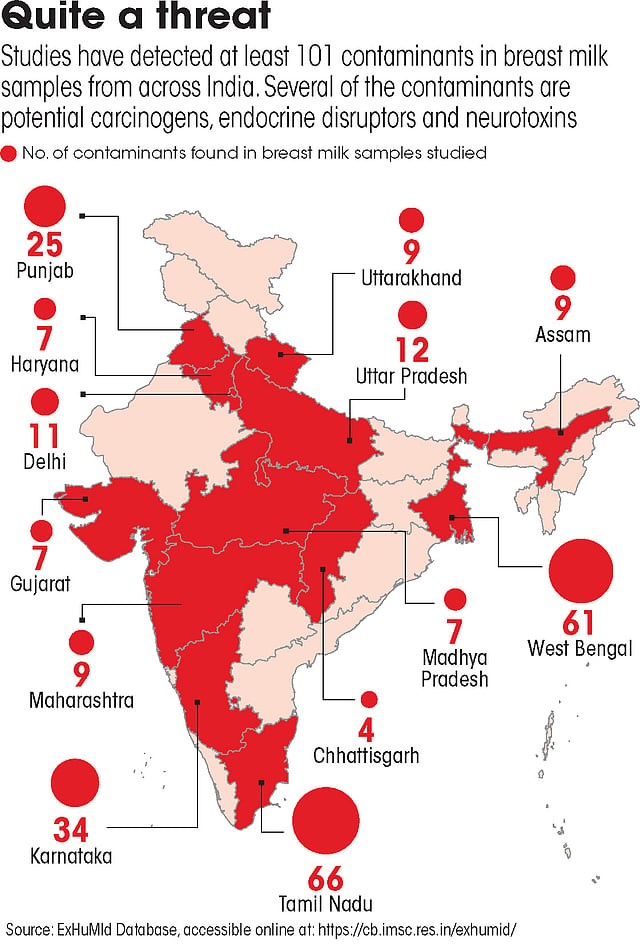
- Concern of Contaminants – Detection of traces of pesticides, heavy metals and uranium in breast milk in parts of rural India.
Studies have detected at least 101 contaminants in breast milk samples across India.
- Nature – Detected substances fall into categories such as:
- Carcinogens (cancer-causing agents)
- Endocrine disruptors (chemicals that interfere with hormonal systems)
- Neurotoxins (harmful to brain development)
- Nephrotoxicity (kidney damage)
- Early-life Exposure – Indicates exposure to pollutants may begin in infancy rather than later in life.
- Infants are particularly vulnerable because their organs and immune systems are still developing and have lower body weight, increasing relative exposure.
- Uranium in Groundwater – Uranium-238 (U-238) is a naturally occurring radioactive element that can contaminate groundwater.
- 151 districts across 18 states had groundwater uranium levels above the WHO guideline of 30 µg/l.
In Bihar, about 1.7% of groundwater sources are affected. Uranium contamination has been reported to have the highest level (5.25 µg/L) recorded in the Katihar district.
States with High contamination levels –
-
- Punjab – 24.2% wells above limit
- Haryana – 19.6%
- Telangana – 10.1%
- Delhi – 11.7%
- Rajasthan – 7.2%
- Smaller proportions were found in Karnataka, Madhya Pradesh, Tamil Nadu, Jharkhand, Chhattisgarh, Gujarat, Himachal Pradesh, Maharashtra, Odisha, West Bengal and Bihar.
- Significance – Highlights the link between environmental pollution and early-life health exposure.
- Emphasises the need for groundwater quality monitoring and pollution control.
References
- Down to Earth | Environmental Contaminants in Mother’s Milk
- Nature | Contaminants in Mother’s Milk



